Race Between Robots and Humans: Who Was the Winner in the Chinese Half Marathon?
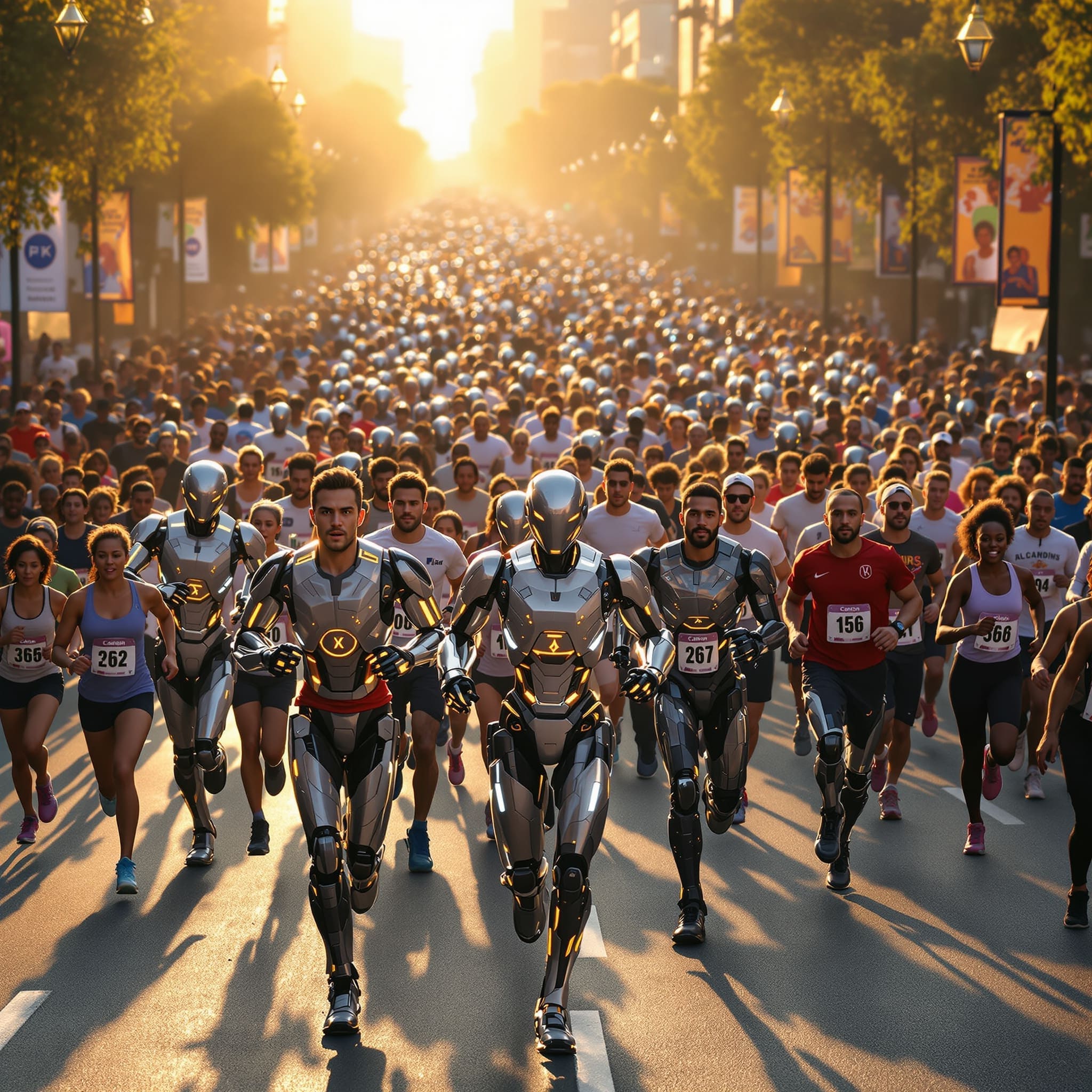
A groundbreaking race recently took place in Beijing, attracting attention from around the world. For the first time in history, humanoid robots lined up alongside thousands of human runners in a half marathon. This unique event served as a real-world stress test for China's rapidly developing robotics industry.
Race Results: Humans vs. Machines
The 21.0975-kilometer race clearly showed that humans can breathe a sigh of relief for now - the fastest human runner completed the course in approximately 1 hour and 2 minutes, which corresponds to the times of elite runners. By contrast, the robots lagged far behind their human counterparts. Only two robots managed to complete the course within the official time limit of 3.5 hours. The winner among the machines was Tiangong Ultra, a 175 cm tall humanoid robot weighing 52 kg, developed by the Beijing Innovation Center for Humanoid Robots. It crossed the finish line with a time of 2 hours, 40 minutes, and 42 seconds. The second successful robot was Little Rascal N2, which also managed to finish the race within the time limit.
Problems Faced by the Robotic Competitors
As reported by The Neuron Daily, most of the robotic participants faced significant difficulties: "So how did the robots perform? Let's put it this way - they don't look ready for Olympic qualifiers just yet," the article remarked with a touch of humor. Many robots fell during the race, crashed into barriers, or ran out of energy. Some machines had trouble navigating the course or were unable to handle uneven surfaces.
Despite the humans' decisive victory, this is a significant milestone in the field of robotics. The very fact that two robots managed to complete a demanding half marathon represents enormous progress in this technology. Tiangong Ultra dramatically improved upon previous robot performances - during earlier attempts, it took robots as long as eight hours to complete a similar distance. Nevertheless, it remains significantly behind human athletic performance.
Should We Be Worried?
The race clearly demonstrated both China's ambitions in the field of robotics and the current limitations of artificial intelligence in moving machines. While technological progress is undeniable, the road to machines being able to physically compete with humans in complex endurance events is still a long one. As The Neuron Daily quipped: "Well... let's just say it's not ready for Olympic qualification yet."
You can watch a video of the race here.