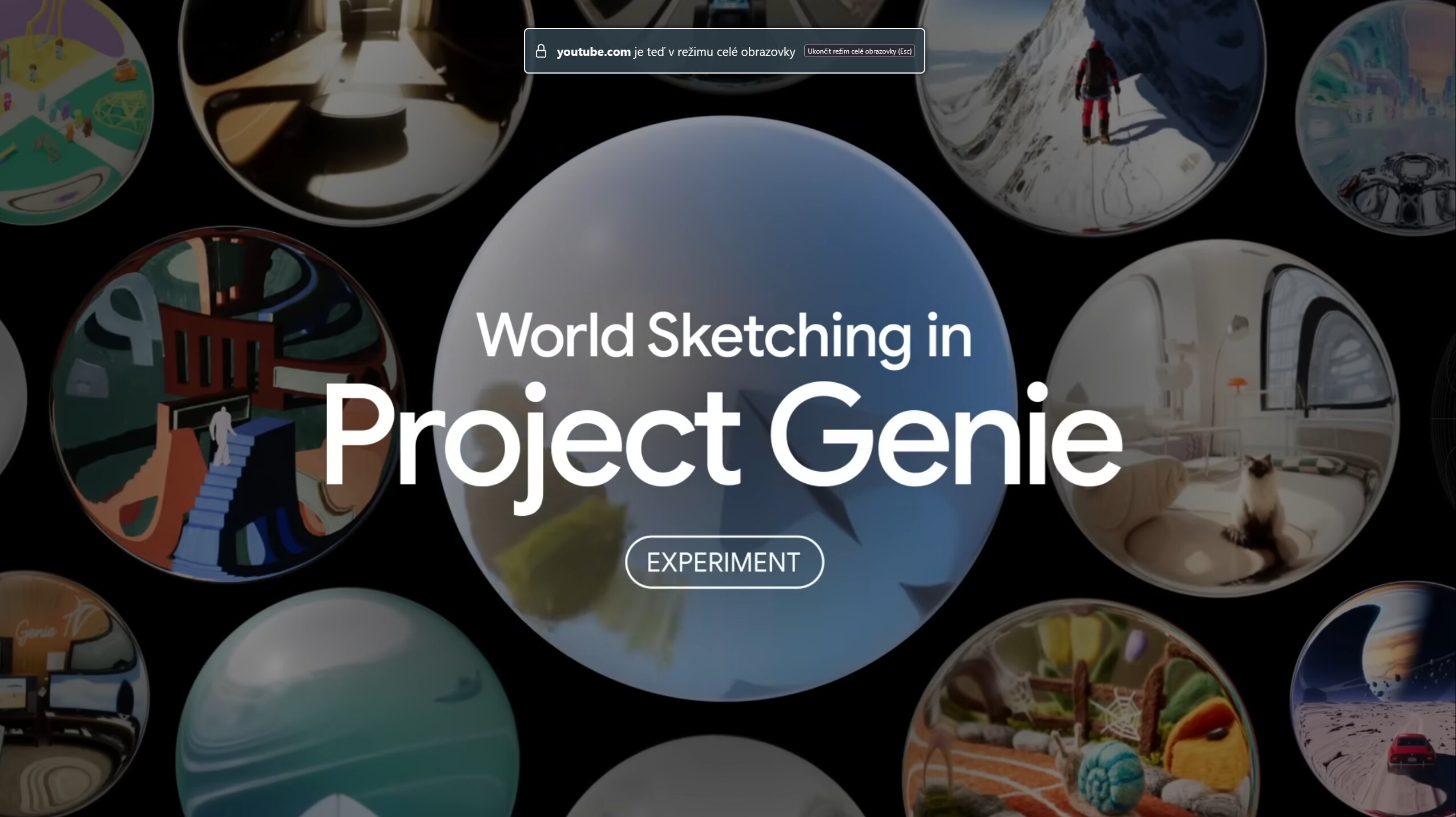
Access to the experimental Project Genie, which can create interactive game worlds from text prompts or images, is being opened up by Google DeepMind. Users can generate a unique 3D environment in which they move using a unique character from a first- or third-person perspective.
How does Project Genie work?
Project Genie is an experimental research prototype that uses a combination of the Genie 3 model, the Nano Banana Pro generator, and Gemini. The system allows users to create, explore, and remix their own interactive worlds through a web application.
The world creation process takes place in four simple steps. First, the user describes the world using a text prompt or uploads an image as a reference. Genie 3 generates the path ahead in real time based on the actions the user takes. The system can simulate physics and interactions for dynamic worlds.
Diego Rivas, a product manager at Google DeepMind, together with Elliott Breece from Google Labs and Suz Chambers from Google Creative Lab, introduced this technology as an important step toward artificial general intelligence.
Three main platform features
World Sketching allows users to create living, expanding environments using text and generated or uploaded images. Users can create their own character and world and define how they explore it—from walking and driving to flying. For more precise control, Nano Banana Pro is integrated, allowing users to preview and modify the world before entering.
World Exploration offers a navigable environment waiting to be explored. As the user moves, Project Genie generates the path ahead in real time at 24 frames per second. Users can also adjust the camera while moving through the world using WASD controls.
World Remixing allows existing worlds to be transformed into new interpretations by building on their prompts. Users can explore curated worlds in the gallery or use them as inspiration. Once finished, videos of the created worlds and explorations can be downloaded.
What works and what does not
According to TechCrunch, which tested Project Genie, the system excels primarily at creating imaginative worlds that look, for example, as though they were made from modeling clay or painted in watercolor. The first world they created was a castle in the clouds made of marshmallow, with a river of chocolate sauce and candy trees—all in a claymation style.

The models excel at creating worlds based on artistic prompts, such as the use of watercolors, an anime style, or a classic cartoon aesthetic. Photorealistic scenes, however, feel artificial and sterile. When they provided a photograph of their office, the system created a world with similar furniture, but arranged differently and looking digital and sterile.
Shlomi Fruchter, research director at DeepMind, admitted that this is an early prototype with a number of limitations. Characters sometimes pass through walls, and keyboard controls are not always reliable. Navigation using the arrow keys to look around, the spacebar to jump, and the WASD keys to move was often unresponsive or sent users in the wrong direction.
Limitations and safety measures
Google has deployed strict filters against copyright infringement in response to last year's legal disputes with Disney. Users cannot generate worlds featuring movie heroes or content resembling protected characters. It is not even possible to create worlds with mermaids or ice queens that might resemble Disney characters.
Google allows users to spend only 60 seconds in a generated world, which the company attributes to the enormous computing power requirements. "When you use the system, somewhere there is a chip that is yours alone and is dedicated to your session," Fruchter explained. Extending sessions beyond 60 seconds would reduce the incremental value of testing and limit the number of users who can try the system.
The future of world models
The developers view these "world models" as a key step toward achieving artificial general intelligence. In the near future, however, the project is expected to target primarily the entertainment industry and training robots in simulations. Unlike static 3D images, Genie 3 generates the path ahead in real time as the user moves and interacts with the world.
Access to Project Genie is gradually being rolled out from January 29, 2026, to Google AI Ultra subscribers in the US (18+) at a price of CZK 6,250 per month, with plans to expand to additional territories. Some Genie 3 capabilities announced in August, such as world-changing events during exploration, are not yet included in this prototype.
DeepMind researchers are open about the tool's experimental nature and are working to improve the realism of the worlds, enhance interaction capabilities, and give users greater control over actions and environments.