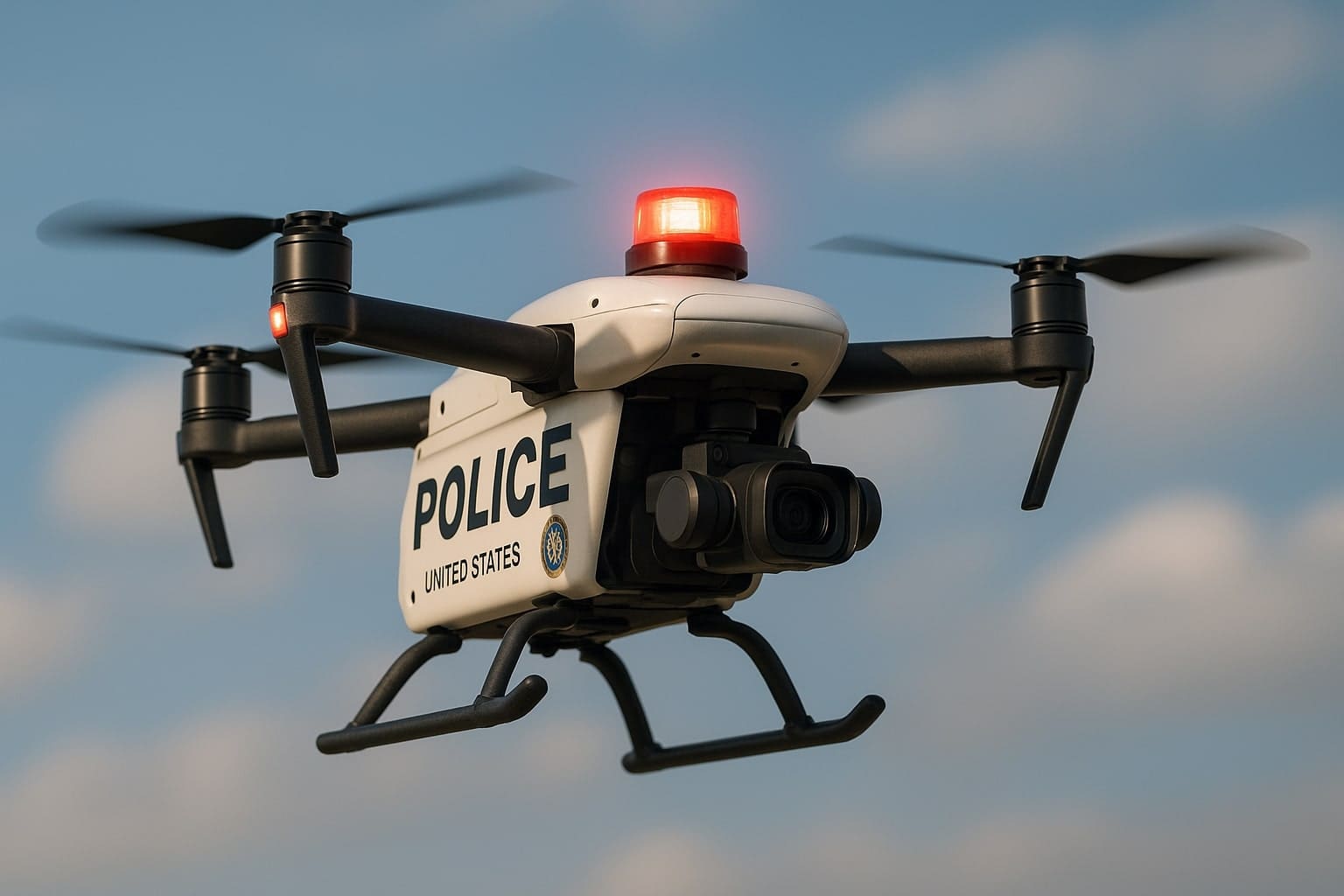
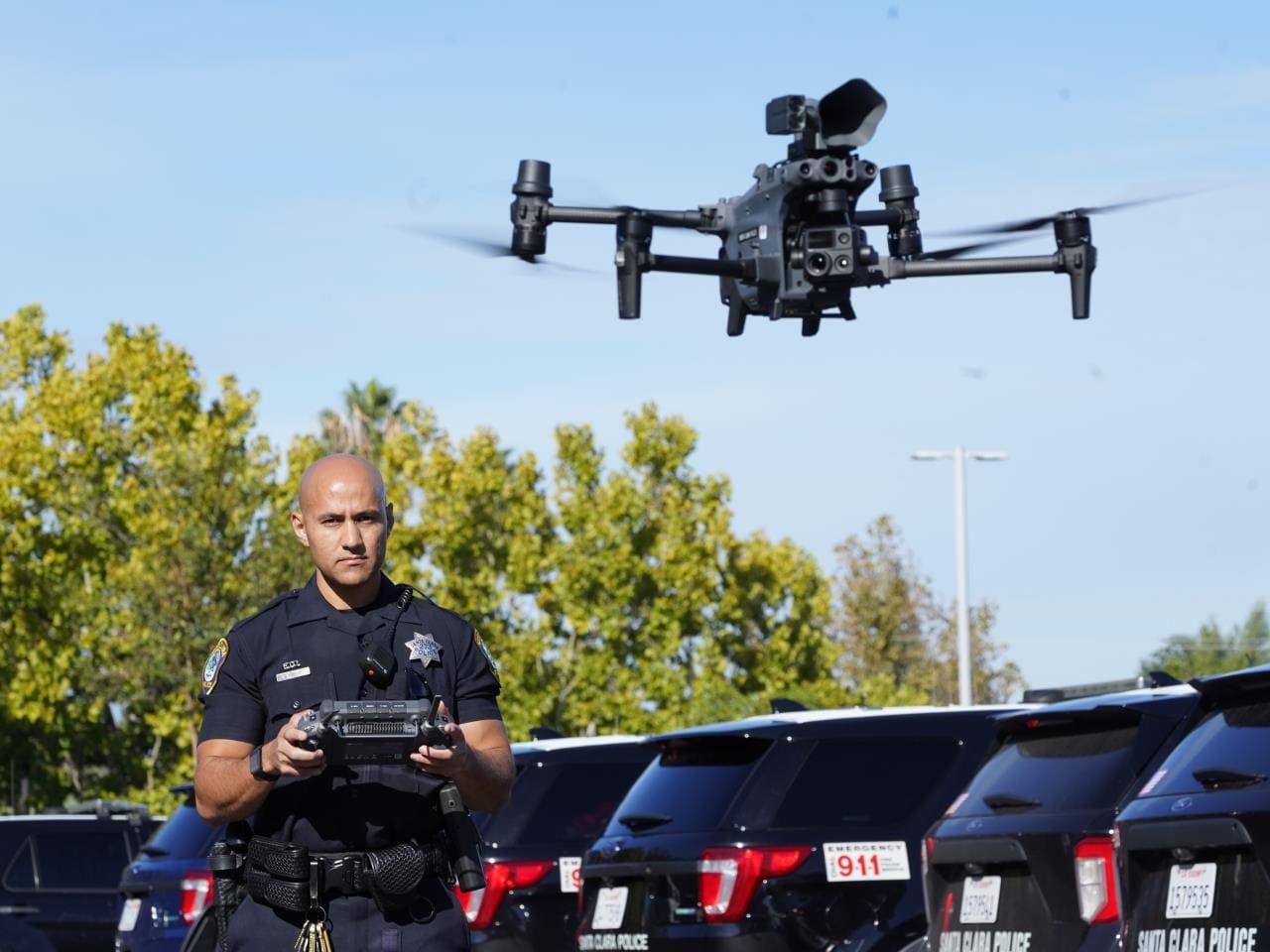
In recent years, drones have become a key tool for police departments across the United States. These small flying machines, equipped with advanced technology, assist with pursuing suspects, investigating incidents, and responding to emergencies. In Albuquerque, for example, police deploy drones to catch car thieves, contributing to a significant decline in vehicle thefts over the past eight years. Gilbert Gallegos Jr., a spokesperson for the Albuquerque Police Department, explains that drones provide a better overview of the situation and make it possible to identify suspects more quickly immediately after a crime has been committed. Thanks to them, officers receive important information before they arrive at the scene.
Drones are not just used for surveillance. In many cases, they deliver life-saving supplies, such as Narcan for people experiencing an overdose. This capability is proving particularly useful in situations where time is critical. According to reports from this year, more than 1,500 police and sheriff's departments use drones, representing a 150% increase compared to 2018. This boom can be seen in cities such as Miami, Cleveland, Columbus, Ohio, and Charlotte-Mecklenburg, North Carolina, where new drone programs were launched this year. Cameron Chell, CEO of the Canadian company Draganfly, describes how these drones can measure a person's heart rate, breathing, blood pressure, and oxygen levels from 500 meters away, helping in emergency scenarios.
Drones as First Responders in Arizona
In Arizona, specifically in Scottsdale, drones have become part of everyday police work. Flock Safety, a company that supplies camera systems and gunshot detectors to police departments across the country, is integrating drones from the startup Aerodome into its crime-fighting platform. When a Flock camera detects a stolen vehicle or a car associated with an AMBER Alert, a dispatcher can press a button and send a drone from a rooftop to the location in less than 90 seconds. This system acts as a "force multiplier"—if only one police officer is available and two 911 calls come in, the drone can quietly track a suspect while the officer handles the priority call.
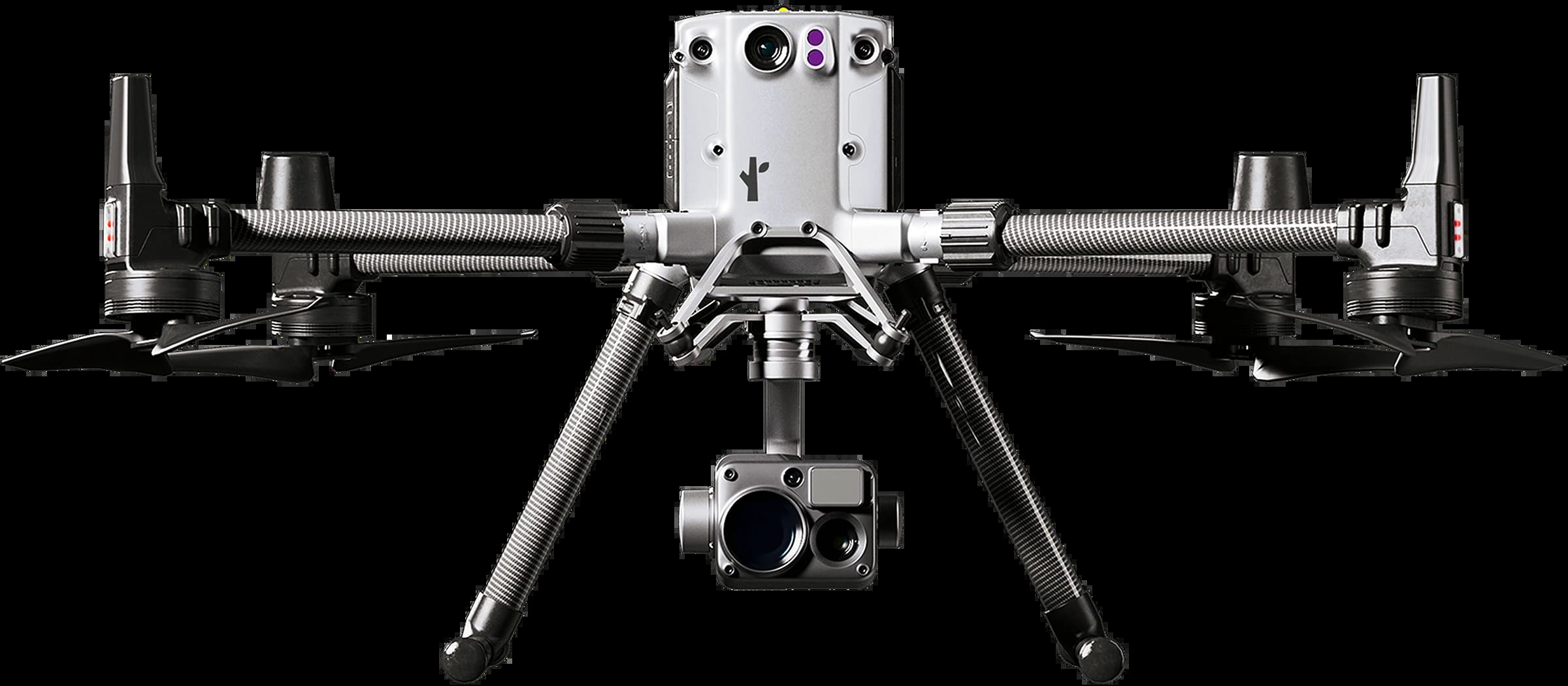
Jeff Walther, Scottsdale's police chief, emphasizes that this drone-as-first-responder program helps protect lives, keep the city safe, shorten response times, and reduce crime. Drones replace dangerous car chases, protecting both police officers and civilians. According to Charles Werner, director of the nonprofit DroneResponders Public Safety Alliance, around two dozen agencies currently have similar programs, with plans for expansion. Since 2019, the Federal Aviation Administration (FAA) has been granting waivers for flights beyond the operator's line of sight, enabling larger fleets of remotely operated drones. Aerodome claims that its pilots can control three or four drones simultaneously from a single computer, and the drones automatically swap their batteries, so they do not have to waste time charging.
Drone Deployment in Washington, D.C.
In Washington, D.C., the Metropolitan Police Department launched a program with five automated drones that can fly for 30 minutes before requiring a recharge. These drones assist in searches for missing persons, responses to major traffic accidents, crowd management, and tactical situations such as police barricades. The use of a drone is approved only if it meets three criteria: the suspect must be considered armed, and the situation must place officers at risk of death or serious injury. Other examples include serving high-risk warrants or conducting explosive ordnance disposal operations.
The department explicitly prohibits the use of facial recognition and weapons capabilities. Drones may not be deployed to record a specific person or group based on their identity. According to the Electronic Frontier Foundation, a digital privacy advocacy group, around 1,200 police departments across the United States use drones, including Beverly Hills, California, and agencies in Washington state. Chula Vista, California, has the longest-running drone-as-first-responder program, where statistics from 2022 show that drones primarily handled disturbances, psychological evaluations, and welfare checks, freeing up officers for more urgent cases.
Privacy Concerns and the Future
The deployment of drones also raises serious questions regarding privacy and the Fourth Amendment. In Phoenix, police only recently began using drones due to opposition from residents who feared illegal surveillance. Jay Stanley of the American Civil Liberties Union warns that having drones constantly overhead could create a feeling that the eyes of the law are everywhere, which is no way for anyone to live. Beryl Lipton of the Electronic Frontier Foundation points out that it is unclear what police do with the data or how private companies process it. These drones collect detailed biometric information, such as heart rate, without adequate restrictions, which is frightening.
Mauricio Kleinburg, director of technology at the Mexican security company Seguritech, emphasizes that the true power of drones lies in data analysis—the drone merely flies and collects information, but what happens to it at the police operations center is key. In Minnesota, where George Floyd was murdered, agencies spent more than one million dollars on drones in 2023, an increase of 44% over the previous year. This trend reflects efforts to reduce direct confrontations following the events of 2020. In Albuquerque, drones are helping reduce car thefts by providing better situational awareness.
Drones are also expanding into other areas, such as delivering defibrillators or tourniquets to emergency locations. In Seattle, although the local police department does not have a program, drones are used by the state patrol and departments in Everett, Redmond, and Renton. Overall, drones are becoming a common part of police work, but they require careful debate about privacy and regulations.
Source: axios.com