
The Pentagon Is Struggling with Delays in AI Weapons: It Risks Losing to China
Two years ago, the U.S. Department of Defense launched a program called Replicator, which was intended to quickly provide thousands of advanced drones for a potential conflict with China. Announced in 2023 by then-Deputy Secretary of Defense Kathleen Hicks, the project promised cheap, intelligent, and autonomous systems on land, in the air, and at sea. The goal was to strengthen defenses against Beijing’s growing military power as it rapidly expands its fleet of ships, aircraft, and high-tech weapons. Officially, the program was supposed to deliver thousands of units by August 2025, but the reality is different—the plans have stalled due to technical problems and insufficient speed.
Kathleen Hicks requested a budget of $1 billion (approximately CZK 22.5 billion) over two years, but some lawmakers are calling for much larger amounts to ensure its success. People familiar with the program describe how the systems proved unreliable, too expensive, or too slow to manufacture in the quantities needed. In addition, there is no software capable of controlling large groups of drones from different manufacturers so they can jointly search for and potentially attack targets.
Reliability and Cost Problems
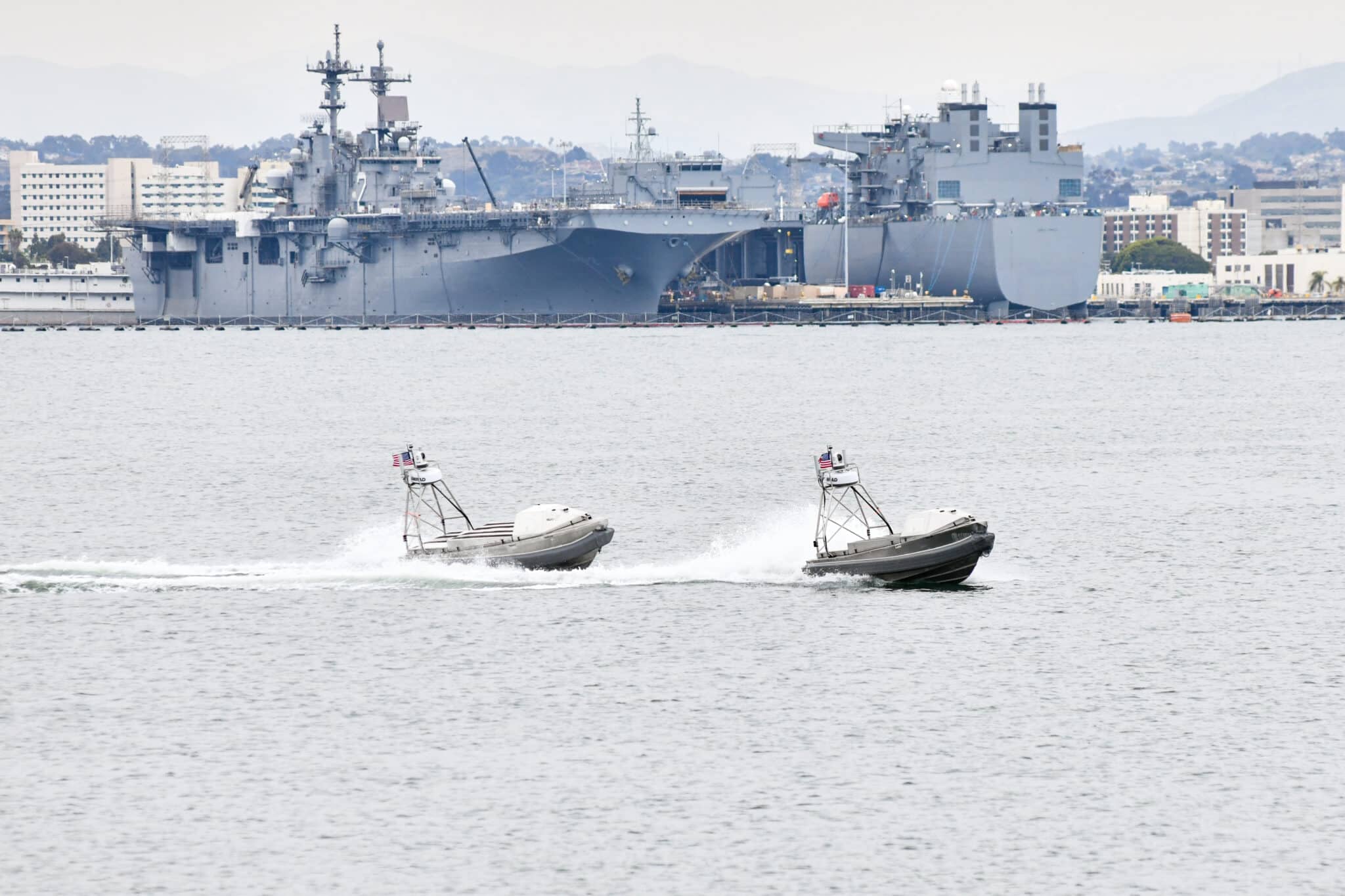
Some Replicator systems failed in real-world testing. For example, an unmanned vessel made by BlackSea Technologies suffered a rudder failure and drifted away during a test in California in August. An aerial drone from Anduril Industries, founded by Palmer Luckey, was delayed due to problems with its launch tubes. Software on several vessels misidentified objects or failed to recognize them altogether. These incidents occurred during an event that also involved the deputy commander of Special Operations, Lieutenant General Frank Donovan.
One of the largest purchases was the Switchblade 600 drone from AeroVironment, which cost around $100,000 (approximately CZK 2.25 million) per unit—ten times more than the inexpensive drones used in Ukraine. This model experienced problems in Ukraine, where it failed under communications jamming conditions, which are common in modern conflicts. AeroVironment says it made improvements, but the military opted for older versions to avoid further delays.
Additional complications arose from BlackSea Technologies’ GARC unmanned vessels. The military purchased hundreds of them, but these vessels are not suitable for complex, long-range missions in the Pacific. Naval officers pushed for them without fully understanding the technical limitations, leading to repeated software changes, rising costs, and unnecessary complications.
Transfer to the New DAWG Organization
Because of these difficulties, Pentagon leadership transferred the program to a new division under Special Operations called the Defense Autonomous Warfare Group, or DAWG. This group is tasked with accelerating development and focusing on the most suitable weapons. Frank Donovan, deputy commander of Special Operations, now oversees the Replicator program and has less than two years to deliver the required drones.
People involved in the program explain the delays in different ways—some blame the military branches for purchasing unfinished systems, while others see them as a natural part of rapid development. Kathleen Hicks said in an email that the program was on track when she left the Pentagon in January and had helped launch purchases of autonomous systems. Aditi Kumar, former deputy director of innovation, said the transfer to Special Operations was natural and would help scale promising technologies.
Integration and Testing
Integrating the technologies proved difficult. During the Project Kahuna exercise in the Pacific last year, drones from different manufacturers, connected through software from Anduril Industries, had problems coordinating and carrying out tasks beyond the operator’s line of sight. Palmer Luckey of Anduril acknowledged that more could have been done to ensure clarity, but overall, he considers the program a success.
Defense Innovation Unit Director Doug Beck, a military veteran and former Apple executive, resigned last month. His team had to deal with bureaucratic obstacles at the Pentagon, where uniformed officers without technical expertise made decisions about major purchases. Of the dozen systems selected for the Replicator program, three were unfinished or existed only as concepts at the time of selection.
The Future and Geopolitical Pressure
Replicator was intended to prepare the United States for a conflict over Taiwan, which could come as early as 2027. Drones would make it possible to disperse the battlefield, confuse the enemy, and strike without major loss of life or expensive equipment, even amid communications jamming. Nevertheless, the program has achieved some successes—it accelerated testing, advanced autonomous technologies, and shortened the traditional weapons procurement process by years.
Further information confirms that the delays stem from high costs, software errors, and bureaucracy, threatening U.S. superiority. DAWG must now overcome these obstacles to prevent the United States from falling behind China in military artificial intelligence. If it succeeds, these systems could transform warfare, but time is running out.
Source: wsj.com