

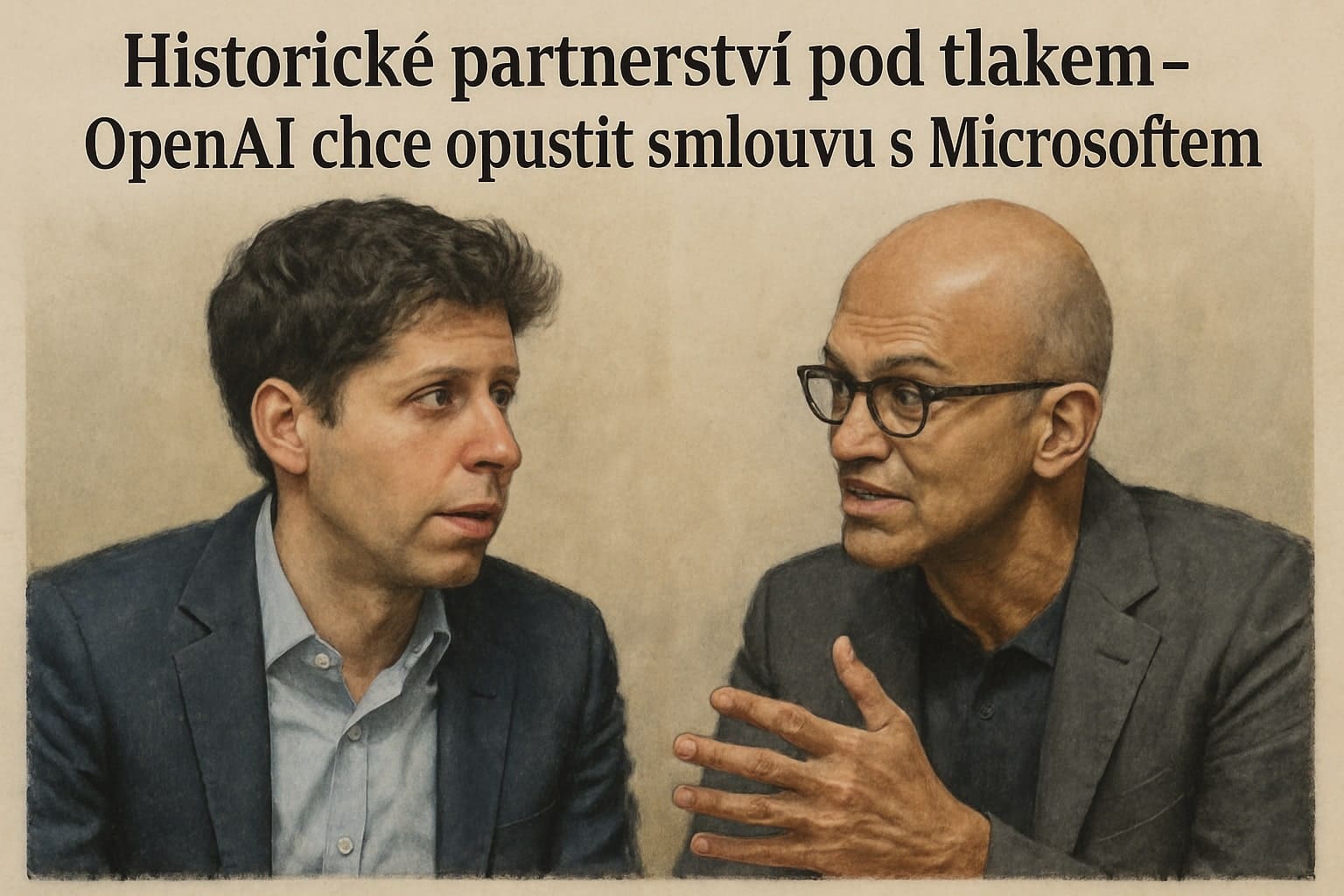
Historic Partnership Under Pressure - OpenAI Wants to Abandon Exclusive Agreement with Microsoft
The relationship between OpenAI and Microsoft, which for six years was regarded as one of the most successful partnerships in the history of the technology industry, is on the brink of collapse. OpenAI, the creator of the revolutionary ChatGPT chatbot, is seeking to loosen Microsoft's control over its artificial intelligence products and computing resources. At the same time, it is seeking the technology giant's approval for its conversion into a for-profit company. Microsoft's approval of this conversion is crucial to OpenAI's ability to raise additional funding and go public.
Negotiations between the two companies have become so difficult that, in recent weeks, OpenAI executives have discussed what they consider a "nuclear option" - accusing Microsoft of anticompetitive conduct during their partnership. This effort could include requesting a federal regulatory review of the agreement's terms for potential antitrust violations, as well as launching a public campaign, according to people familiar with the matter.
Competitive Battle over Intellectual Property
A key point of contention has become a dispute over the terms of the $3 billion acquisition of Windsurf, a startup specializing in programming tools. Under the current agreement, Microsoft has access to all of OpenAI's intellectual property. At the same time, it offers its own product for programmers, GitHub Copilot, which directly competes with OpenAI's services. OpenAI does not want Microsoft to gain access to Windsurf's intellectual property, creating a stalemate between the two partners.
The companies also cannot agree on how large a stake Microsoft would own in OpenAI if the startup converted into a public benefit corporation. Microsoft is currently demanding a larger stake in the new company than OpenAI is willing to provide. OpenAI must complete its conversion by the end of the year or risk losing $20 billion in funding.
History of Development and Cooperation
Microsoft first invested $1 billion in OpenAI in 2019. Under the current agreement, the technology giant has the exclusive right to sell OpenAI's software tools through its Azure cloud service and has priority access to the startup's technologies. Microsoft is also supposed to be OpenAI's sole provider of computing resources, although last year it allowed the startup to create its own data center, the Stargate project. In the meantime, however, the partners have become competitors. The two companies now compete in products ranging from consumer chatbots to artificial intelligence tools for businesses.
Future of the Partnership and Regulatory Threats
The startup is seeking to renegotiate elements of this agreement alongside its planned conversion. It wants to partner with other cloud service providers so that it can sell its technology to more customers and gain access to additional computing resources. Microsoft, meanwhile, wants access to OpenAI's technology even after the startup declares that its models have achieved human-level intelligence, which would end the current partnership.
This level of sophistication, known as "artificial general intelligence" (AGI), is the subject of intense debate among technology company executives. Some believe it is possible and imminent, while others think it is distant or potentially unattainable and that improvements in artificial intelligence will instead be gradual.
Under the Biden administration, the Federal Trade Commission launched a broad antitrust investigation into Microsoft last year. More than a year ago, it also began examining Microsoft's investment in OpenAI alongside other major technology investments in artificial intelligence.
Responses from Both Sides
Despite the growing tensions, the two companies issued a joint statement emphasizing their ongoing partnership: "We have a long-term, productive partnership that has delivered amazing AI tools for everyone. Talks are ongoing, and we are optimistic that we will continue building together for many years to come."
However, this dispute could jeopardize their six-year relationship and fundamentally reshape the artificial intelligence development landscape. The outcome of these negotiations will have far-reaching consequences not only for both companies, but also for the entire technology industry and the way artificial intelligence will be developed and distributed in the future.


