

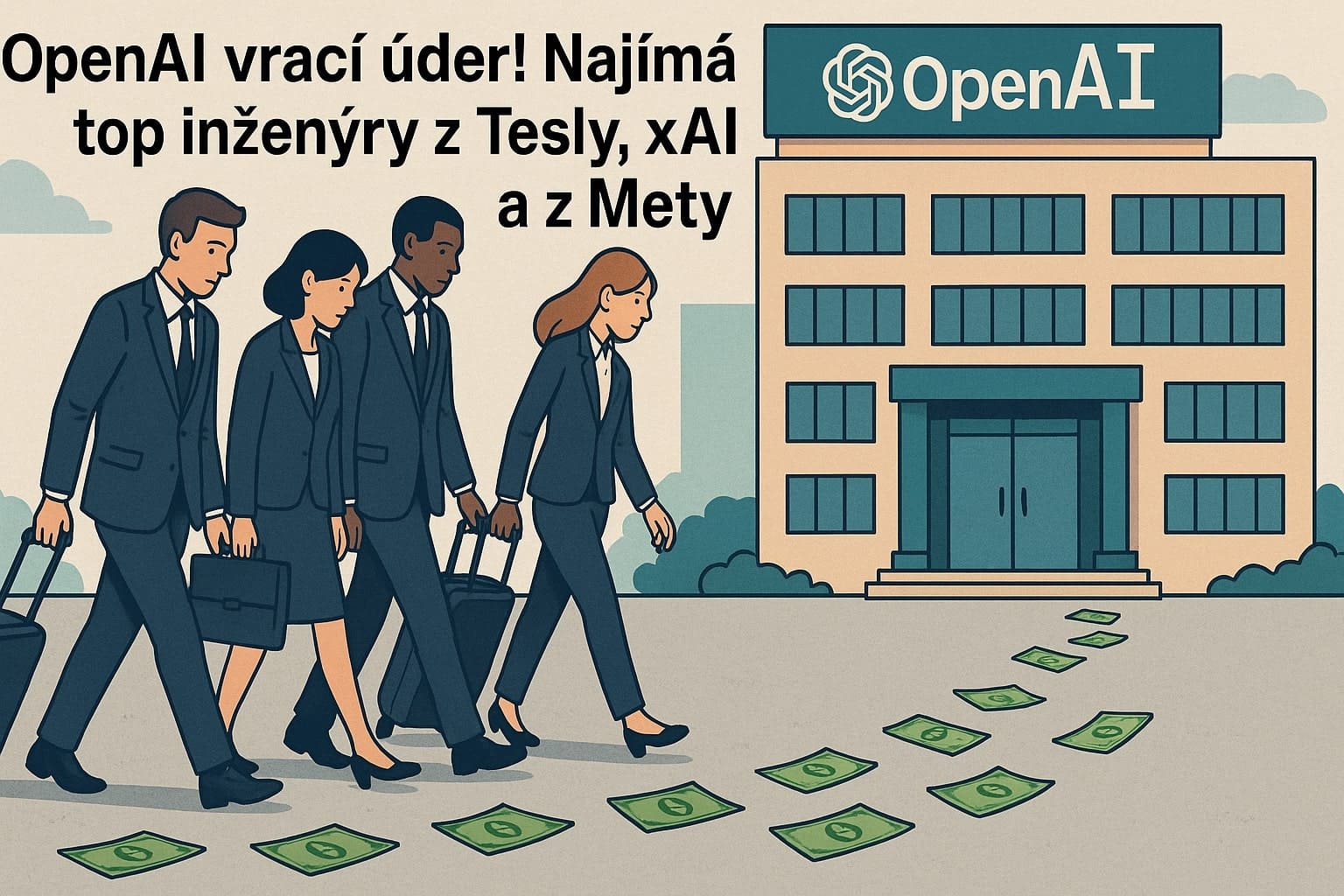
OpenAI Strikes Back! Hires Top Engineers from Tesla, xAI, and Meta
OpenAI, known for its advances in artificial intelligence, has announced the arrival of four prominent engineers from rival companies. The move was disclosed in an internal Slack message sent by OpenAI co-founder Greg Brockman, who leads the scaling team. The new members include David Lau, the former vice president of software engineering at Tesla, where he led software development. He is joined by Uday Ruddarraju, the former head of infrastructure at xAI and X (formerly Twitter), and Mike Dalton, an infrastructure engineer from xAI. Both Ruddarraju and Dalton previously worked at Robinhood and helped build the massive Colossus supercomputer at xAI, which includes more than 200,000 graphics processing units (GPUs). The fourth new hire is Angela Fan, an artificial intelligence researcher from Meta who specializes in developing and training large language models.
These engineers are joining OpenAI's scaling team, which manages backend hardware and software systems, data centers, and projects such as Stargate—a joint venture focused on building artificial intelligence infrastructure. This team enables researchers to train cutting-edge foundation models, which is crucial to achieving artificial general intelligence (AGI). OpenAI spokesperson Hannah Wong said in a statement that the company was excited to welcome these new members and was continuing to build world-class teams across infrastructure, research, and products to accelerate its mission and bring the benefits of artificial intelligence to hundreds of millions of people.
In a statement to WIRED, Uday Ruddarraju emphasized that infrastructure is where research meets reality, and OpenAI has already successfully demonstrated this. He described the Stargate project as an ambitious systems-level challenge that he was eager to take on. David Lau, meanwhile, said that accelerating progress toward safe and well-aligned artificial general intelligence was the most rewarding mission for the next stage of his career.
Competition for Talent in the AI Industry
These hiring moves come amid growing competition for talent and resources among the major players in artificial intelligence. Meta CEO Mark Zuckerberg recently aggressively lured at least eight people away from OpenAI with attractive compensation packages and vast computing resources for their research. This prompted OpenAI CEO Sam Altman to tell employees that the company would likely adjust compensation for researchers to compete more effectively. Zuckerberg has also targeted employees of Thinking Machines Lab, a startup led by former OpenAI chief technology officer Mira Murati and OpenAI co-founder John Schulman.
The moves from Tesla, xAI, and X could further inflame tensions between Sam Altman and Elon Musk, who co-founded OpenAI in 2015 but left three years later amid disagreements over its direction and leadership. Musk is currently suing OpenAI, alleging that it abandoned its original mission to develop artificial intelligence for the benefit of humanity. In 2019, the company transitioned from a purely nonprofit organization to a for-profit entity and accepted billions of dollars in investment from Microsoft. OpenAI, in turn, is suing Musk for unfair competition and interference with its business.
The battle for talent in the AI industry has intensified since ChatGPT was publicly launched in late 2022. The situation has recently escalated further as some researchers and executives discuss the possibility of achieving artificial superintelligence—machines that outperform humans at any task. The prospect of being the first to reach such a transformative milestone is leading companies to rethink conventional hiring practices.
The Importance of Scaling for AI Progress
ChatGPT has shown that scaling is crucial to progress in artificial intelligence. Today's models become more capable and demonstrate surprising new skills when more data and computing power are used during training and operation. OpenAI and other major AI companies are therefore focusing on expanding infrastructure, such as the aforementioned Stargate project, which is intended to be an infrastructure "moonshot."
Large AI companies are also seeking new markets for their products. For example, WIRED recently reported that OpenAI and Microsoft are developing a plan to make artificial intelligence training available to educators across the United States. This move shows how OpenAI is seeking to expand its influence beyond research into practical applications.
According to other sources, such as NewsBytes and AInvest, these hiring moves strengthen OpenAI's scaling and infrastructure capabilities at a critical time for artificial intelligence development. Experts such as David Lau are drawn to the vision of Stargate, while Ruddarraju and Dalton bring experience in building massive GPU systems such as Colossus. Angela Fan adds expertise in training large models, helping OpenAI maintain its lead in a competitive environment. This development highlights the growing intensity of the battle for top talent, which is affecting the entire industry.


