

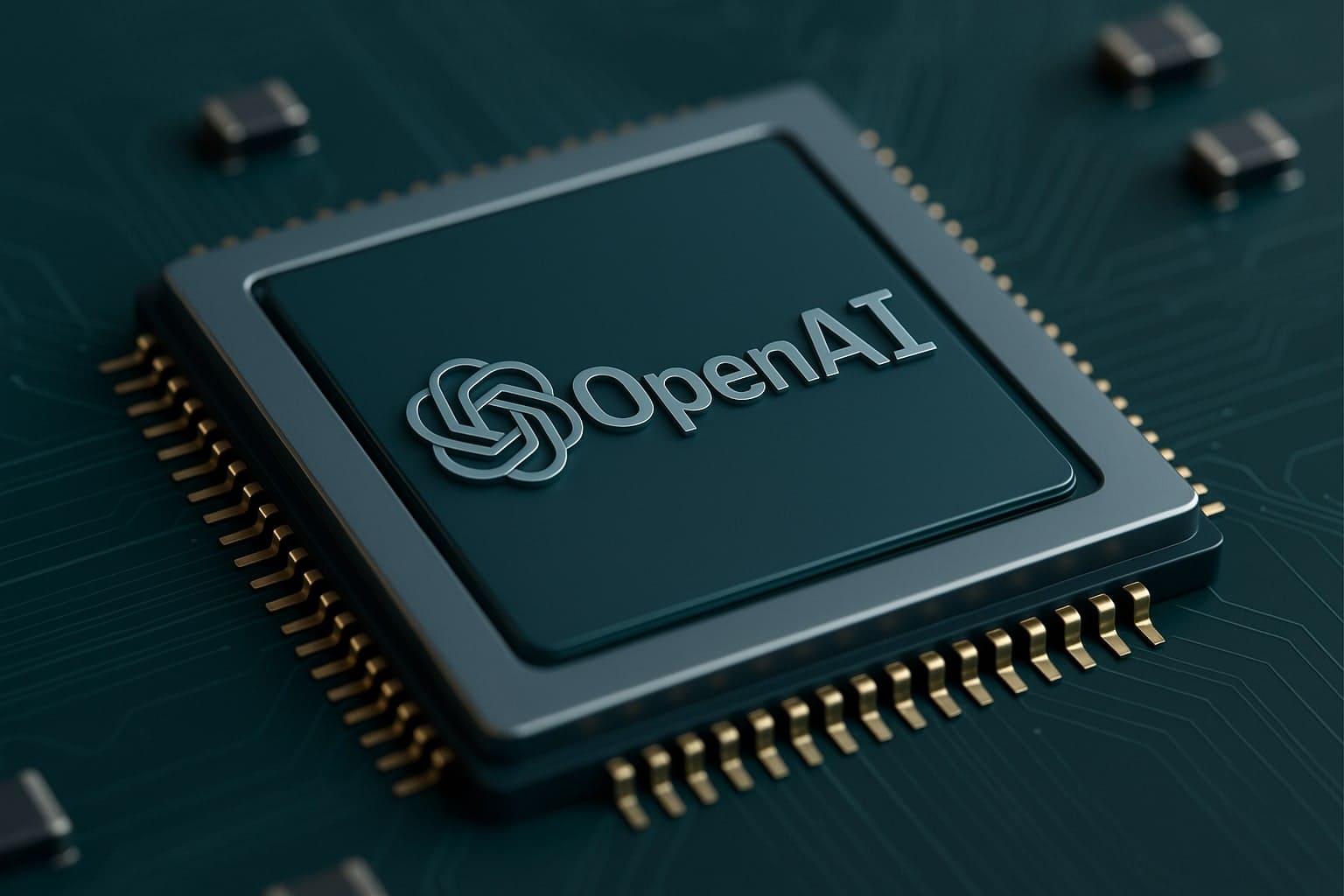
OpenAI and Broadcom have just unveiled a long-term partnership aimed at reshaping artificial intelligence. The agreement focuses on developing and deploying 10 gigawatts of custom AI accelerators, which OpenAI will design based on its experience with advanced models. Broadcom will handle the manufacturing and deployment of these systems. The project will begin in the second half of 2026 and be completed by the end of 2029. The plan includes racks packed with chips interconnected using Broadcom solutions such as Ethernet, PCIe, and optical connectivity for scale-up and scale-out.
Sam Altman, co-founder and CEO of OpenAI, sees this as a key move toward building infrastructure that will unlock the potential of artificial intelligence and deliver benefits to people and businesses. Hock Tan, president and CEO of Broadcom, describes it as a pivotal moment in the pursuit of artificial general intelligence, as OpenAI is at the forefront of AI development. Greg Brockman, co-founder and president of OpenAI, adds that custom chips will make it possible to embed insights gained from creating advanced models directly into the hardware, opening the door to new levels of capability.
Development and Deployment Details
OpenAI will take responsibility for the design of the chips and complete systems, while Broadcom will handle their manufacturing and deployment in data centers. These accelerators will be optimized for OpenAI's specific needs, based on its development of frontier models. The racks will be fully equipped with Broadcom's networking technologies, including Ethernet for scaling, PCIe for connectivity, and optical solutions for high-speed communication. Deployment will take place both at OpenAI facilities and in partner data centers around the world to meet the growing demand for artificial intelligence.
This collaboration builds on existing agreements between OpenAI and Broadcom for the joint development and supply of accelerators. The companies have signed an agreement to deploy racks containing these chips and networking solutions. Charlie Kawwas, president of the Semiconductor Solutions Group at Broadcom, emphasizes that custom accelerators pair exceptionally well with standards-based Ethernet solutions for scaling, ensuring optimal cost and performance for artificial intelligence infrastructure.
The first systems will come online in the second half of 2026, with full deployment completed by the end of 2029. OpenAI is thus expanding its network of partners, including existing agreements with Nvidia and AMD for computing power. This expansion also includes a recent partnership with AMD for 6 gigawatts of GPUs and with Samsung and SK as part of the Stargate initiative for global artificial intelligence infrastructure.
Market Growth
Broadcom shares jumped 10% following the announcement. OpenAI is joining giants such as Amazon and Google, which are also developing their own artificial intelligence accelerators to gain better control over costs, performance, and supply. While Nvidia remains the dominant player in artificial intelligence hardware, this OpenAI initiative could introduce new competition, although time will tell whether these chips can truly outperform the current leaders.
OpenAI now serves more than 800 million weekly active users, including global companies, small businesses, and developers. This collaboration will help advance OpenAI's mission of ensuring that artificial general intelligence benefits all of humanity. Broadcom sees this as confirmation of the importance of custom accelerators and Ethernet as a key technology for artificial intelligence data centers.


