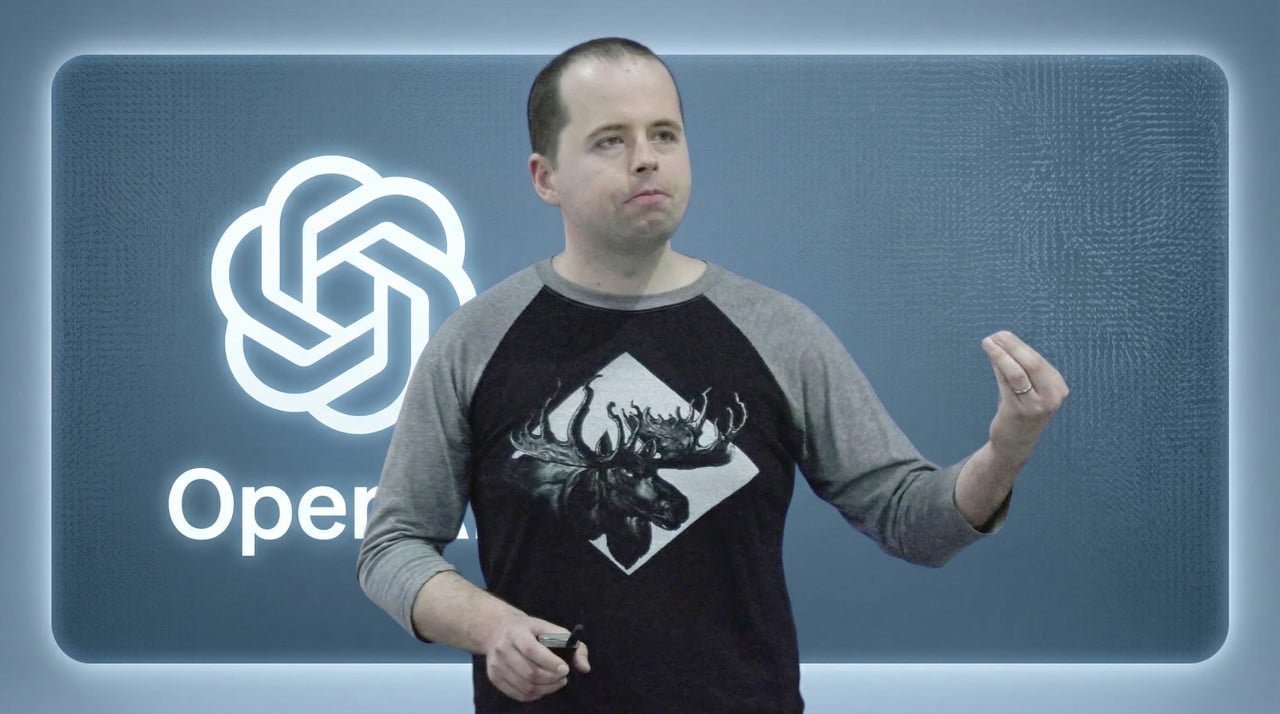
OpenAI has a new goal. Or rather, a new obsession. The San Francisco company that gave the world ChatGPT is now focusing all its efforts on one major project: a fully automated AI researcher capable of solving complex scientific problems entirely on its own. What’s more, it even has a timeline.
By September 2026, OpenAI wants to launch an “autonomous research intern” capable of handling specific scientific tasks without human supervision. And by 2028, it plans to introduce a full-fledged system capable of tackling problems so vast that a human team would not know how to solve them.
The man with a vision: Jakub Pachocki
The person behind the entire plan is Jakub Pachocki, OpenAI’s chief scientist. He played a key role in developing GPT-4 and the so-called reasoning models that power most modern chatbots today. Pachocki told MIT Technology Review: “I think we’re approaching the point where we’ll have models capable of working coherently for an unlimited amount of time, just like humans.”
Interestingly, just a year ago, he did not use autocomplete when writing code. As he admits: “I’m meticulous about my code; I like to take my time typing it out in the Vim editor.” But then he saw what the latest models could do, and his conviction faded. Today, with their help, he can complete experiments over a weekend that would previously have taken him an entire week. This personal transformation seems to have convinced him that the entire scientific world could undergo a similar shift.
Codex was the first attempt
So far, the closest thing to the vision of an autonomous researcher is Codex, which OpenAI launched in January of this year. It is an agentic application built on the GPT-5 model that can write code, analyze documents, compile reports, and automate entire workflows. Pachocki says that most of OpenAI’s technical staff actually use Codex in their work.
But Codex is only a precursor. The real goal is a system that receives an assignment and then works independently for several days, without anyone having to push it forward. “We’re looking for a system that you can give a task that would take a normal person a few days, and it can complete it on its own,” Pachocki explains.
The problems such a researcher could solve range from mathematics and physics to biology and chemistry, as well as business strategies and public policy. Essentially, anything that can be expressed through text, code, or a sketch on a whiteboard.
Enthusiasm and sober skepticism
Not everyone shares Pachocki’s optimism. Doug Downey of the Allen Institute for AI and his team tested leading language models on scientific tasks last year. GPT-5 performed best, but it still made enough errors to be a problem. “When you chain tasks together, the chances of getting all of them right quickly decrease,” Downey warns.
Still, he acknowledges that progress is moving so quickly that his findings may already be outdated. OpenAI has since released GPT-5.4, so what was true last autumn may no longer be true today. And therein lies the peculiar tension surrounding the entire project. It is a race in which both the starting line and the finish line are moving at the same time.
Could something go wrong?
Pachocki is not naive. In the interview, he identified what keeps him awake at night: what if a system capable of running an entire research program does something wrong? Whether because it gets out of control, is attacked by hackers, or simply misunderstands its assignment. For now, OpenAI’s answer is what is known as chain-of-thought monitoring. As the models work, they write notes in a kind of notebook, and other models continuously check those notes. OpenAI is actively testing this approach internally on Codex.
“Until we truly trust the system, we need to have restrictions,” Pachocki says. In his view, powerful models should operate in closed environments, isolated from anything they might damage.
But the question remains: who will ultimately decide where the boundaries lie? Pachocki believes governments and lawmakers should be involved. He says he feels a personal responsibility, but he also knows that OpenAI cannot solve this alone. And yet OpenAI recently signed a contract with the U.S. Pentagon after Anthropic refused to do so. Words about responsibility and actions do not always go hand in hand.
An entire laboratory in a data center
Pachocki has a specific vision of what the world will look like once this goal is achieved: “A data center capable of doing all the work that the entirety of OpenAI or Google does today. Things that once required large human organizations will suddenly be handled by just a few people.”
Pachocki admits that he does not expect systems to be as intelligent as humans in every respect by 2028. But he immediately adds: “You don’t need to be as intelligent as a human at everything to be truly transformative.”