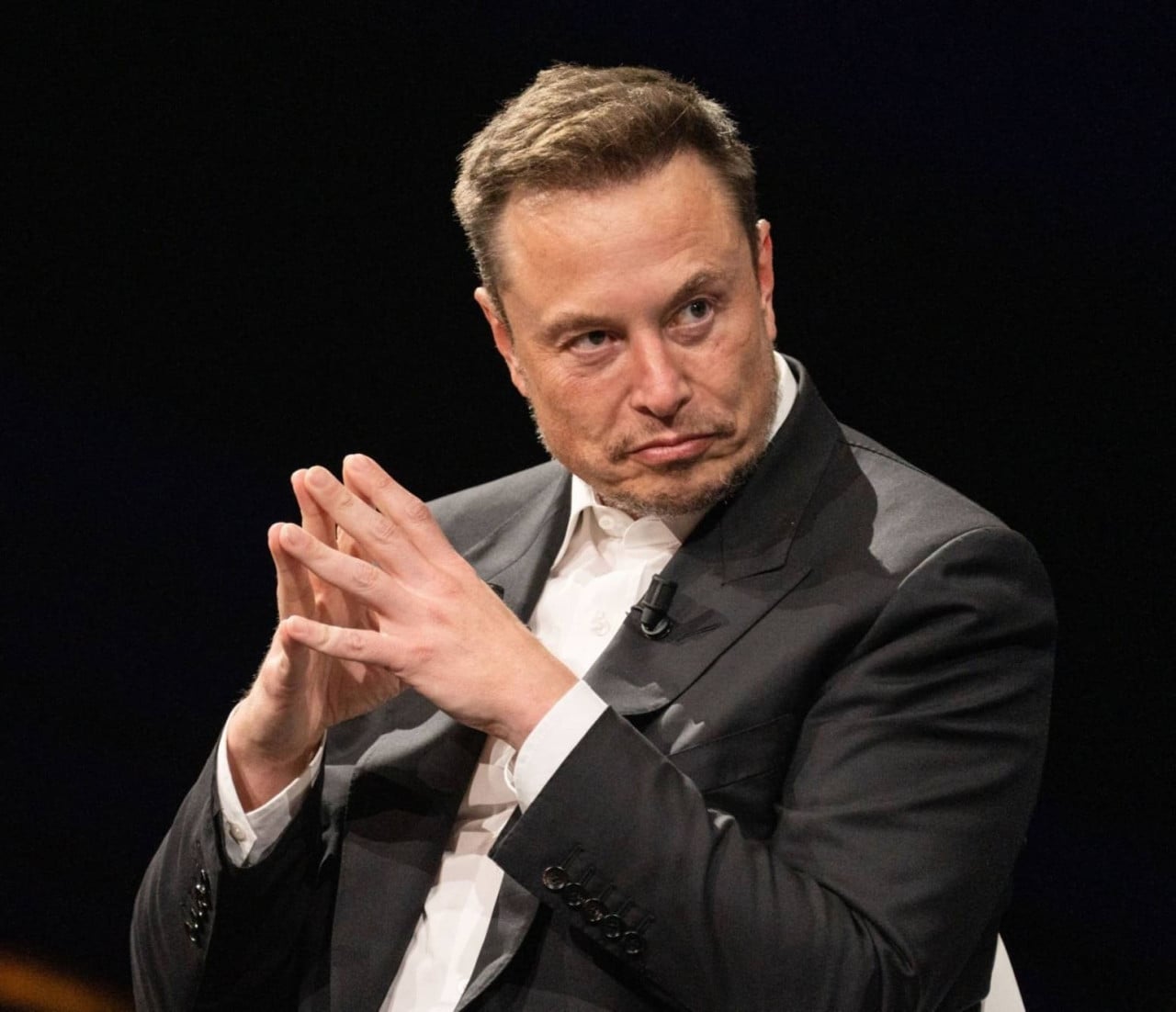
Elon Musk stood on stage with the expression of someone about to announce something everyone else would call madness. This time, it was the Terafab project, two advanced semiconductor plants to be built in Austin, Texas, supplying chips to both Tesla and SpaceX. And why is he doing it? Simply because the world cannot produce enough for him.
The world produces 20 gigawatts. Musk needs a thousand times more
Current global AI chip production amounts to roughly 20 gigawatts per year. Musk claims that his companies need much more. More precisely, global production covers only about 2 to 3% of his companies’ actual needs for the next generation of humanoid robots, reusable rockets, and driverless vehicles. It is no wonder that he decided to take matters into his own hands.
He thanked the existing suppliers, specifically Samsung, TSMC, and Micron, for their cooperation. But he added that their rate of growth is simply not enough. "We’ll gladly buy every chip they make," he said. "But we simply have to build Terafab."
Two plants, two chips, one site
Terafab will not be one enormous complex, but two separate manufacturing plants on a single site covering approximately 100 million square feet. Each plant will focus on just one type of chip. This simplifies the entire manufacturing process and enables materials to move smoothly between workstations.
The first plant will produce chips for electric vehicles and Optimus humanoid robots—in other words, for his company Tesla. Roughly 20% of total annual production will be used for these terrestrial purposes.
The second plant is an entirely different matter. Chips for SpaceX’s space-based data centers must operate in an environment where conventional electronics quickly fail. High-energy ions, photons, electrical charge buildup, and extreme temperatures. Musk explained that these chips must also operate at higher temperatures than their terrestrial counterparts to minimize the weight of cooling systems aboard satellites. "It’s a hostile environment," he said.
Space-based data centers? Exactly
Meanwhile, in January, SpaceX filed an application with the U.S. Federal Communications Commission for authorization of a so-called orbital data system. This would be a constellation of up to one million satellites using solar energy to power computing infrastructure directly in orbit. For comparison, the existing Starlink network has more than 9,600 satellites. The new plan would exceed it by a factor of one hundred.
The logic behind it is straightforward. As the cost of transportation into space falls, placing computing capacity in orbit becomes economically viable. And no local residents are bothered by noise or water consumption. "Nobody wants a facility like this in their backyard," Musk noted, referring to opposition to terrestrial data centers.
Terafab is a joint plan involving his three companies
The project carries the weight of three of Musk’s companies. Terafab is a joint venture between SpaceX, Tesla, and xAI, with SpaceX having recently acquired xAI. According to several media outlets, the project’s total estimated value is around 25 billion dollars, although Musk himself did not publicly mention any investment figure.
The ambition is clear: Terafab is intended to produce one terawatt of computing capacity annually. To put that into perspective, the entire United States currently generates approximately half a terawatt. Musk wants to double that capacity within a single site. The entire complex is also intended to be completely self-sufficient. Lithography mask creation, logic and memory chip manufacturing, testing, and final packaging are all expected to take place under one roof. Musk described it as an "incredibly fast feedback loop for improving chip design."
When will it be built?
The timeline? It was not mentioned. And it is worth remembering here that Musk has a history of projects that were delayed by years or never progressed beyond words. Even so, this time he appears to have more concrete arguments in hand than usual.
While Terafab is only beginning to take shape, the competition is not standing still. TSMC has completed its second plant in Phoenix, Arizona, and is preparing a third and fourth. Intel is building its plant in Albany, although the project has faced several delays following a change in leadership.
Musk has simply bet on taking control of chip production himself. Will it work out or not? That remains to be seen. But one thing is certain: no one else would announce something like this with such matter-of-fact confidence.
Sources: datacenterdynamics.com and tomshardware.com