What happens when you encounter a human-sized robot in a factory and need to hand it a heavy component? Today, it would most likely stop or slow down. And that is exactly what Nvidia wants to change.
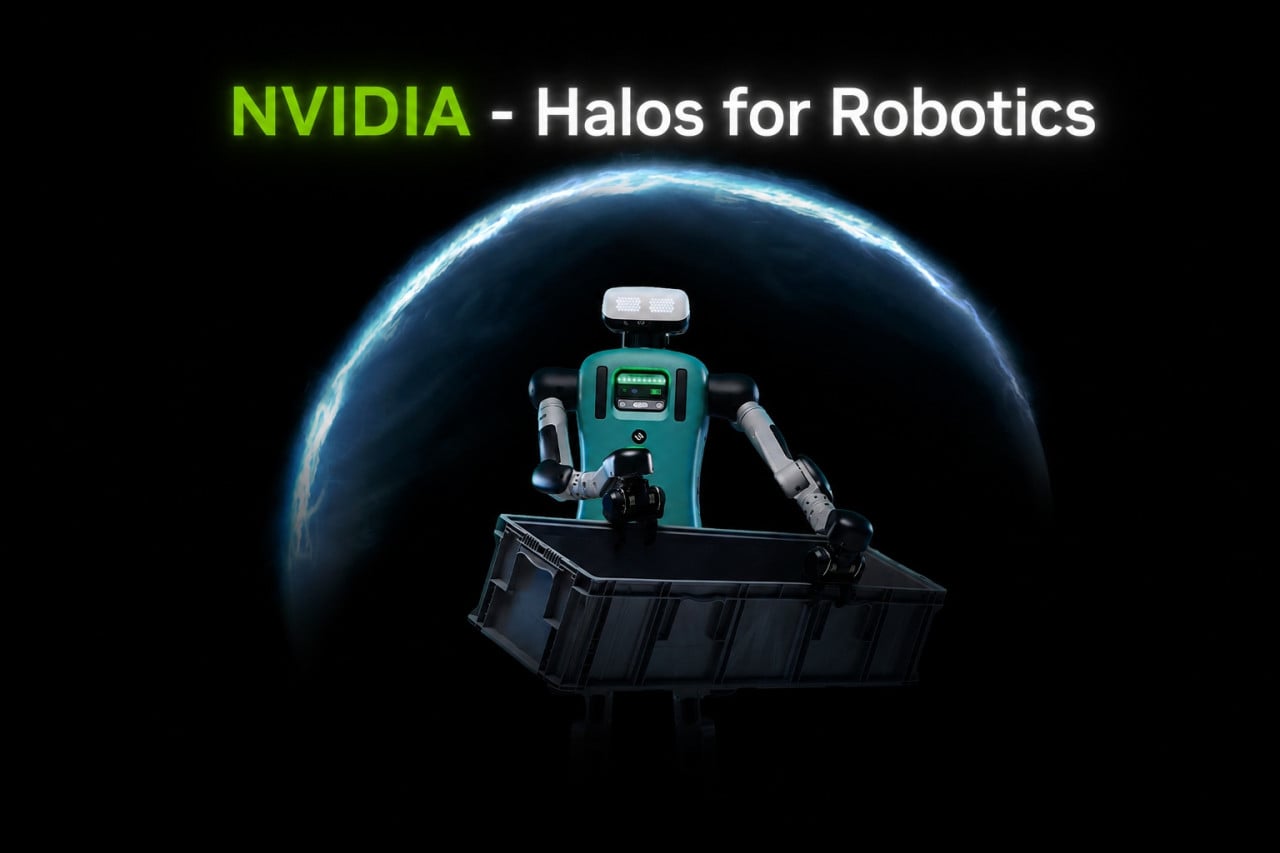
The company has announced the Halos for Robotics system. It describes it as the first-ever complete safety system for humanoid robots and so-called physical artificial intelligence—that is, machines that perceive their surroundings, make decisions, and act autonomously in the real world. It consists of software, chips, sensors, and certification capabilities. All of this is based on technologies Nvidia has spent years developing for self-driving cars.
Today's robots tend to get in people's way
Traditional industrial robots work well. You either enclose them in a cage or place sensors around them that detect an obstacle and immediately stop the machine. But that is not enough for a humanoid.
“When you think about safety for a conventional robot, you basically have to put it in a cage or have sensors that can detect an obstacle and stop the robot,” explained Amit Goel, director of product management at Nvidia. “But that is not enough for a humanoid robot.” The problem is productivity. If the machine stops every time a person approaches it, it will not get much work done. Nor can it help with the tasks for which people would value it most, such as handing a tool to a colleague or lifting something heavy together.
That is why Nvidia wants to give machines a much better understanding of what is happening around them. Halos will run as an operating system on top of its IGX Thor hardware, allowing robots to make their own decisions based on an analysis of their surroundings. The machines will also connect to external sensors. An autonomous forklift, for example, can access warehouse cameras, look around a corner, and assess whether it can continue at full speed or should slow down to avoid hitting something. The difference compared with cars is fundamental. A self-driving vehicle is essentially just trying not to hit anything. A humanoid has to be much smarter.
“The safety design has to be much more sophisticated because, based on what you see around you, you really have to reason about what you can and cannot touch, what you can move, and what you can push,” said Pras Velagapudi, chief technology officer at Agility Robotics. He added that the force of those movements cannot be low. “You cannot get around the problem by making the robot so weak that it merely brushes against a person and nothing happens. Because a robot that weak cannot do any useful work either.”
Agility is deploying humanoids in Amazon warehouses
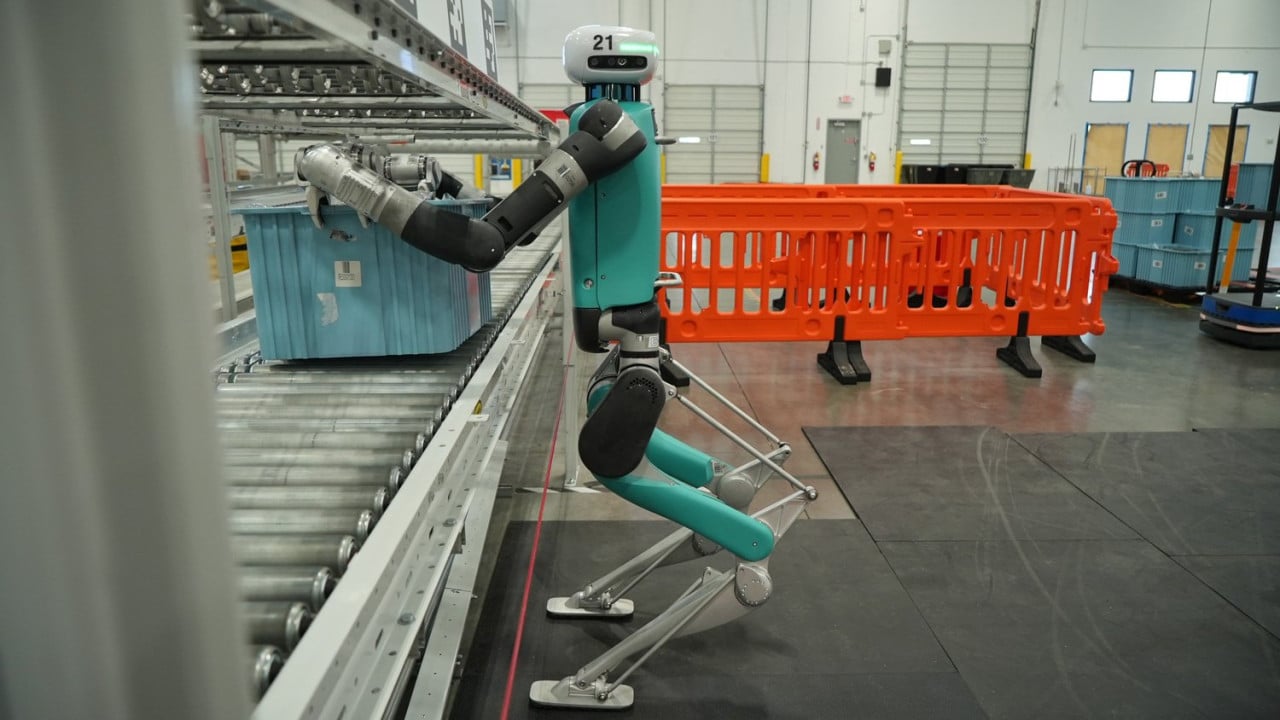
The first customer for the new technology is Agility. The company plans to deploy Halos in its humanoids called Digit, which are already working in manufacturing, warehouses, and logistics for customers such as Amazon, GXO, Schaeffler, and Toyota Motor in Canada.
Agility will integrate two Nvidia components into its own safe human detection system: IGX Thor hardware and the Halos Core software layer. Together, they aim to verify that Digit's software, artificial intelligence components, and cybersecurity meet strict standards before final certification by an independent third party.
“For humanoids to deliver value at scale, safety must be built directly into the robot and validated across the entire system,” said Peggy Johnson, CEO of Agility. According to her, this collaboration opens the door to genuine teamwork between people and machines.
And where does it all begin? In warehouses and logistics, one of the most highly structured environments. “We are starting in warehouses and logistics, which is one of the most structured environments, but it already represents a multi-billion-dollar addressable market,” Velagapudi explained. From there, Agility wants to expand into retail, healthcare, and construction. According to him, robots that care for people directly in their homes will come later, building on experience gained in factories.
Nvidia is focusing on software
Nvidia has created a laboratory where robot manufacturers and their customers can conduct safety tests before seeking the necessary approvals. Nvidia engineers will perform a preliminary review and assist with technical modifications. This laboratory, the Halos AI Systems Inspection Lab, is the first accredited program of its kind for functional safety and artificial intelligence safety in physical AI.
Nvidia is focusing on software and chips for humanoids, not on manufacturing the robots themselves. And that is precisely where it sees the value. Nvidia, currently the world's most valuable company, earns most of its revenue from chips for artificial intelligence data centers. But it is gradually expanding into other areas. It often offers its technologies free of charge in order to make artificial intelligence available to as many people as possible.
Nvidia CEO Jensen Huang has long been a supporter of humanoids. He recently said that Hyundai is leading development in this field. “No one is in a better position,” he told journalists in South Korea. He has also repeatedly praised Tesla's Optimus robot, which Elon Musk has described as potentially the greatest product in the history of the world.
The market promises substantial sums. According to estimates by Barclays, humanoid robotics is expected to generate around $200 billion in revenue by 2035.