

NVIDIA and Foxconn to Unveil Humanoid Robots in November
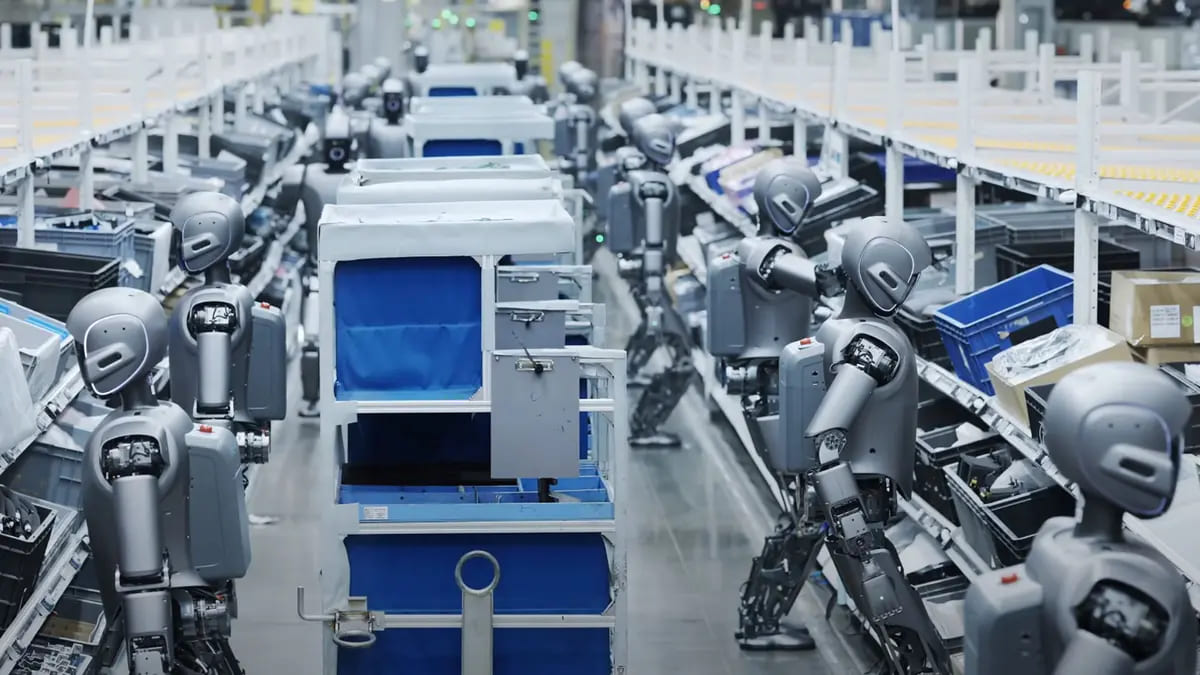
Foxconn, a key supplier for NVIDIA, is preparing to enter the world of humanoid robots. According to information from Taiwan Economic Daily, Foxconn is preparing to manufacture these robots in partnership with NVIDIA. Two versions are expected to be unveiled in November 2025: one with legs and the other with wheels. These robots will first be deployed at the Houston factory where Foxconn manufactures NVIDIA GB300 AI servers. This initiative represents the first deployment of humanoid robots in the manufacturing of NVIDIA products and marks a major step toward automation.
Robot Development and Training
Foxconn is developing its own humanoid robots using hardware and software from NVIDIA. In addition, it has tested models from the Chinese company UBTech. The robots are being trained for specific tasks, such as picking up and placing objects, inserting cables, and assembling components. This training is taking place at the US factory, where advanced AI servers such as Blackwell and Blackwell Ultra are also being manufactured. The robots are expected to be fully operational in early 2026, coinciding with the ramp-up of GB300 AI server production.
Industry and NVIDIA
NVIDIA refers to this field as 'physical AI' (physical artificial intelligence). NVIDIA CEO Jensen Huang has previously emphasized that physical AI could have a greater impact than generative AI or agentic systems because robots will influence everyday life in both commercial and professional settings. Foxconn plans to showcase these robots at its Technology Day in November, where NVIDIA will present its solutions, including the GR00T platform, which incorporates large language models (LLMs) and robotic brains.
Similar advances can also be seen among Chinese companies such as Unitree, which offers the humanoid R1 robot for approximately $5,900. However, the partnership between NVIDIA and Foxconn adds a new dimension by focusing on industrial automation in the US. The specific designs, models, and number of robots have not yet been disclosed, but the November demonstration should provide a first look at this collaboration. This move signals a broader industry shift toward robotic automation.
Source: wccftech.com


