

GPT-5: The New Generation of AI Is Here, Bringing Greater Reliability and Ph.D.-Level Expertise
A few days ago, OpenAI launched the new GPT-5 chat model. And this is not just a cosmetic improvement over the previous version, but an entirely new generation. It promises greater speed, accuracy, and reliability. Is it really that revolutionary?
Every new artificial intelligence model from OpenAI always causes a stir. And GPT-5, launched on August 7, has become one of the most discussed developments of recent days. According to tests, it is said to possess the knowledge of an expert with a Ph.D. and, given its other capabilities, rank among the very best in its field.
A More Human Approach and Maximum Reliability
Although the new ChatGPT-5 initially seemed “colder” and less personal, it is slowly convincing its users otherwise. The new version allows users to switch between “personality modes”. It is entirely up to you whether you prefer a friendly and relaxed tone or a serious and matter-of-fact style of conversation. In short, the new GPT-5 model offers both.
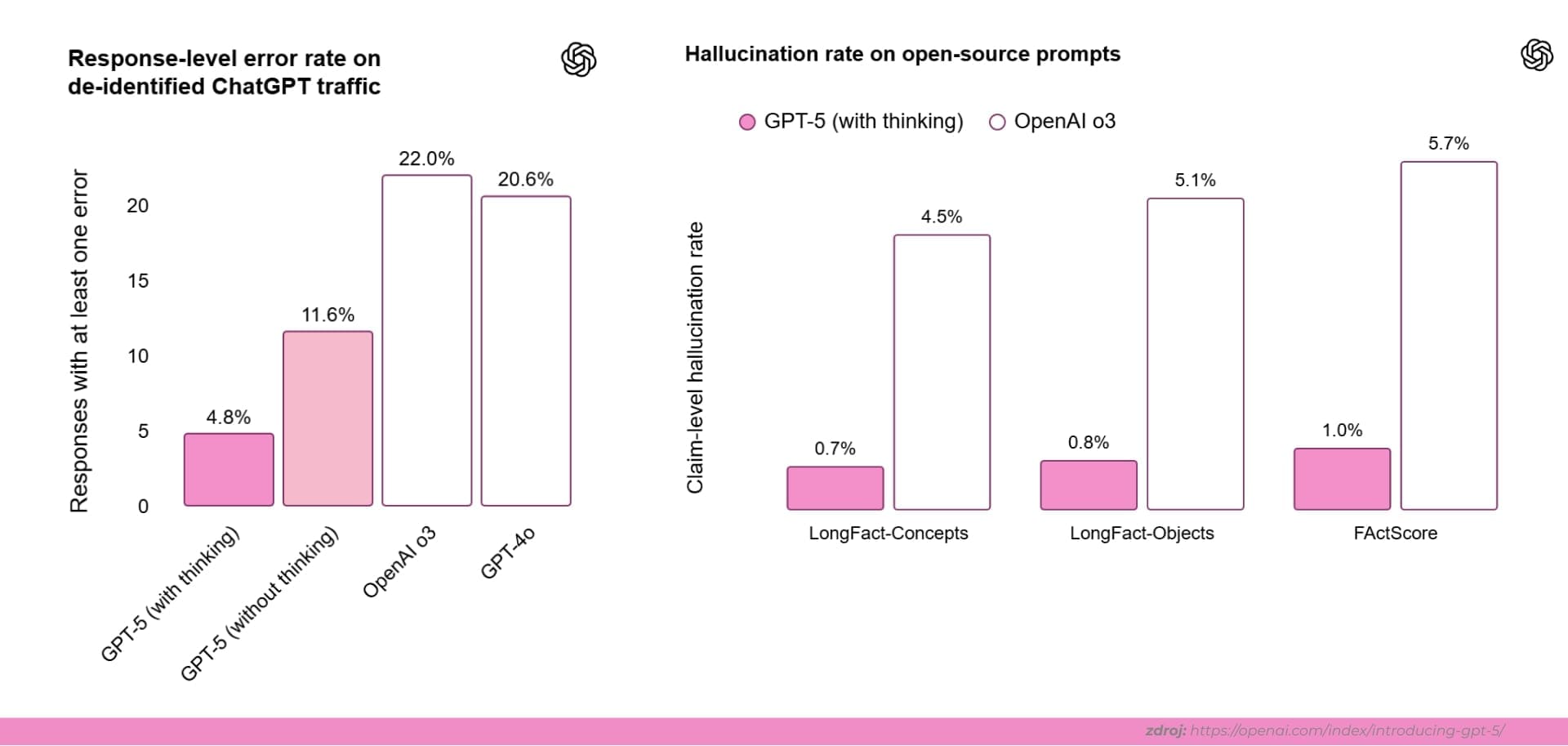
The same progress is also evident in terms of accuracy and reliability. While the previous GPT-4 model was very fond of making things up and would not admit when it could not do something, its successor hallucinates only minimally. It was specifically trained to admit when it does not know something and not overwhelm users with nonsensical information.
In addition to greater accuracy, it also achieves excellent results across all fields, including mathematics, programming, law, science, and finance, and performs exceptionally well on complex or difficult tasks.
Switching Between Modes and Advanced Multimodality
Another major advance lies in the way this AI model thinks. With today’s advanced AI models, you can already quite commonly choose between a “quick answer” and “extended thinking,” where, in addition to the answer, you can also see the entire reasoning process and the path the AI took to reach the result. GPT-5 no longer offers anything like that—it decides for itself which mode and depth of reasoning to use for your task. And that is precisely what ensures even better and more accurate answers.
A Larger Context Window for Better Understanding of Connections
The size of the context window varies from model to model. However, the maximum length can exceed 250 000 tokens, which is roughly twice as much as the best model in the previous GPT-4 generation.
In practice, this means that a single chat can accommodate far more text and data. Users will appreciate this especially when working on longer projects, as the chat remembers the context and maintains continuity more effectively, or when analyzing lengthy files or code.
Number One in Programming
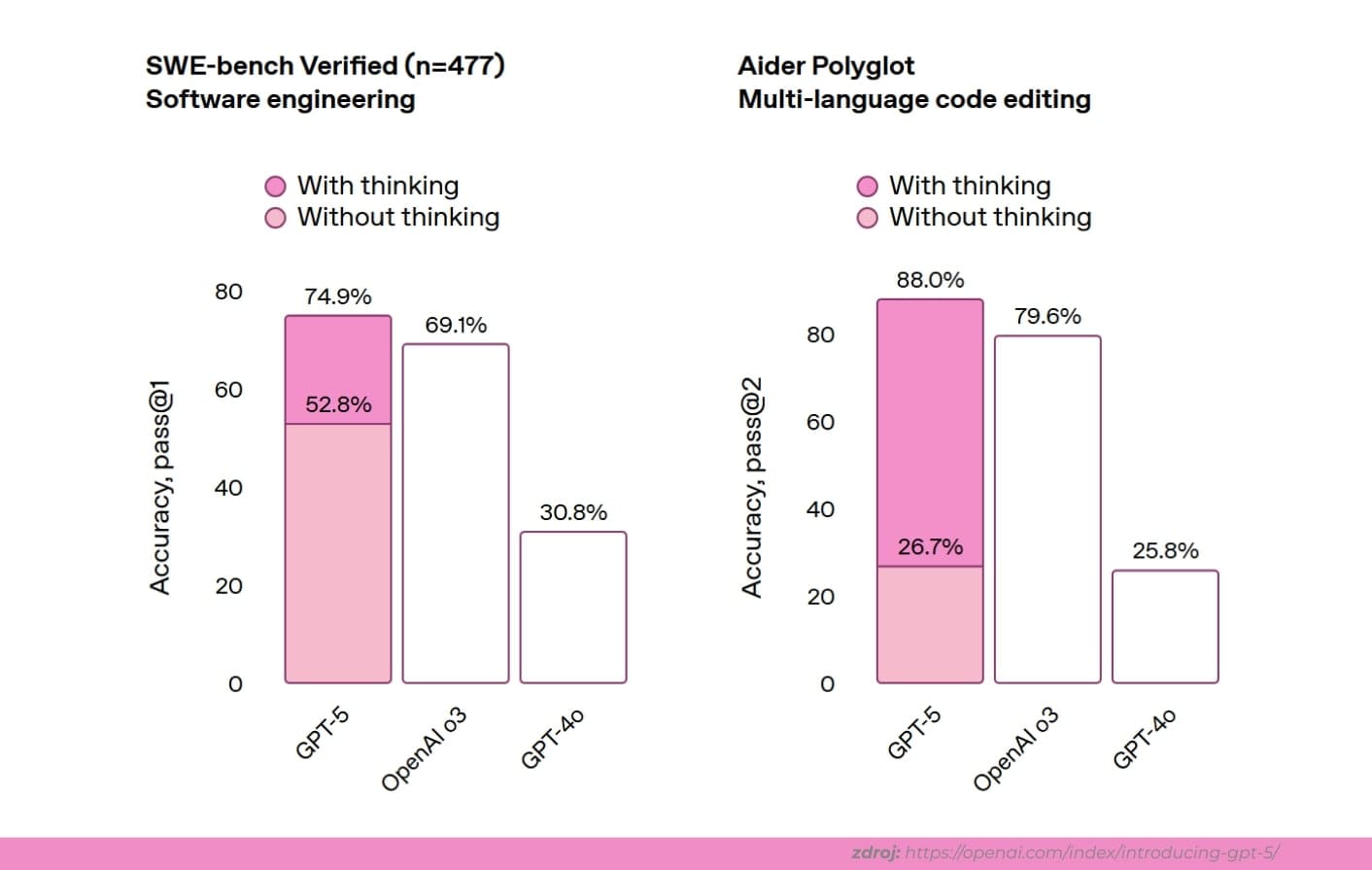
OpenAI’s new model also achieves absolutely remarkable results in programming. It can create entire applications from a simple prompt, makes fewer mistakes, and serves as an effective code-debugging tool. This is demonstrated by the results of the SWE-bench and Aider Polygot tests.
GPT-5 vs. Gemini, Claude, or Grok: Which Is Best?
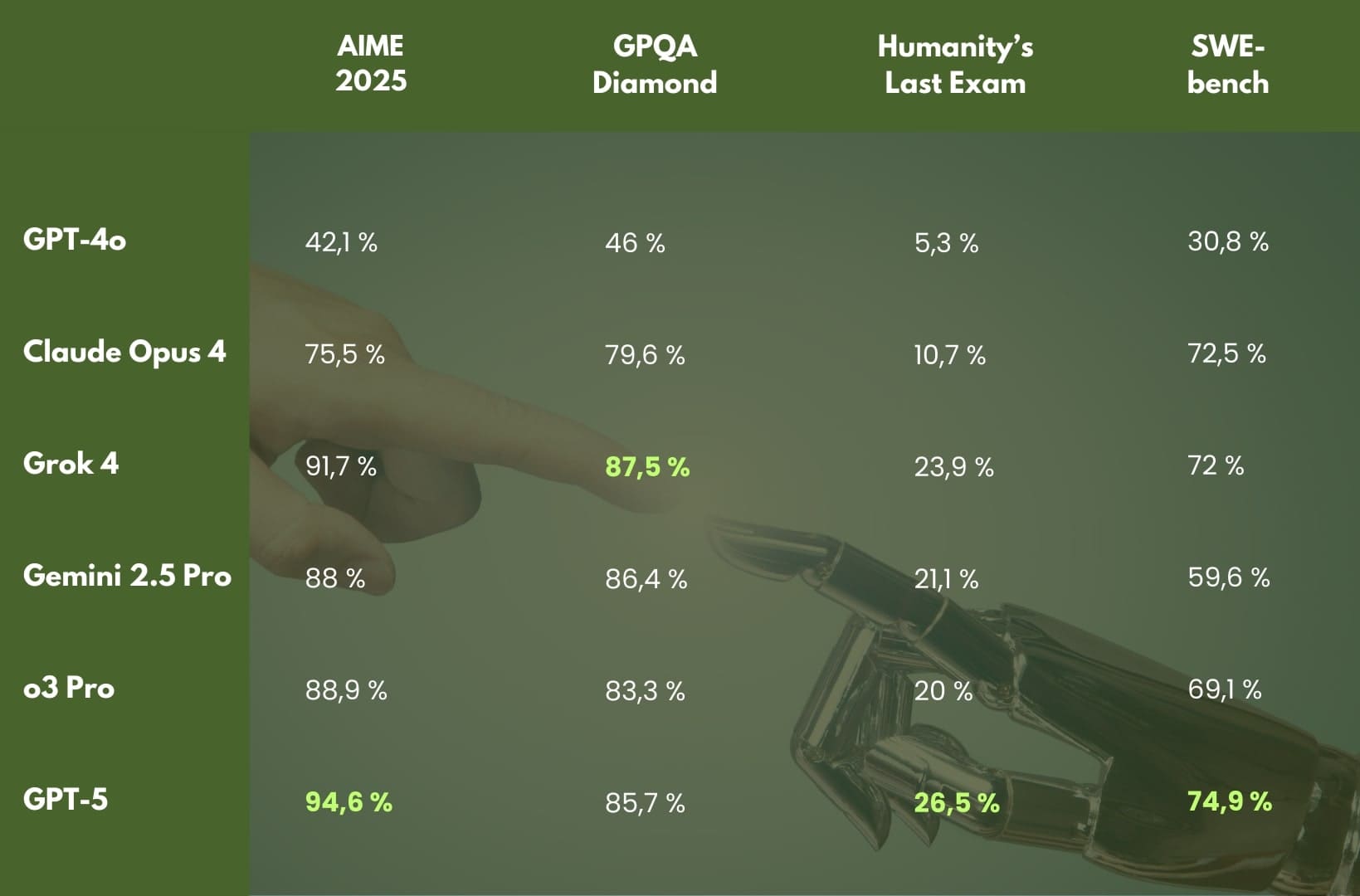
And how does GPT-5 compare with other models? More than well. While Grok 4 was only recently being described as the absolute pinnacle of AI, benchmark results now tell a different story.
GPT-5 defended its top position not only in programming, but also in mathematics and reasoning, as well as in the most difficult benchmark, Humanity’s Last Exam —which consists of 2,500 highly complex questions from a wide variety of fields and aims to determine whether a model merely assembles and reproduces information or truly understands the subject in depth.
Is GPT-5 Worth Trying?
If you enjoy following how far AI can advance, you should definitely try GPT-5. It offers more personal conversations, better text comprehension, greater speed, and minimal hallucinations. In short, it is not merely an eager AI assistant, but a truly professional partner for work, creativity, and conversation.
Source: OpenAI, TechCrunch, BBC


