
New AI Combines Podcasts and Scientific Articles for More Accurate Answers
Researchers at Boston University, led by Vijaya B. Kolachalama, have created an entirely new language model called PodGPT that is transforming access to scientific information. This model uses a unique approach—it learns from more than 3,700 hours of audio content from scientific podcasts in science, technology, engineering, mathematics, and medicine (STEMM).
The research team transcribed the podcast recordings into more than 42 million text tokens, enabling the model to capture a broad range of technical terminology and conversational contexts that are not commonly found in traditional text datasets. This approach represents a major innovation in training language models for scientific applications.
Combining Podcasts with Scientific Literature
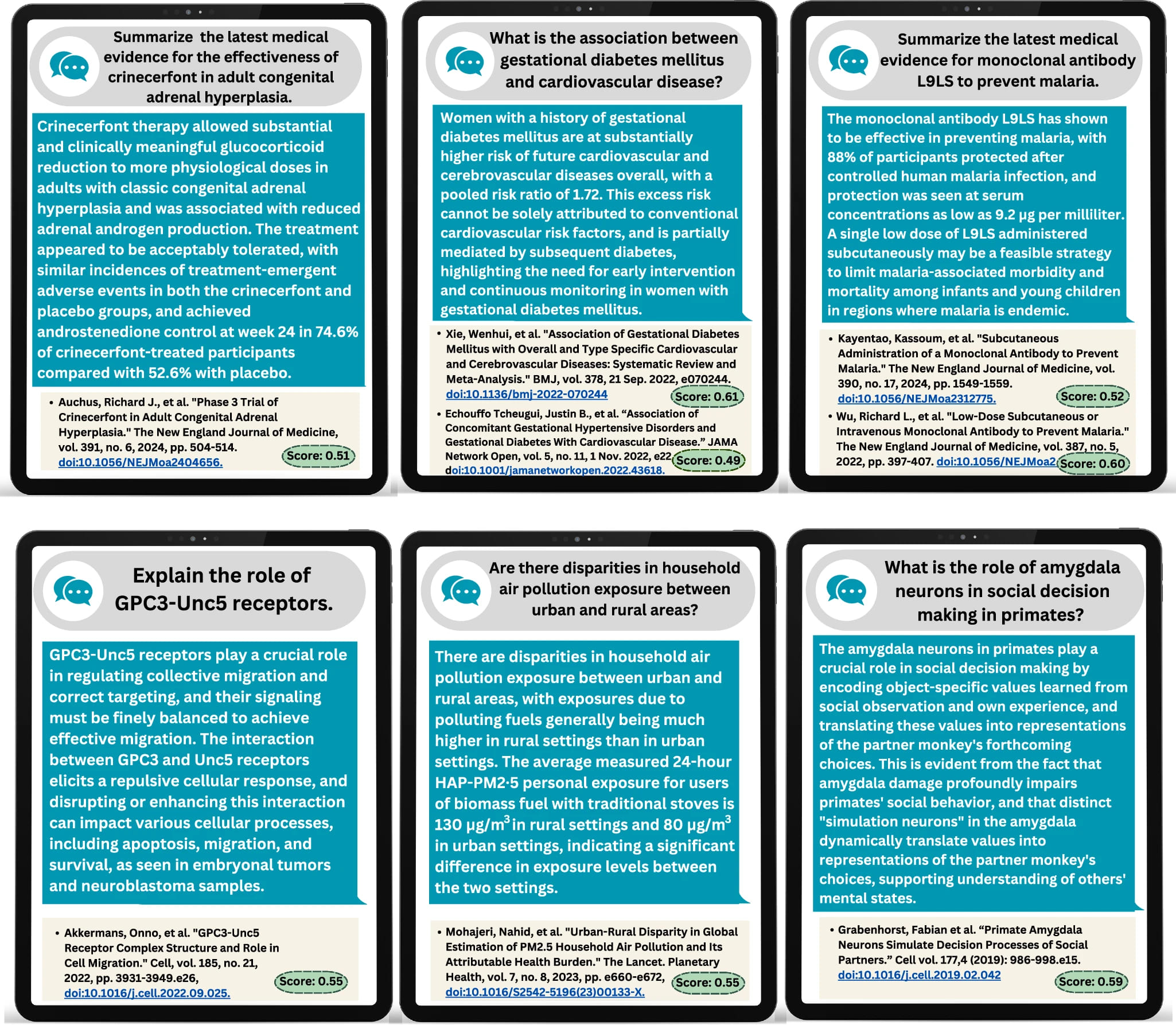
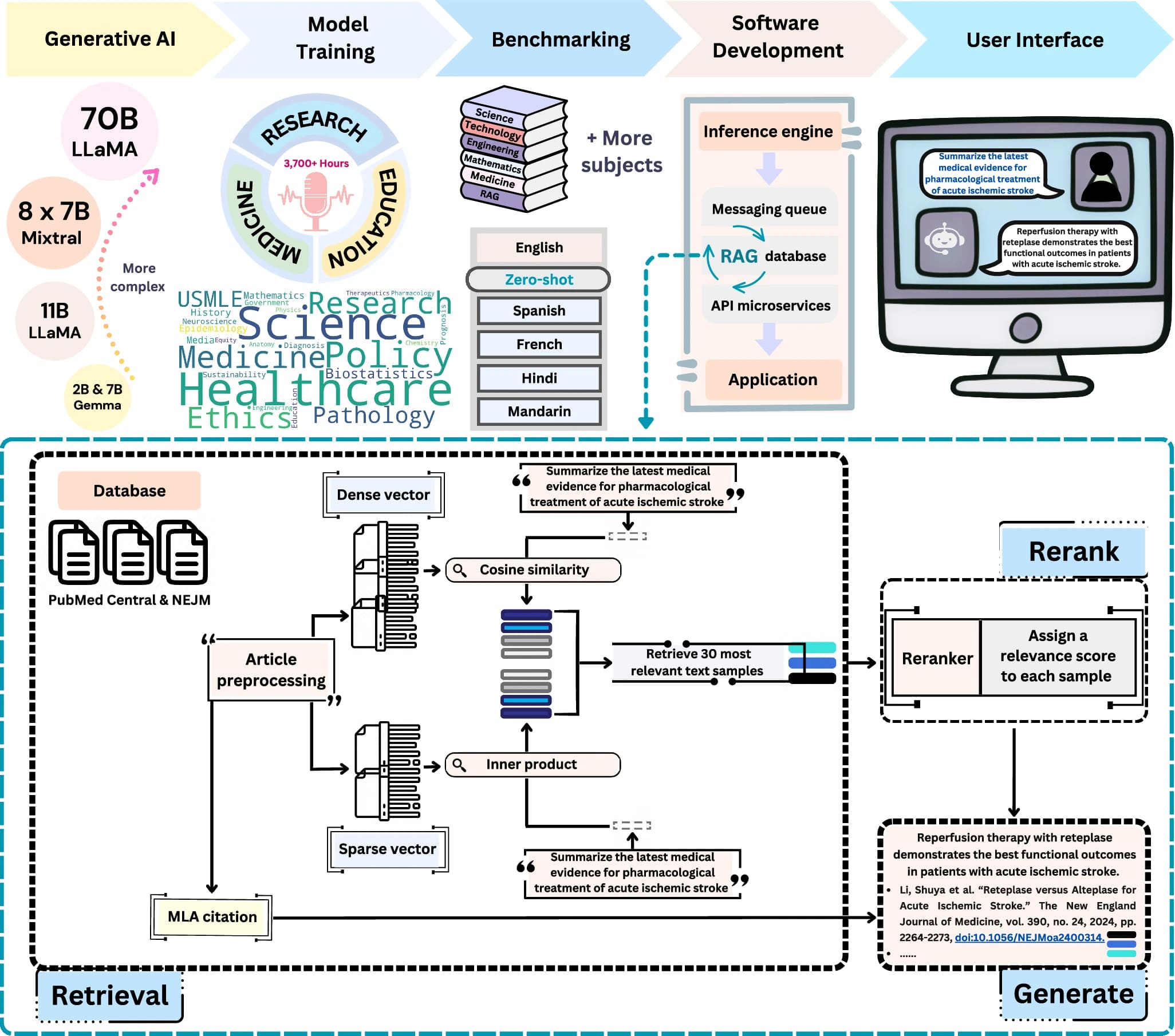
PodGPT uses advanced RAG technology (Retrieval-Augmented Generation), which gives it access to a database of open-access scientific articles. The model can draw information from prestigious sources such as Creative Commons articles in PubMed Central and The New England Journal of Medicine. This database contains articles from major journals, including JAMA Network Open (9,367 articles), Cell (497 articles), and The Lancet (458 articles). The system can retrieve the latest scientific findings in real time and provide answers supported by current research. Each answer is accompanied by relevant links to scientific sources, with relevance scores based on cosine similarity.
Performance Across Languages and Disciplines
When tested on standard datasets such as MedQA, PubMedQA, MedMCQA, and the MMLU STEMM categories, PodGPT outperformed baseline models, including Google Gemma and Meta LLaMA. The model achieved an average improvement of 3.51 percentage points over standard open-source benchmarks and 4.06 percentage points in cross-lingual transfer tasks.
The results for individual languages are particularly impressive. On the Chinese MedQA-MCMLE benchmark, the Gemma 7B model achieved an improvement of 4.39 percentage points. On French benchmarks, PodGPT demonstrated strong performance, with an average improvement of up to 5.04 percentage points for the Gemma 7B model. In Hindi, the model achieved an improvement of up to 9.80 percentage points in biology.
Technical Specifications and Availability
The researchers tested PodGPT across various model sizes ranging from 2B to 70B parameters. They used the Gemma 2B and 7B models, Mixtral 8×7B MoE from Mistral AI, and an instruction-tuned variant of LLaMA 3.3 70B. To reduce computational costs, they implemented low-rank adaptation (LoRA) and an 8-bit quantized AdamW optimizer.
The model is publicly available through a web platform with a user-friendly interface built using ReactJS and NextJS. The infrastructure uses Kubernetes for container orchestration and the vLLM library for efficient deployment of language models.
Practical Applications and the Future
PodGPT represents significant progress in democratizing scientific knowledge. By leveraging podcast content, which often features discussions with leading experts, the model makes scientific findings accessible to a broader audience in a more contextually rich format. Lower perplexity scores on conversational datasets demonstrated the model's ability to generate coherent responses that emulate doctor-patient interactions.
This approach opens up new possibilities for education and research, allowing AI to provide accurate and up-to-date information supported by the latest scientific findings in medicine, biology, chemistry, physics, and other STEMM disciplines.