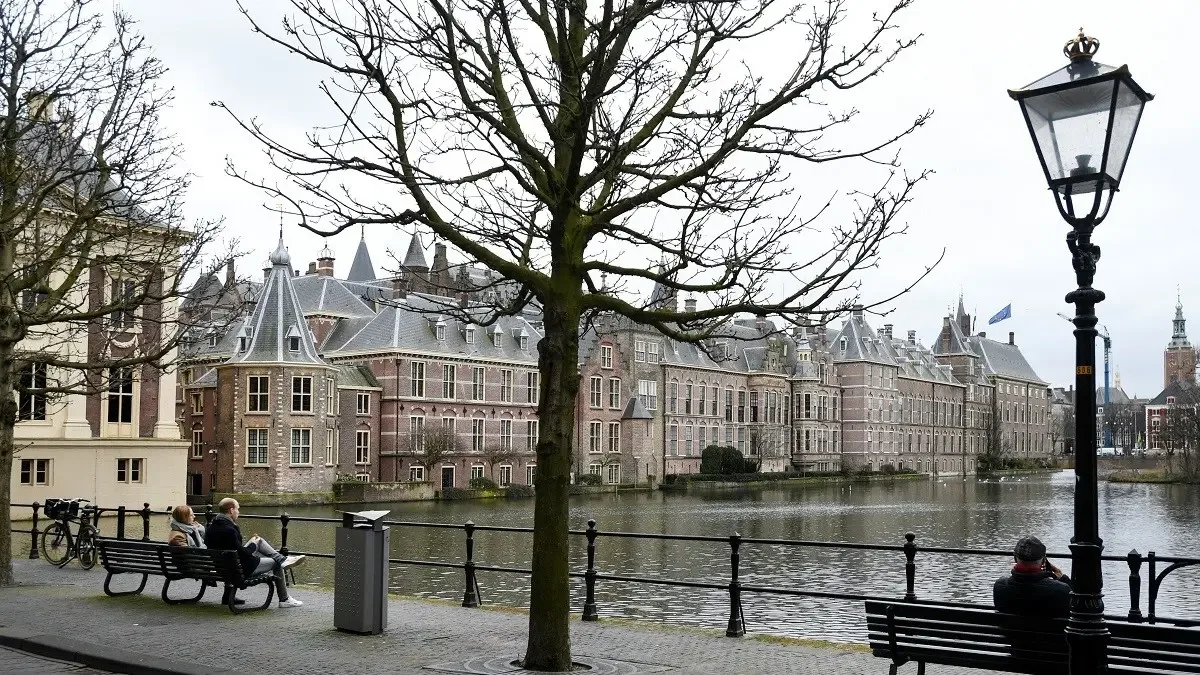
The Dutch government has unveiled a plan that countries around the world are watching closely. As part of an AI-driven cost-cutting program, it wants to eliminate 25,000 civil service jobs and save €3.5 billion annually.
The reason why The Hague is taking such a drastic step is clear from the figures of recent years. At the end of 2025, a record 160,000 civil servants worked for the Dutch state, 41 percent more than in 2018. This happened despite previous governments repeatedly promising to reduce their number. The planned cuts amount to roughly one in every six jobs and, according to the news website DutchNews, will represent a 16 percent reduction by 2035.
The plan is being spearheaded by State Secretary Eric van der Burg, who is responsible for ensuring the efficient operation of the state. We cannot continue doing everything as we have until now, he said. According to him, the government will therefore make difficult decisions so that the state can truly operate more simply, intelligently, and with fewer people.
At the same time, the Netherlands is under less financial pressure than many other countries. Its budget deficit of 1.8 percent is among the lowest in the entire European Union. But in a country that prides itself on prudent financial management, even such a figure raises concerns, especially because of its long-term outlook.
Savings will be phased in through 2035
The government wants to save €900 million annually by 2027 and €3.5 billion annually from 2035 onward. According to the government statement, this corresponds to roughly 25,000 jobs spread over several years. However, the figure is not yet final because it is only an estimate, and the government has not yet specified how many of these jobs are to be replaced specifically by artificial intelligence. According to the Dutch public broadcaster NOS, van der Burg has not yet said how many people will have to leave each ministry either.
What is certain is that the cuts will not affect everyone equally. The police and armed forces are exempt. Ministries, inspectorates, and executive agencies will bear the brunt, with some departments potentially losing 45 or even 60 percent of their staff, according to a letter van der Burg sent to parliament.
How can the same amount of work suddenly be done by so many fewer people? The government is relying on two things. The first is eliminating unnecessary rules. According to van der Burg, the main program, which is intended to abolish 500 unnecessary or excessively complex regulations each year, should significantly streamline the entire state apparatus and reduce the need for additional employees.
AI with a European label
The second pillar is technology. Various artificial intelligence projects have already been running in several areas of the civil service in recent years, and the government wants to expand them so that officials can handle more work. As an example, van der Burg cited the use of digital systems to review tax returns. The government also wants to save money by standardizing computer systems across public authorities. Details are still lacking, and the cabinet will present a specific plan for deploying artificial intelligence at the beginning of next year.
Pressure is also coming from parliament. Van der Burg pointed to a series of non-binding resolutions in which lawmakers call on the government to use artificial intelligence to increase civil service productivity by 20 percent.
The plan also has a less visible aspect. The government wants to cooperate as much as possible with Dutch and European suppliers to avoid becoming dependent on technologies from countries outside Europe.
Questions remain, however. It is unclear whether some of the work can be automated without people receiving poorer services from public authorities. Nor is the Netherlands the only country pursuing this path. Companies are also increasingly relying on artificial intelligence to reduce staff numbers. Microsoft recently offered severance packages to roughly 60,000 people, while Deutsche Telekom wants to use AI to save around €2.5 billion by 2030.
Sources: thestar.com, bloomberg.com and theprint.in