

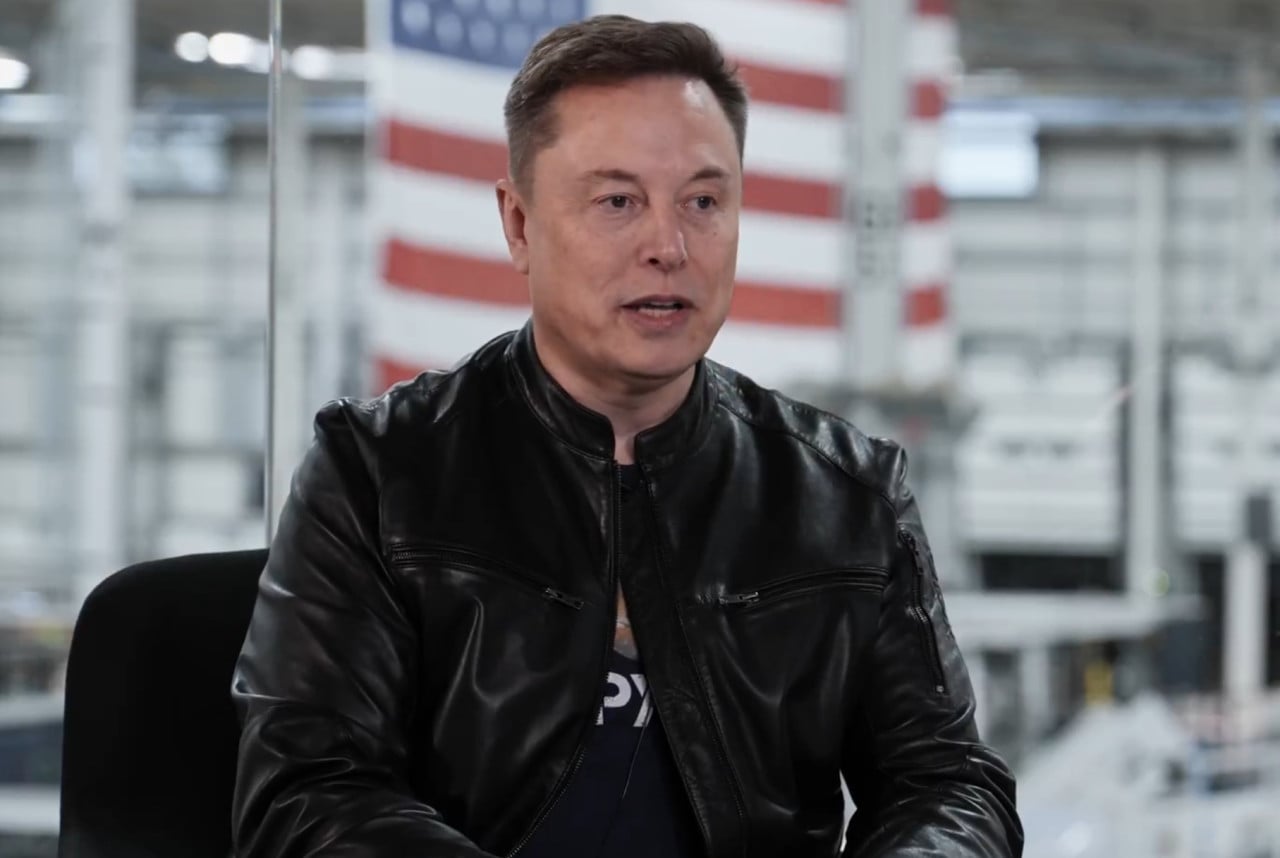
Elon Musk has shown the world the most detailed look yet at a satellite designed to operate as a data center in orbit. SpaceX calls it AI1 and plans to send up to a million of them into space. It will be the largest satellite the company has ever launched. SpaceX is heading to the stock market this week with a valuation of around $1.75 trillion, making its listing the largest initial public offering in history.
Wings Spanning More Than 70 Meters and Enough Power for Thousands of Chips
In a half-hour video posted on X on Monday, Musk revealed the machine’s technical specifications. The satellite will be 20 meters tall, and its solar panels will extend to a width of 70 meters. For comparison, that is roughly the length of a soccer field. Inside will be a rack full of artificial intelligence chips powered by the massive solar panels. Liquid radiators will dissipate excess heat. According to the published figures, the satellite should deliver an average computing power of 120 kilowatts, peaking at 150 kilowatts.
Musk described the entire design as “working version 1.” In other words, the final form may still change. However, it is based on technologies that SpaceX has spent years refining on Starlink satellites.
Could a data center in space be simpler than an internet satellite? Musk says yes. “An AI satellite is basically a lot of solar cells, a radiator, and a few laser links. But you don’t need all those extremely complex antennas that Starlink has,” he explained in the video. “If you choose between the two, the AI satellite is easier to design.”
The catch lies elsewhere. Data satellites must be significantly larger than Starlink satellites. And that is where the new factory comes in.
Watch @ElonMusk provide a technical update on SpaceX’s capability to manufacture, launch, and operate AI satellites at scale → https://t.co/PSCyWrNsOg pic.twitter.com/vhtr46uax7
— SpaceX (@SpaceX) June 8, 2026
The solar panels will be manufactured in Bastrop, Texas, where SpaceX already produces Starlink user terminals. The facility, named Gigasat, will expand to more than 11 million square feet, or over one million square meters. Solar panel production is already underway, and according to Musk, the entire factory should be operating at “decent volume” by the end of next year.
Nvidia will supply the chips for the first satellites, as confirmed by SpaceX Chief Financial Officer Bret Johnsen. They are later expected to be replaced by specialized radiation-resistant semiconductors from the Terafab factory, which SpaceX is building together with Tesla and Intel. It is expected to be roughly ten times larger than Tesla’s largest plant in Austin.
One Million Satellites and Concerns About Space Debris
The plan calls for launching up to one million satellites, and the US telecommunications regulator, the FCC, has already accepted SpaceX’s corresponding application. The key to deployment on such a massive scale is expected to be the Starship rocket, which could eventually launch several times per hour.
What do critics say? They most often mention the risk of space debris and the so-called Kessler syndrome, in which satellite collisions would trigger a chain reaction of debris. Musk dismisses these objections by pointing to the scale involved. According to him, even one million satellites would represent a negligible fraction of the available orbital space. SpaceX also uses automated collision avoidance for Starlink and designs its satellites to burn up in the atmosphere at the end of their service lives.
Musk sees something more in orbital computing. According to him, moving energy-intensive data centers off the planet is a step toward harnessing a much larger share of solar energy and advancing humanity on the Kardashev scale, which measures the advancement of civilizations by the amount of energy they can harness.
The IPO Will Decide Everything
Orbital data centers form the core of SpaceX’s pitch to investors ahead of its stock market debut. In its filings, the company states that its total addressable market is worth $28.5 trillion, of which artificial intelligence accounts for $26.5 trillion.
SpaceX is not relying solely on its own services. Following this year’s merger with Musk’s xAI, it signed agreements with Anthropic and Google to sell them access to its data centers and chips. xAI has also reached an agreement with the startup Cursor regarding a potential acquisition and collaboration on artificial intelligence-assisted programming.
Sources: businessinsider.com, teslarati.com and space.com


