


MIT Student Invents a Way to Restore Paintings Using AI in Just a Few Hours
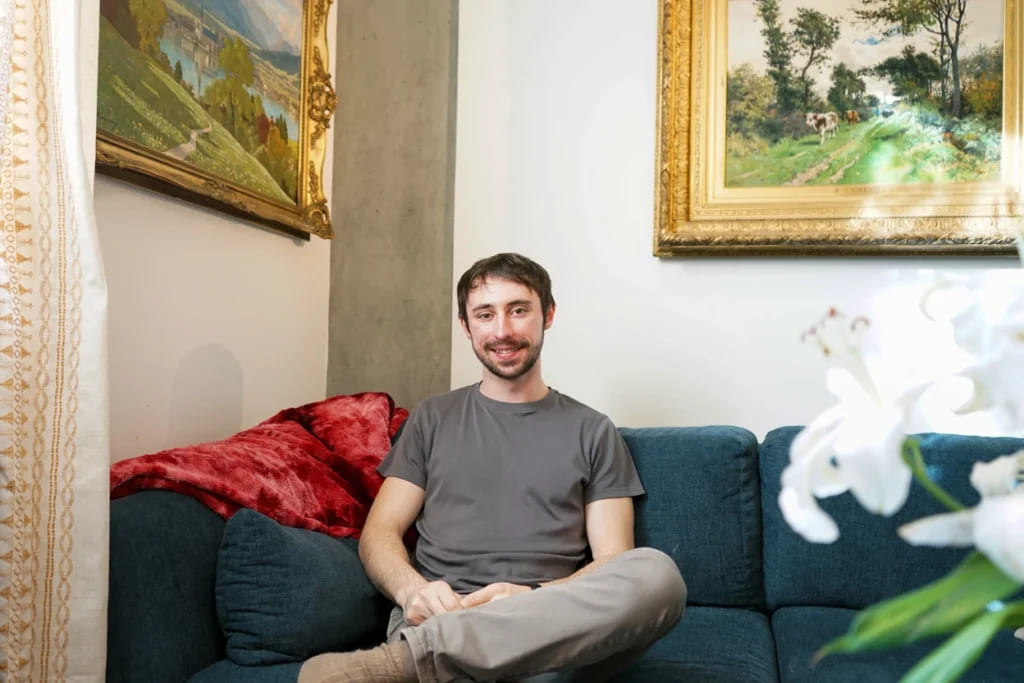
Thanks to a revolutionary invention from MIT (Massachusetts Institute of Technology), restoring damaged paintings could become a dramatically faster and less invasive process. Mechanical engineering graduate Alex Kachkine has developed a groundbreaking technology that uses artificial intelligence and printed polymer masks to restore historic works of art. This method, published in the prestigious journal Nature, can reduce restoration time from months or years to just a few hours.
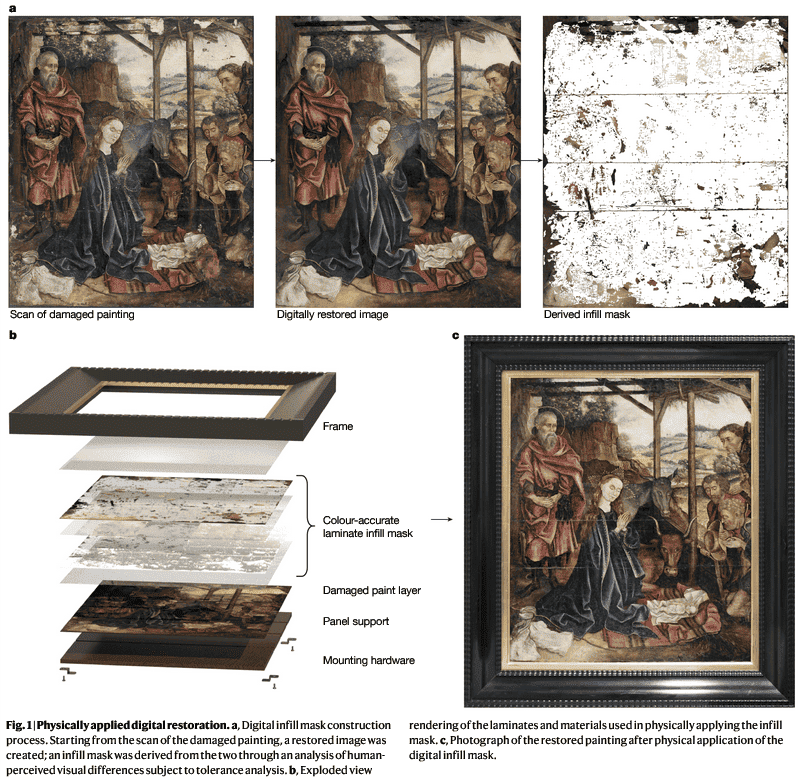
The technology combines advanced AI analysis with precision 3D printing to create thin, transparent polymer films that are applied directly to damaged areas of a painting. Unlike traditional methods of manual inpainting, this approach is fully reversible and leaves no permanent changes to the original work. The entire process begins with traditional cleaning of the painting, during which old repairs and overpainting are removed to reveal the original damaged surface.
Detailed AI-Assisted Restoration Process
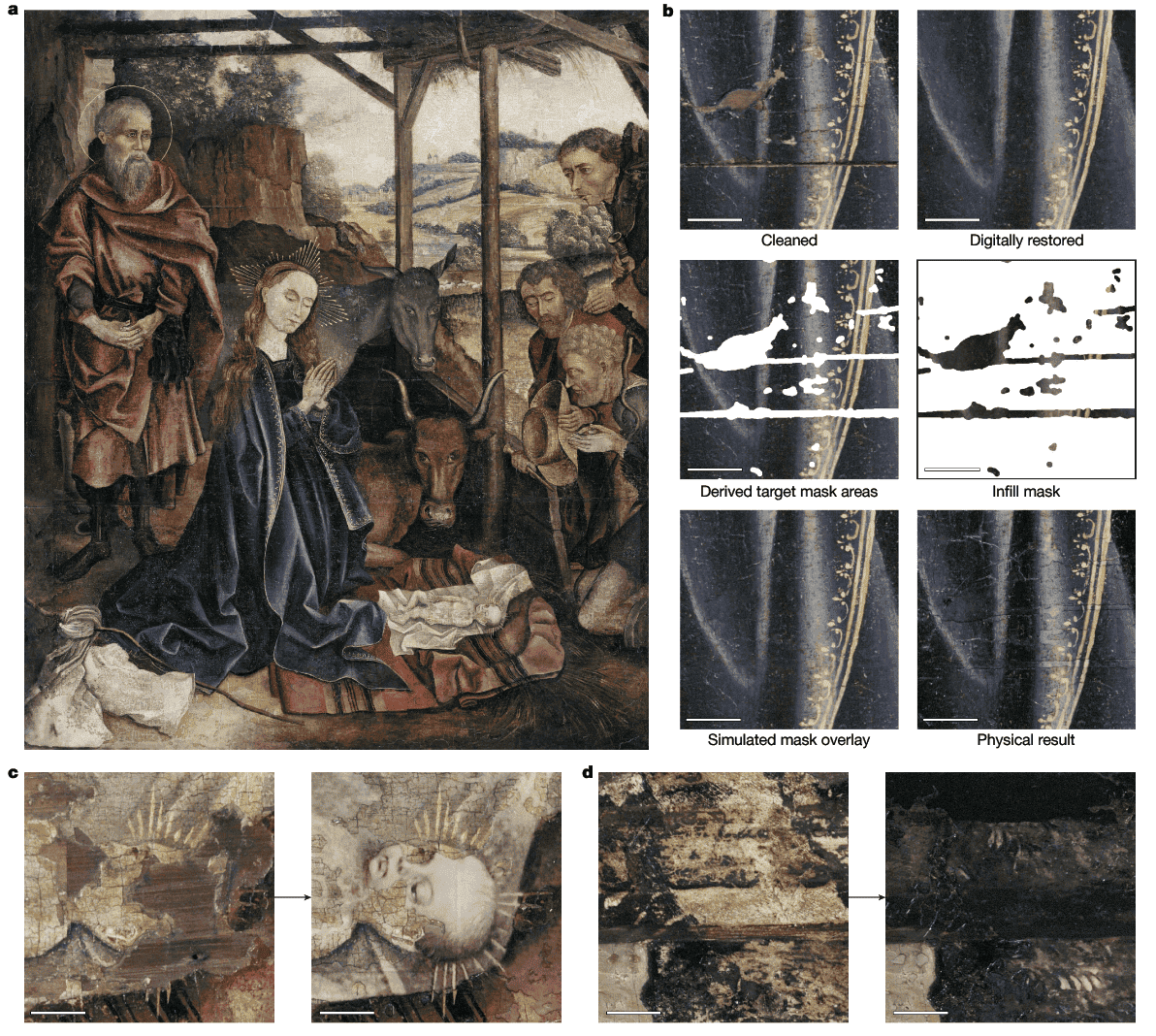
The painting restoration process begins with thoroughly cleaning the artwork of all previous restoration interventions and overpainting. This preparatory phase is followed by the creation of a high-resolution digital scan of the painting's current condition. The acquired data is then analyzed using artificial intelligence algorithms that reconstruct a virtual model of what the painting probably looked like in its original, undamaged state.
Specialized software then creates a precise map of the damaged areas, identifies exactly where filling is required, and determines suitable colors that match the digitally restored version. This mapped data is then printed onto a very thin, transparent polymer film that forms a two-layer mask. The first layer contains the color restoration, while the second layer is printed in white to ensure accurate color reproduction.
Application and Technical Details of the Polymer Mask
The printed polymer mask is carefully aligned and adhered to the original painting using removable varnish. This method allows the restoration to be placed precisely where it is needed, while the rest of the painting remains untouched. A key advantage of this technology is its complete reversibility—the polymer mask can be easily removed at any time without causing any damage to the original artwork.
The process also includes thorough digital documentation of every step of the restoration. All mask files and records of restoration interventions are archived for future conservators, significantly increasing transparency and facilitating future scientific study and conservation efforts. This digital documentation represents a revolution in the recording of restoration work.
Time Savings and Economic Benefits
The most dramatic benefit of this technology is the dramatic reduction in the time required for restoration. While traditional manual restoration can take weeks, months, or even years, the polymer mask method can restore a painting within a few hours. These time savings make restoration more affordable and allow even works that would otherwise remain in storage due to the high costs or labor intensity of manual restoration to be restored.
The technology also eliminates the risk of human error during manual inpainting and ensures consistent quality of results. AI algorithms can analyze the original color scheme and textures with a high degree of accuracy, resulting in more authentic restorations than those performed solely by hand.
Impact on the Future of Art Conservation
This technology has the potential to democratize art restoration and make it more accessible to a wide range of institutions and collectors. The polymer mask method complies with best conservation practices thanks to its reversibility, allowing future experts to reassess or update the restoration as needed without risking damage to the original work.
In addition to preserving cultural heritage for public display and research, this technology opens up new possibilities for museums and galleries, which can now restore works previously considered too damaged or too costly to restore. Digital archiving also creates a valuable database for future generations of conservators and art historians.
Comparison with Traditional Methods
Unlike traditional restoration, which often requires permanent interventions in the original work, MIT's technology offers an entirely new approach. Traditional methods rely on manual inpainting and filling, which are often irreversible and can alter the characteristics of the original work. By contrast, the new technology preserves the work's authenticity by making no permanent changes.
The accuracy of color matching is significantly higher with the AI method thanks to a computer-optimized process, while traditional methods rely on the conservator's subjective judgment. Documentation is also more complete and accurate, creating a valuable record for future experts in the field.
This groundbreaking technology from MIT represents a transformative advance in art conservation, combining artificial intelligence, precise mapping, and removable polymer films to achieve rapid, reversible, and non-invasive restoration. It thus has the potential to democratize the preservation of cultural heritage and safeguard it for future generations.


