

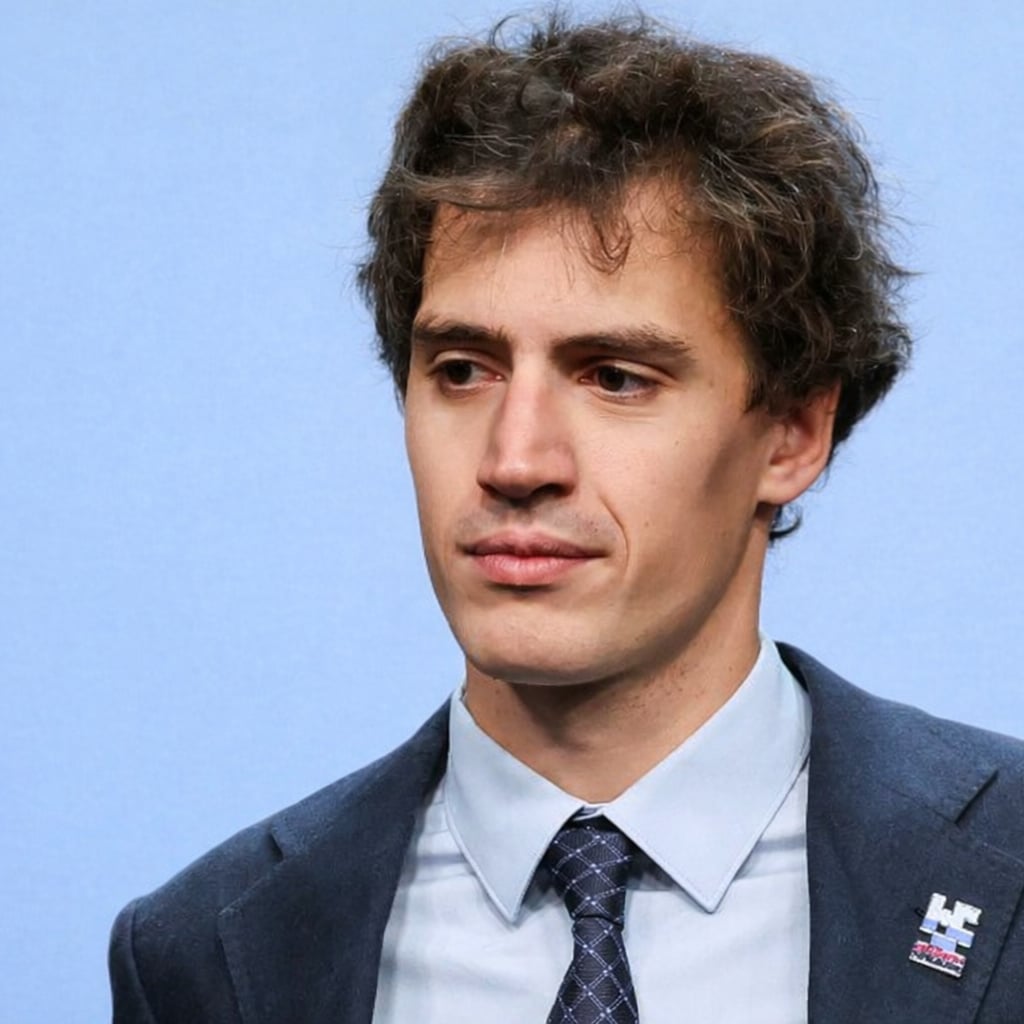
French startup Mistral AI has announced ambitious plans that go far beyond developing language models alone. The company’s CEO, Arthur Mensch, wants to be present across the entire artificial intelligence value chain, from chips in data centers to software applications for corporate customers. And if we are to believe him, Europe cannot afford to underestimate this.
Mistral held its first annual AI Now summit in Paris, where Mensch spoke publicly for the first time about his long-term plans. The company was founded only in April 2023 and is now valued at nearly 12 billion euros.
Its own chips? Mensch says yes
For now, Mistral AI relies on chips from Nvidia. But Mensch made it clear that he has different plans for the future. "Owning chips may come, I think it should come. But right now, we rely on Nvidia, which is a great partner for us, and we are experimenting with different things here and there," Mensch told CNBC.
Custom chips, known as ASICs, allow a company to integrate hardware with software more effectively and significantly reduce the cost of running models. Tokens, the units of data processed by models, are cheaper when using proprietary chips. Custom chips make it possible to reduce the cost of deploying tokens to a meaningful level.
If Mistral were to take this route, it would join American technology giants such as Amazon and Google, which already operate proprietary chips in their data centers. For now, it is merely exploring the possibilities, but the first public acknowledgment of this intention is a signal in itself.
Infrastructure worth 4 billion euros
Alongside its chip ambitions, Mistral announced a new data center in Les Ulis, France, south of Paris. The center will focus exclusively on inference, meaning the actual operation of models in real-world use. In total, Mistral has invested 4 billion euros in data centers in France and Sweden. That is no small sum for a company that generated only 200 million euros last year and is targeting one billion this year.
The new capacity will not be reserved solely for Mistral’s customers. Mensch indicated that other laboratories working with artificial intelligence would also be able to use the computing power. "Artificial intelligence laboratories desperately need computing power, and we have some. Some are asking us for a lot of computing power today," he said.
Europe is falling behind
"Europe is falling behind when it comes to building infrastructure, and we are investing to close that gap," Mensch told CNBC. Two weeks earlier, he appeared before the French National Assembly and warned that unless Europe takes action, it will become a "colony" of the United States in digital technology and artificial intelligence.
Mensch compared artificial intelligence to electricity. "Artificial intelligence is becoming as important as electricity. We need to ensure supplies that are available, affordable, adaptable and secure." He sees the dominance of American cloud companies—Amazon, Microsoft and Google—as a structural problem for the entire continent. "You cannot afford to have a trade deficit of more than one trillion euros if you want to remain competitive in this race. That should concern every one of us."
Mistral generated 200 million euros last year. This year, it is targeting one billion. OpenAI, meanwhile, reached more than 20 billion dollars in annual recurring revenue in 2025. Anthropic is on track to reach nearly 11 billion dollars in the second quarter of 2026 alone. In its sector, Mistral faces rivals with vastly greater resources.
New customers and an agent platform
At the summit, Mistral also announced partnerships with new industrial customers, including Airbus, BMW and French electric utility EDF. The company is thus moving beyond a purely technological profile toward deeper integration into European industry.
At the same time, Mistral launched a new enterprise agent platform called Vibe. The system can independently handle tasks such as writing, programming or complete code deployment across large projects. "The user provides an assignment and can move on. Vibe thinks, designs and delivers a finished result from a single conversation," the company said in a statement. "Vibe is an agent platform for tasks that need to get done," said Chief Technology Officer Timothée Lacroix.
Sources: lemonde.fr and seekingalpha.com


