Anthropic has officially launched Claude Opus 4.8. The new model comes at the same price as its predecessor, but adds faster processing and an entirely new feature for large-scale development projects. Opus 4.8 is another step in the right direction for developers and businesses.
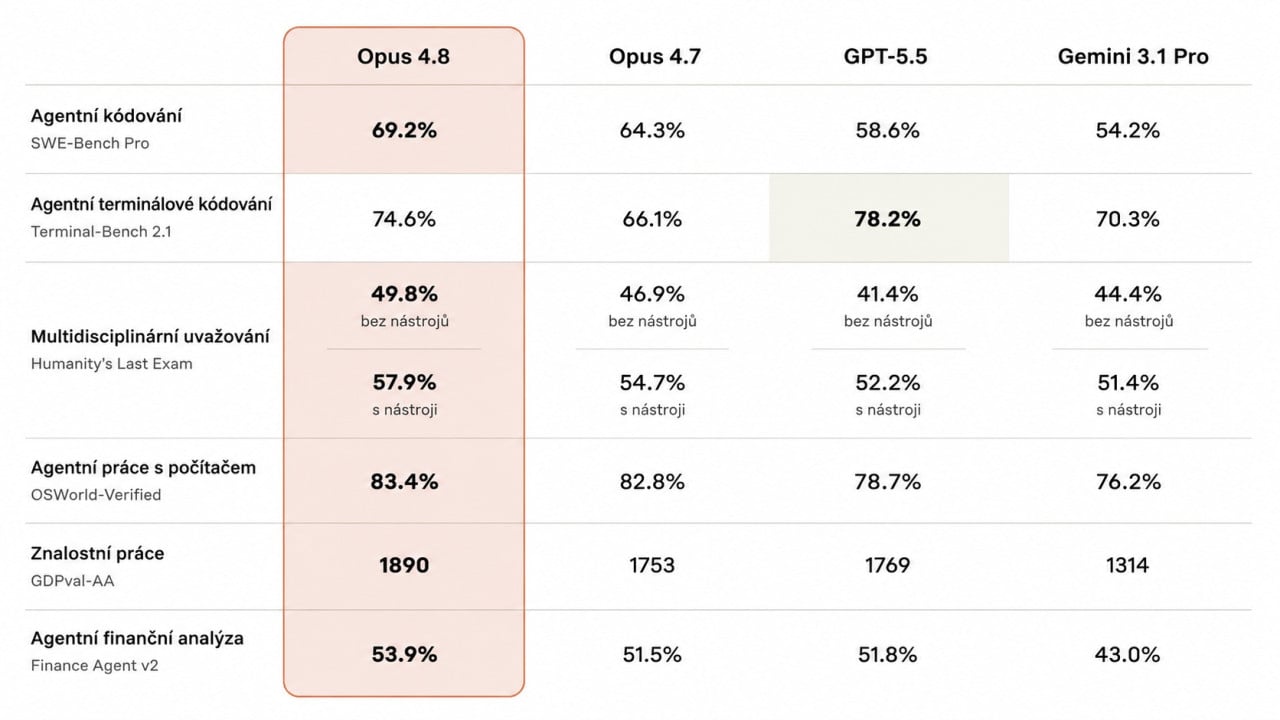
Opus 4.8 builds on its predecessor, Opus 4.7, and focuses on three areas: long-running agentic coding tasks, better calibration of reasoning depth, and more precise tool execution. In practice, this means the model wanders less, skips fewer necessary steps, and handles tasks that take hours or days more effectively.
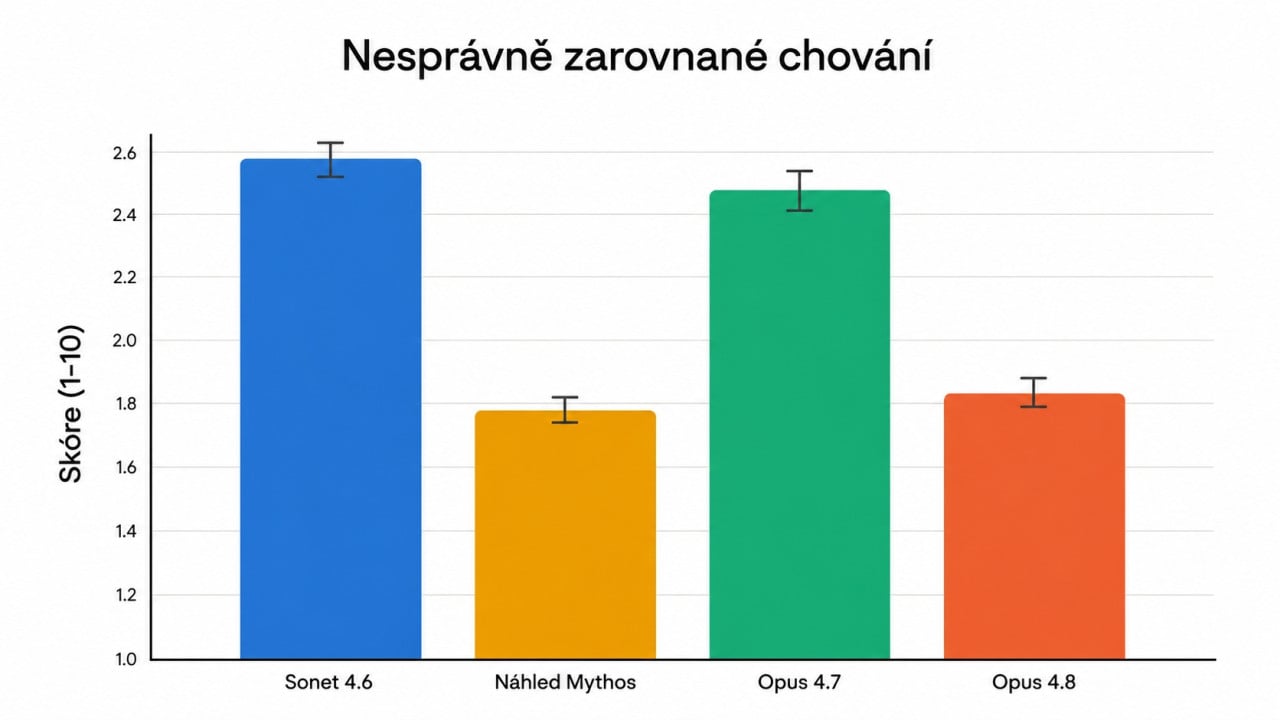
The biggest topic Anthropic discusses is what it calls honesty. AI models tend to present their work confidently even when the result rests on shaky foundations. In Opus 4.8, this habit has been largely curbed. According to an evaluation Anthropic published in the accompanying system document, the new model is approximately four times less likely to let an error in the code pass without comment. It simply asks questions, raises concerns, and acknowledges uncertainty instead of pretending to have confidence it does not possess.
Dynamic Workflows
Alongside the model, Anthropic launched a feature called dynamic workflows, currently available as a research preview in Claude Code. It works by having Claude plan a large-scale task and then divide it among hundreds of parallel sub-agents. It verifies their outputs before submission and returns the result to the user. For example, it can carry out a complete migration of a large codebase containing hundreds of thousands of lines of code, from the very beginning through to the merge, using the existing test suite as a checkpoint. These are tasks that previously required the work of an entire development team.
The feature is available in Claude Code for Enterprise, Team, and Max plans.
Fast Mode and Pricing
Anthropic has added a so-called fast mode, in which Opus 4.8 operates up to 2.5 times faster than under standard settings. This option is now three times cheaper than with previous models: input tokens cost $10 per million, while output tokens cost $50 per million. Standard pricing remains the same as for Opus 4.7: $5 per million input tokens and $25 per million output tokens. Developers who use prompt caching can save up to 90 percent, while batch processing offers savings of 50 percent.
The model has a context window of 1 million tokens and supports up to 128,000 output tokens in a single response.
Thinking Only When Needed
Opus 4.8 uses what is known as adaptive thinking. The model determines whether a given question requires deeper analysis or whether a direct answer will suffice. It responds quickly to simple queries, while taking time to reason through complex, multi-step problems. Compared with the previous model, this offers the advantage of lower token consumption for trivial tasks. The default effort setting is "high," but developers can select higher levels for more demanding asynchronous processes.
The API accepts system messages directly in the middle of a conversation, making it possible to update instructions on the fly without having to rewrite the entire prompt and without losing the stored cache.
What Comes Next?
Anthropic indicates that it is working on models with even greater intelligence than the Opus class. As part of Project Glasswing, a small group of organizations is currently testing Claude Mythos Preview for cybersecurity work. Before these models reach general users, they must meet stricter safety requirements. Anthropic says it is rapidly developing the necessary safeguards and expects general availability within weeks.
Opus 4.8 is available through Anthropic's API, Amazon Web Services, Google Cloud, and Microsoft Foundry.