

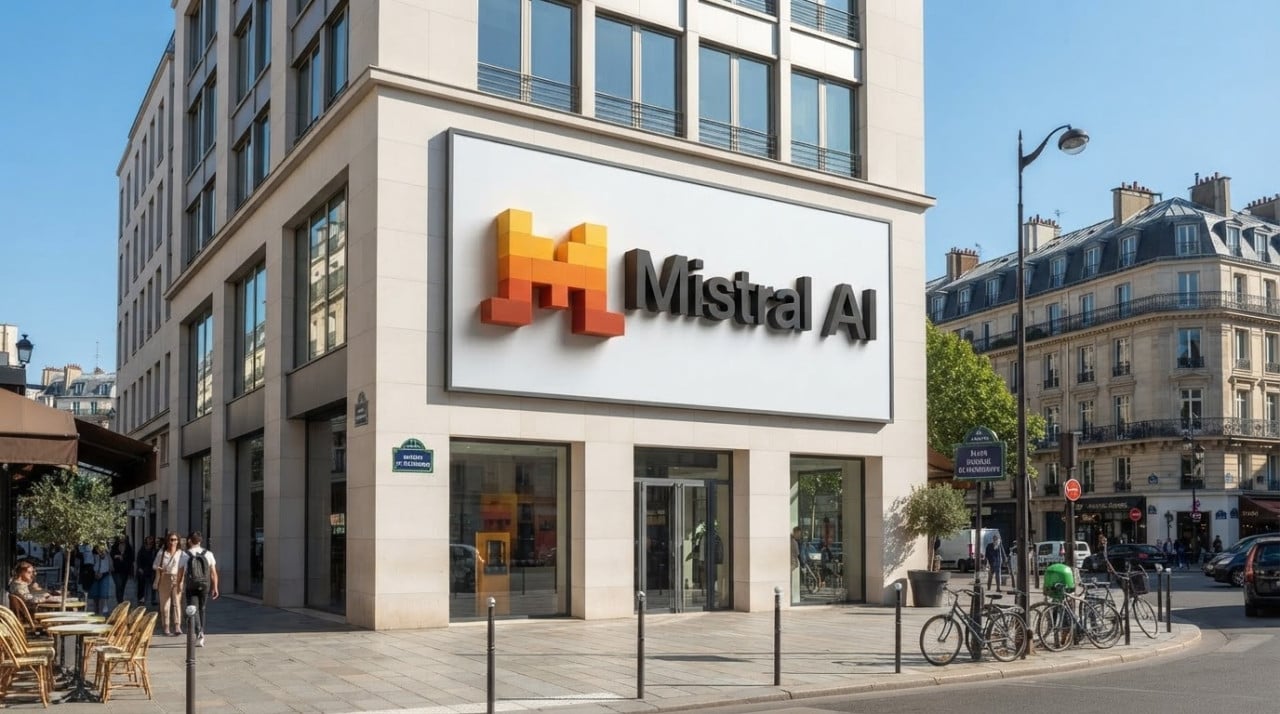
Microsoft announced on Tuesday that it is expanding its partnership with French company Mistral and plans to invest billions of dollars in it. Each side expects something different from the deal: Microsoft wants access to computing capacity located in Europe, while Mistral needs funding and customers for both its models and its newly built data centers. Neither company disclosed the exact amount of money or computing power involved; both spoke only of billions of dollars.
What will the money be used for?
The agreement centers on the leasing of computing power. Microsoft will lease capacity from Mistral’s European data centers to meet growing demand for cloud and AI services on the continent. According to a joint statement, the deal will be worth billions of dollars, but no specific figure has yet been disclosed, nor has the amount of computing power Mistral will provide.
Mistral told AFP that the agreement gives it a clearer view of how to accelerate the financing and development of its Mistral Compute division, its own cloud and infrastructure arm. In other words, Microsoft’s money will help the French company build faster.
The company itself is investing four billion euros in data centers in France and elsewhere in Europe. One data center is already operating near Paris, while another is being built in Sweden. Mistral aims to reach 200 megawatts of capacity by 2027 and one gigawatt by 2030. That is roughly as much as one of France’s dozens of nuclear reactors generates.
What Microsoft wants to gain
The American company is addressing one specific problem. European customers are increasingly insisting that their data and operations remain independent of American companies, particularly at a time when transatlantic relations are strained. Microsoft is trying to present itself as the cloud provider that best understands European concerns about retaining control over technology.
Leasing computing power physically located in Europe is precisely the argument Microsoft hopes will reassure these customers. “Europe should have access to the most capable artificial intelligence in the world without losing control over its data, operations, or digital future,” Microsoft President Brad Smith said in a statement. The company will also gain additional computing capacity at a time when cutting-edge chips are in short supply.
And what Mistral will gain
For Mistral, the agreement is a ticket into a highly lucrative sector: leasing computing power to others. In addition to funding for building data centers, the French company is also gaining something even more valuable: customers. Its models will be offered directly to Microsoft customers.
Mistral CEO and co-founder Arthur Mensch said that Microsoft will help bring their models to companies and public institutions around the world through a platform trusted even by the most demanding, highly regulated industries.
Considering that Mistral was founded only three years ago and has around a thousand employees, this is significant progress. Its plans are still small compared with the hundreds of billions of dollars American companies are pouring into infrastructure, but they place it among developers that not only consume computing power but also sell it.
Two Mistral models, specifically Medium 3.5 and OCR 4, are now available in Microsoft Foundry, where developers can build and customize their own AI applications. The Medium 3.5 model has also been added to Copilot Studio.
The OCR 4 model can process structured documents, while Medium 3.5 is coming to the managed Azure environment as an open-weight model. Microsoft customers can therefore access the French models where they already work with other tools, without having to change their entire workflow.
AI under the customer’s control
A large part of the agreement rests on one word: control. Through Azure and Azure Local, companies can deploy Mistral models in three different modes: in the cloud, in an environment that remains connected to the cloud only as needed, or completely disconnected from the wider internet.
The last option is aimed at industries where isolation from external connectivity is a requirement. Banks and insurance companies, manufacturers, hospitals, and critical infrastructure operators can run artificial intelligence on sensitive data without sending it anywhere outside their own environments. For manufacturers, intellectual property protection, cybersecurity, and supply chain resilience also play a role, while hospitals must consider patient privacy and the physical location of data.
All of this fits into the approach Microsoft calls Sovereign Cloud and builds on commitments to Europe that the company announced in 2025.
Chips from NVIDIA
To build this capacity, Mistral will use thousands of NVIDIA’s latest Vera Rubin chips. These will be used both to train models and to run and deploy them at scale.
NVIDIA’s Ian Buck noted that agentic artificial intelligence is driving demand for powerful, energy-efficient hardware to unprecedented heights, and that deploying Vera Rubin systems at scale will give customers a foundation on which they can build the next generation of AI across Europe.
A joint go-to-market strategy
The two companies also agreed on how they will pursue customers together. They are preparing a joint sales plan and will compete for major clients side by side, both in Europe and elsewhere in the world. They will also provide funding for initial projects, Azure credits, and workshops intended to encourage companies to accelerate adoption.
With this move, Mistral joins a growing number of generative artificial intelligence developers that now sell computing power to others. As the industry grows and cutting-edge chips remain scarce, leasing capacity is becoming a distinct and profitable business.
Sources: microsoft.com, theinformation.com and finance.yahoo.com


