

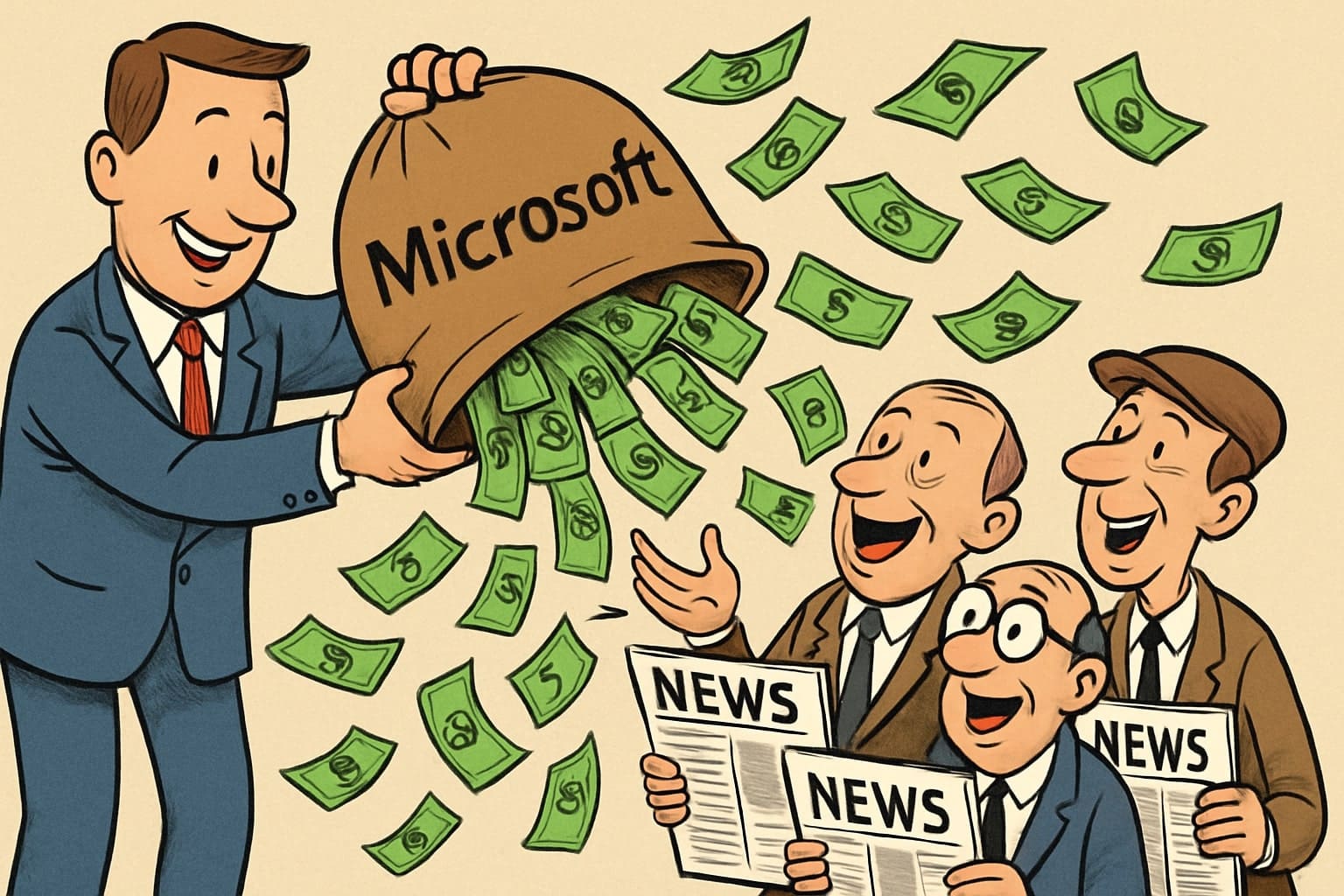
Microsoft Opens the Door to Paid Content in AI
Microsoft has just unveiled plans to create a dedicated marketplace where publishers can be paid for their content used in artificial intelligence. The project, called the Publisher Content Marketplace (PCM), is starting as a pilot program with selected U.S. publishers. The goal is to create a two-sided system where AI tools purchase content from publishers and pay them for each use. The first such tool will be Microsoft's Copilot assistant, which already generates answers based on various sources.
According to information from ongoing discussions with publishers, Microsoft is trying to address a long-standing problem facing media companies whose content is used by AI. Publishers often see their articles and data end up in AI models without receiving any compensation. PCM is intended to change that by offering a transparent payment mechanism. The company announced it last week at a closed Partner Summit meeting in Monaco, where it presented its position with a clear message: "You deserve to be paid for the quality of your intellectual property." This resonated with attendees because it stands in direct contrast to the positions of other tech giants.
The Pilot Program and Its Details
The pilot version of PCM includes only a limited number of publishers who have been briefed on the plans. Microsoft wants to work with them to develop tools, rules, and pricing models so that the system operates smoothly. Copilot will be the first "buyer" on this platform—when the assistant uses a publisher's content in a response, the publisher will receive compensation. In the future, Microsoft plans to add more AI products, which would expand the offering and attract more content sellers.
The timeline for launching the pilot is not yet precise, but discussions are progressing intensively. This approach differs from standard licensing agreements, where publishers receive one-time payments for access to archives. Instead, PCM relies on recurring payments based on actual usage, which could create a stable source of income for media companies. For example, in 2024 Microsoft was already experimenting with similar partnerships in the Copilot Daily project, where it aggregated news and weather from organizations such as Reuters, Axel Springer, Hearst Magazines, USA Today Network, and the Financial Times.
The Battle Over Content vs. Licensing Rights
Microsoft's position is welcome because publishers are fighting tech companies over copyright. Microsoft is facing lawsuits from major players such as The New York Times and other newspapers, which accuse the company of copyright infringement in the training of AI models. These lawsuits, together with those involving OpenAI (in which Microsoft is the largest investor), highlight the need for new models of cooperation. PCM could be the answer—a platform that ensures consent, control, and payment for the use of content.
Other giants are still lagging behind. Google, which dominates search, has signed only a handful of agreements with publishers and has shown no interest in a marketplace. Meta has recently intensified discussions about AI licensing, but it has neither launched nor proposed a similar system. Smaller startups such as ProRata.ai and TollBit are trying to build their own marketplaces, but without major tech companies, they lack sufficient buyers and content. Although Microsoft's Copilot receives less traffic than ChatGPT, its strength lies in its enterprise customers through Microsoft 365 and Azure, which attract millions of users.
Impact on Publishers
For publishers, PCM represents an opportunity to build a sustainable business in the AI world. Instead of having their data passively scraped, they could actively sell their content and control how it is used. Microsoft's decision deepens its ties with media companies, especially following the restructuring of its relationship with OpenAI, which previously led licensing negotiations. If the pilot succeeds, it could also force Google to act—publishers have long been waiting for a system in which large platforms play fairly.
In September 2025, a new version of the Microsoft Publisher Agreement 8.0 was released, covering offerings in Microsoft's commercial marketplace and potentially containing details relevant to PCM. This development shows that Microsoft views AI not only as a tool but also as an opportunity for fair content partnerships.


