

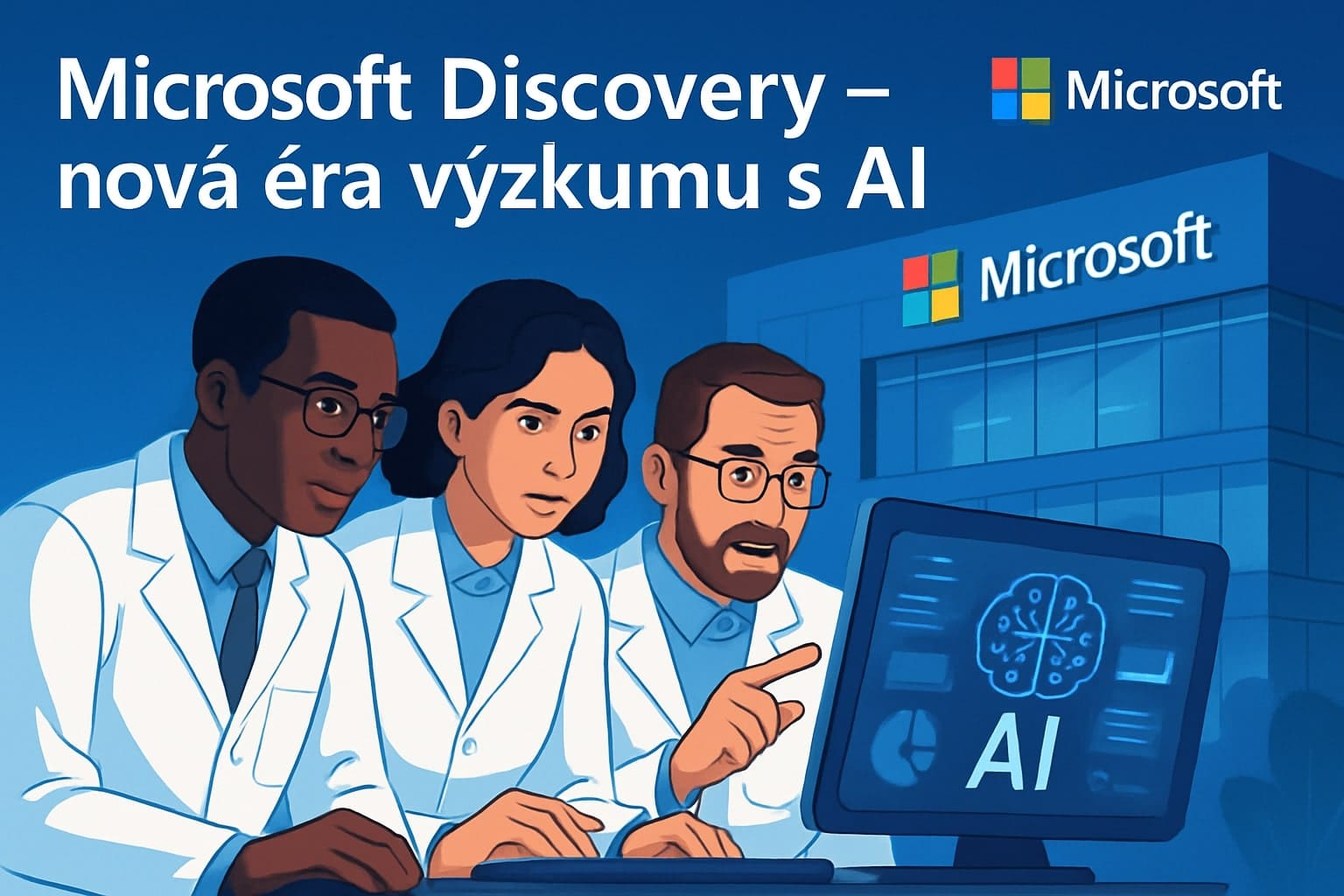
Microsoft Discovery: Introducing a New Era of Research with Agentic AI
Microsoft has introduced an entirely new enterprise platform called Microsoft Discovery, which has the potential to completely transform how organizations approach research and development. This advanced platform uses what is known as "agentic AI"—artificial intelligence capable of autonomous reasoning, collaboration, and adaptation—and integrates it into every stage of the scientific discovery process. Microsoft Discovery represents a paradigm shift in R&D, enabling teams to move faster from an initial idea through experimentation to breakthrough discoveries.
Teams of Specialized AI Agents in Action
A key innovation of the Microsoft Discovery platform is the concept of teams of specialized AI agents that researchers can orchestrate according to their specific needs. Each of these agents is tailored to specific scientific tasks, such as molecular simulation or reviewing scientific literature. These agents collaborate in real time under the guidance of a central Copilot assistant, enabling continuous and iterative R&D cycles. This architecture represents a fundamental departure from traditional isolated workflows toward integrated end-to-end cycles in which individual components communicate with and complement one another.
Microsoft Discovery places a strong emphasis on extensibility and integration, meaning researchers are not locked into rigid workflows. The platform is highly extensible and allows researchers to integrate their own models, tools, and datasets, including open-source or commercial solutions. They can also use the latest Microsoft innovations together with partner technologies. This flexibility ensures that organizations can build comprehensive toolsets tailored to their specific needs and do not have to rely solely on predefined functionality.
Security and compliance are not add-on features in Microsoft Discovery, but foundational building blocks. The platform is built on trusted Azure infrastructure and includes robust governance controls for trust, compliance, transparency, and responsible innovation. Researchers therefore remain in control of their processes and data at all times. This is crucial for enterprise environments, where strict data security and regulatory compliance requirements are often in place.
A Graph-Based Knowledge Engine as the Technological Core
At the technological core of Microsoft Discovery is a graph-based knowledge engine that differs fundamentally from traditional large language models working with isolated data points. This system maps nuanced relationships between proprietary and external scientific data, supporting advanced contextual reasoning. The knowledge engine helps researchers navigate conflicting theories and diverse experimental results with full transparency—every step is traced back to its sources to ensure traceability. This functionality is critical for scientific work, where transparency and the reproducibility of results are essential to research credibility.
Real-World Examples and Early Adopters
The practical impact of Microsoft Discovery is already evident in specific examples. Microsoft demonstrated the platform's power by dramatically accelerating complex R&D projects. Researchers used advanced AI models and high-performance computational simulation tools in Microsoft Discovery to discover a new prototype coolant for data center immersion cooling in approximately 200 hours—a process that would otherwise have taken months or years. This example shows how agentic AI can truly transform research and development timelines. The platform's early adopters include major companies such as GSK for drug development and Estée Lauder for personalized skincare. These organizations are already using the platform's capabilities across various industries, including chemistry and materials science, silicon design, energy generation and storage, manufacturing optimization, and pharmaceuticals with biotechnology innovations. The broad range of applications demonstrates the versatility of the Microsoft Discovery approach.
A Shift in the Approach to Research and Development
Agentic AI is fundamentally changing how research and development are conducted. While traditional R&D is characterized by isolated workflows, manual hypothesis generation, slow experimentation, disparate data sources, limited portability, and opaque decision-making, Microsoft Discovery with agentic AI offers integrated end-to-end cycles, automated hypothesis formulation, rapid simulation and iteration through HPC and agents, a unified graph-based representation of knowledge, an extensible toolkit with easy integration, and traceable outputs with transparent reasoning. Microsoft Discovery also uses Azure High Performance Computing (HPC) resources for large-scale simulations, as well as integration with Azure AI Foundry—a unified environment offering more than 1,800 models and tools for designing custom multi-agent systems across domains such as biology (protein design), materials science (atomistic simulations), weather forecasting (atmospheric modeling), and more. This ecosystem ensures access to the latest research resources as they emerge.
A Vision for the Future of Scientific Discovery
The platform was designed with future advances in mind, including readiness for quantum computing and embodied intelligence, ensuring that it remains adaptable as new technologies mature within Microsoft's cloud ecosystem. This forward-looking vision means that investments in Microsoft Discovery will not quickly become obsolete, but will be able to take advantage of new technological breakthroughs. Microsoft Discovery therefore represents not only a technological innovation, but an overall paradigm shift in how organizations approach scientific discovery. It enables teams to move faster from an idea through experimentation to a breakthrough using collaborative agentic AI, while maintaining security and transparency on an extensible, enterprise-grade platform built on Azure. This revolution in R&D could have far-reaching effects on innovation across all scientific and technological fields.


