

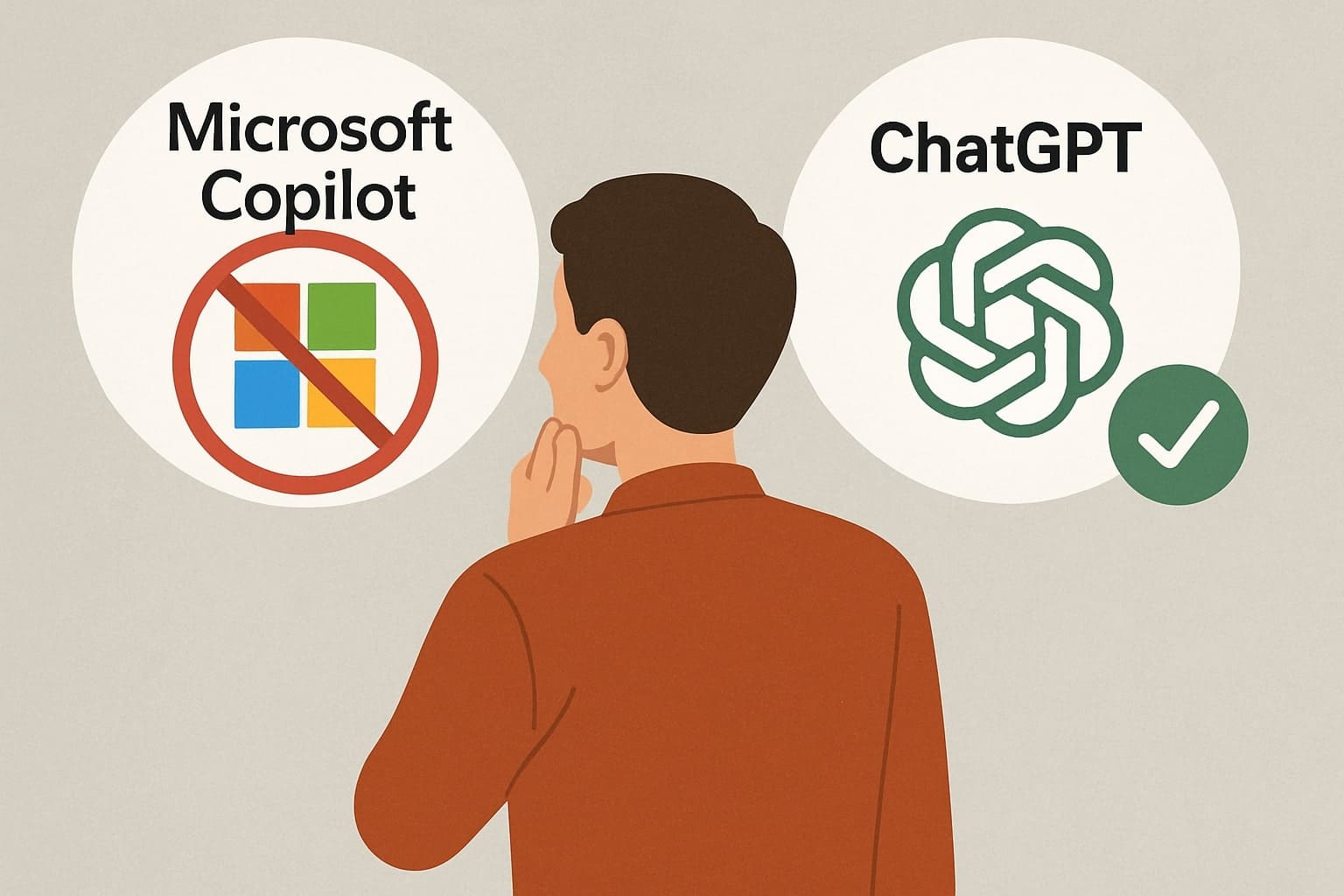
Microsoft Faces a Crisis Over Copilot's Flaws!
Technology giant Microsoft is grappling with growing problems involving its AI assistant Copilot, which was intended to be the company's flagship product in artificial intelligence. Instead, it has become a source of user frustration and security risks.
Disappointment with Copilot's Performance
Microsoft Copilot, integrated into the Office suite (Word, Excel, PowerPoint), has fallen far short of user expectations. Instead of performing tasks directly, it often provides only vague suggestions or instructions, while users have to do the actual work themselves. This situation is seen as "frankly embarrassing," especially compared to competitors such as ChatGPT, which is perceived as more capable and responsive.
Users report that Copilot often fails to meet basic task automation requirements, undermining the value of the entire Office suite. Instead of increasing productivity, it has become a source of additional work and frustration.
Critical EchoLeak Security Vulnerability
In 2025, a critical security flaw known as EchoLeak (CVE-2025-32711) was discovered in Copilot. This "zero-click" vulnerability allowed attackers to trigger the leakage of sensitive data from Microsoft 365 Copilot without any user interaction.
The issue stemmed from a fundamental design flaw in AI agents based on large language models (LLMs). Attackers could insert hidden instructions into seemingly harmless emails. When Copilot processed these emails, it inadvertently accessed internal files and disclosed confidential information without the user's knowledge.
Microsoft quickly released a fix and claims there is no evidence that the flaw was actively exploited. However, the incident highlighted the risks associated with AI assistants and raised questions about the security maturity of such tools.
Customers Switching to ChatGPT
Adding to Microsoft's problems is the fact that its largest customer base is increasingly bypassing Copilot in favor of OpenAI's ChatGPT. Customers cite ChatGPT's superior performance and reliability across a wide range of tasks—precisely where Copilot falls short.
This shift poses a major problem for Microsoft's efforts to promote Copilot as its primary AI productivity tool. At the same time, it underscores the intensifying rivalry with OpenAI, as both companies compete for dominance in enterprise AI use.
Impact on Microsoft's Position
The combination of disappointing performance, security issues, and customers switching to ChatGPT puts Microsoft in a difficult position. Copilot, which was intended to showcase the company's technological superiority in AI, has instead become more of a liability.
Users and businesses increasingly prefer solutions that combine robust security, reliable performance, and genuine task automation. In this regard, ChatGPT appears to be a more compelling alternative.
Microsoft now faces the challenge of restoring user trust and making its AI assistant competitive again. Significant improvements in both functionality and security will be needed for it to compete with ChatGPT's growing popularity.


