Meta FAIR Continues Its Commitment to Open Science: New Open-Source Models and Breakthrough Research
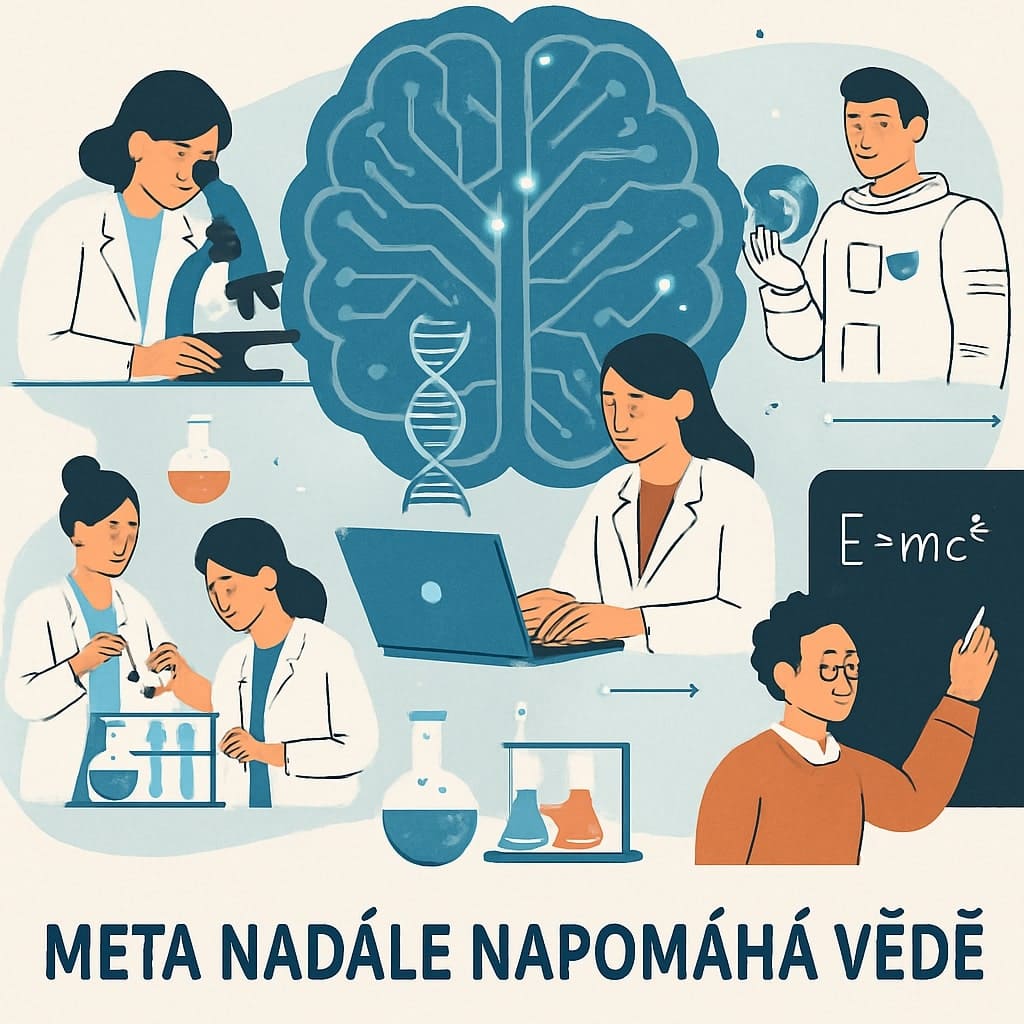
Meta's Fundamental AI Research (FAIR) team continues to demonstrate its commitment to open science by releasing a series of new open-source models, datasets, and research artifacts throughout 2024 and 2025. These releases cover key areas such as perception, localization, reasoning, language understanding, embodied agents, and robustness and safety in AI systems. By sharing research materials at an early stage, FAIR supports the broader scientific community and enables faster progress in artificial intelligence.
Open Molecules 2025 (OMol25) Dataset
Open Molecules 2025 (OMol25) is a massive dataset of density functional theory (DFT) calculation results designed to support breakthroughs in computational chemistry and materials science. This extensive dataset was created using more than 6 billion computational hours and includes the results of approximately 100 million quantum mechanical calculations across four key scientific areas. OMol25 dramatically expands the amount of data available for modeling atomic interactions, enabling faster development cycles for new drugs, battery technologies, energy storage solutions, and climate change mitigation strategies. According to collaborators from Lawrence Berkeley National Laboratory, this project should "dramatically change the way people perform computational chemistry."
Adjoint Sampling: Generative Modeling Without Data
The Adjoint Sampling method introduces a scalable approach to training generative models without the need for large datasets. Instead of learning from existing data patterns, this approach iteratively refines samples based on scalar reward signals, making it particularly relevant in situations where training data is scarce or completely unavailable. Potential applications include fine-tuning generative models for images and videos or sampling from foundational physics or chemistry models using only reward-based feedback.
Collaborations and Their Impact
Meta FAIR's work is built on collaboration with leading institutions such as Lawrence Berkeley National Laboratory, Princeton University, Genentech/Roche Group, Stanford University, University of Cambridge, Carnegie Mellon University, NYU, Los Alamos National Laboratory, and UC Berkeley. The research also extends into new classes, such as polymers, in collaboration with partners from Lawrence Livermore National Laboratory. These collaborations enable the development of advanced tools and methods that push the boundaries of current research in artificial intelligence and its applications in science.
FAIR Initiatives in Open Science
Meta FAIR continues its tradition of releasing open-source research artifacts across several areas. In molecular and materials science, in addition to the OMol25 DFT dataset, it offers the UMA model and various projects carried out in collaboration with national laboratories. In the area of perception, it improved the Segment Anything Model to version 2.1 (SAM 2.1), which provides enhanced segmentation for images and videos. For language processing, it developed LLMs with multi-token prediction and the Chameleon multimodal models. In the area of robustness and safety, it introduced Meta Video Seal, a watermarking framework, and the Omni Seal Bench leaderboard. For robotics, FAIR created the PARTNR framework and an associated dataset for human-robot collaboration. All of these resources are released under various open licenses to support their broad adoption by researchers around the world. Meta emphasizes that openly sharing these tools will support collaboration and accelerate progress toward advanced machine intelligence while also promoting responsible innovation in science and technology.
How to Gain Access
Researchers can download datasets such as OMol25 directly through Meta's AI blog or research portal. Additional code and frameworks are also available—including the SAM Developer Suite and Video Seal—along with documentation and demo interfaces for rapid experimentation. Through this approach, Meta ensures that its research is not only open but also easily accessible and usable by the global research community. Overall, Meta FAIR's latest open-source projects represent a significant step forward both in AI-based scientific research and in foundational research on machine intelligence. They provide unprecedented resources for molecular modeling as well as robust tools ranging from perception to robotics—all freely available to accelerate global innovation and scientific progress.