

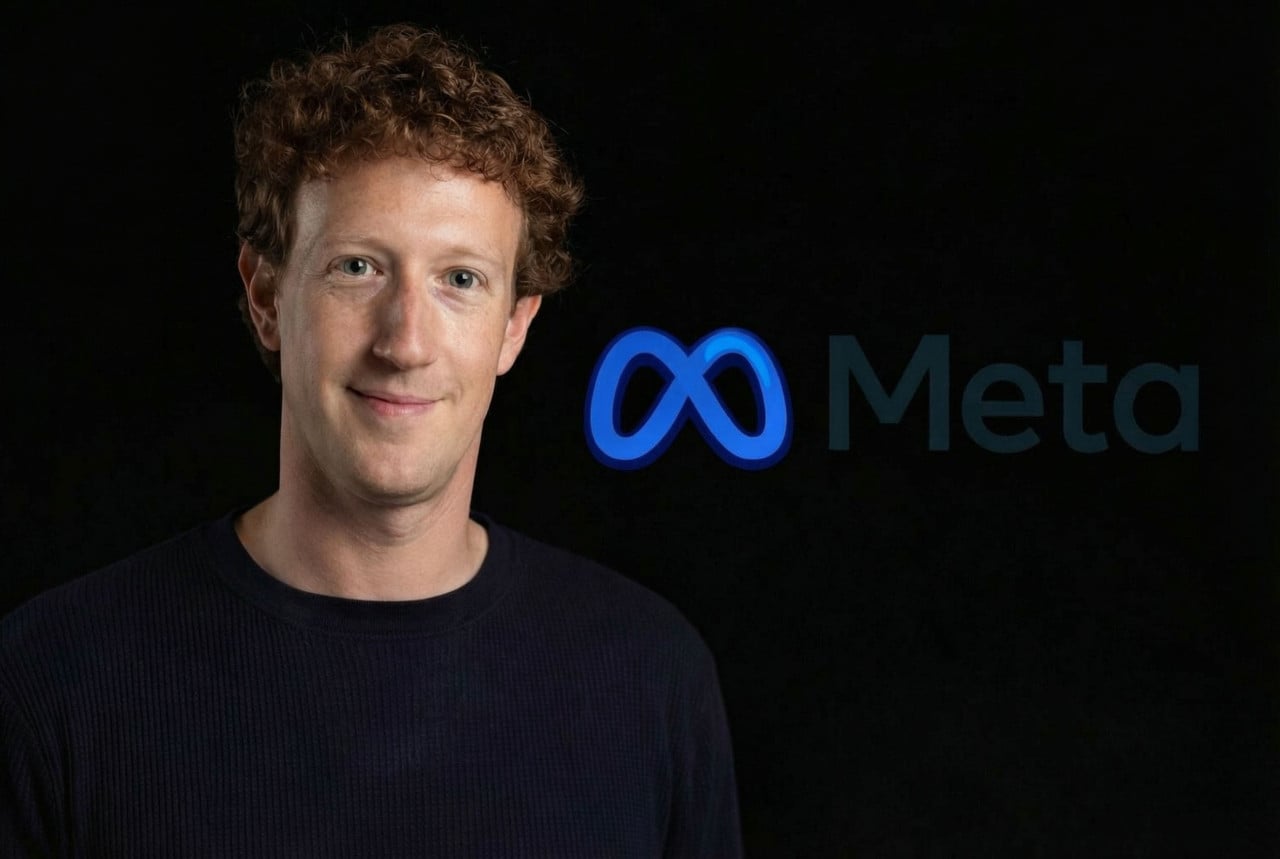
Last July, Mark Zuckerberg declared that Meta's new AI models would "push the boundaries of what is possible over the next year or so." But now comes a cold shower: Meta is delaying the release of its most anticipated artificial intelligence model, codenamed Avocado, until at least May. And that's not all.
How Project Avocado began and what went wrong
It all started a year ago, when Meta was no longer satisfied with its previous model, Llama 4. It failed to meet expectations, and Zuckerberg decided to take decisive action. In June 2025, Meta invested $14.3 billion in the startup Scale AI and brought in its then 29-year-old CEO, Alexandr Wang, as its new head of artificial intelligence. Wang then assembled an elite research team within Meta called TBD Lab (short for "to be determined"), which began working on two new models with fruit-themed codenames: Avocado (a text model) and Mango (an image and video generator).
TBD Lab, which has roughly 100 employees, completed the first phase of Avocado's development, known as "pre-training," at the end of last year. In January 2026, the team moved on to the second phase, "post-training," and set a target release date for mid-March. But internal tests produced disappointing results.
The Avocado model lags behind the competition in reasoning, programming, and writing. Specifically, it failed to match the performance of Google's Gemini 3.0 from November 2025 or models from OpenAI and Anthropic. Although it outperformed Meta's previous models and even the older Gemini 2.5 from March, that was not enough. The results simply were not where they needed to be.
Zuckerberg is considering borrowing from the competition
Meta's AI division leadership has reportedly discussed whether to temporarily license Google's Gemini to power Meta's own products. No final decision has been made yet, but the very idea is symbolic, to say the least. A company that has spent hundreds of billions on its own AI infrastructure could end up borrowing technology from a direct rival.
So far, Meta has released only one product through TBD Lab: the Vibes app, an AI video generator similar to OpenAI's Sora. Beyond that, the new team's list of accomplishments is empty.
Billions are pouring in, but the results are nowhere to be seen
Zuckerberg has bet heavily on AI. Meta has pledged $600 billion to build data centers and announced in January that it intends to spend up to $135 billion this year, nearly double last year's $72 billion. The company is also developing its own chips to reduce its dependence on Nvidia. Nevertheless, Google, OpenAI, and Anthropic remain ahead in foundational AI models. And that is an uncomfortable reality for Zuckerberg, because powerful foundational models are the backbone of everything else: chatbots, video generators, programming tools, and the advertising systems from which Meta makes its money.
Experts say Meta can still catch up, as developing AI models simply takes time. But the longer timeline is taking its toll. Zuckerberg himself has begun tempering expectations in recent months. "I expect our first models to be good, but more importantly, they will show the rapid trajectory we're on," he told investors in January.
Tensions within Meta: Wang vs. Cox and Bosworth
Behind closed doors, however, tensions were boiling over. Alexandr Wang clashed with Chief Product Officer Chris Cox and Chief Technology Officer Andrew Bosworth. At the heart of the disagreements was how the new AI models should improve Meta's advertising business. Advertising remains the company's main source of revenue, and internal pressure for AI to serve commercial goals was apparently intense.

Last week, Meta announced to employees that a new AI engineering team would be formed under Bosworth and would collaborate with Wang and his division. The news quickly sparked speculation that Zuckerberg and Wang were at each other's throats. Meta immediately dismissed it as "complete nonsense," and Zuckerberg posted a selfie with Wang on Threads captioned "Meanwhile at Meta headquarters."
Whatever the truth may be, the departure of several researchers from TBD Lab before Avocado's release speaks volumes.
What comes after Avocado? Watermelon
Meanwhile, Meta is already looking ahead. The next model after Avocado will be called Watermelon. The fruit-themed series continues. Whether it will be bigger and juicier than its predecessor remains to be seen. Meta spokesperson Dave Arnold commented diplomatically: "Our next model will be good, but more importantly, it will show the rapid trajectory we're on. Then, throughout the year, we will progressively push the boundaries as we release new models. We look forward to people seeing what we've cooked up."
Cooked. Avocado. Watermelon. Mango. It seems they have a sense of humor at Meta. The question is whether they can also deliver results that match their ambitions and the billions they have poured into the effort.
Sources: aol.com and businesstimes.com.sg


