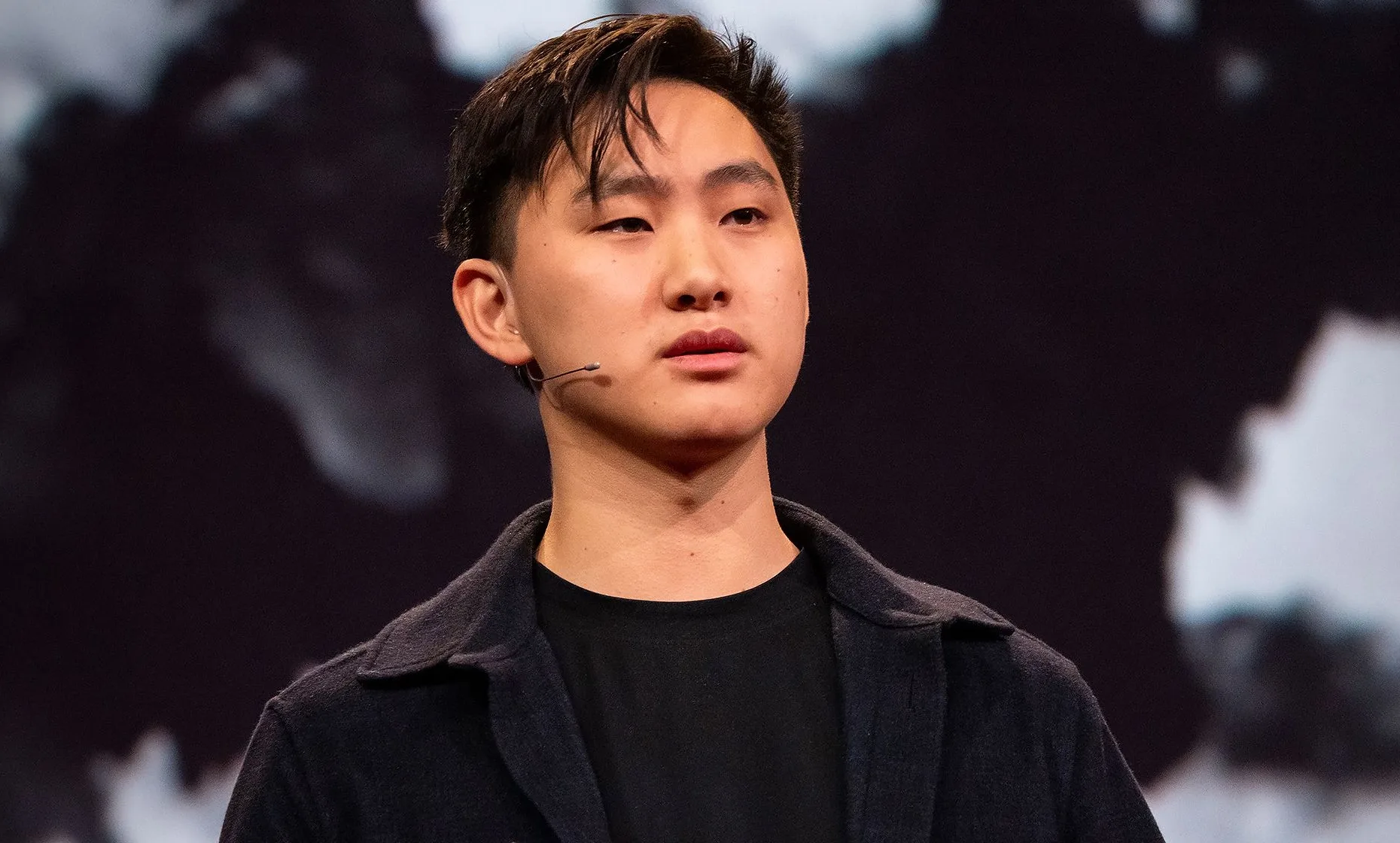
Alexandr Wang, Meta’s head of artificial intelligence and leader of its Superintelligence Labs, published an essay on X on Sunday that immediately sparked debate. According to him, superintelligence is coming, and how humanity acts over the next year will determine the shape of the world we will live in. The catalyst was a proof of the Riemann hypothesis, to which Anthropic’s Claude language model contributed. The text was seen by more than 8 million people within the first half-day.
A mathematical puzzle that resisted solution for 167 years
The Riemann hypothesis concerns the distribution of prime numbers, and mathematicians have been wrestling with it since 1859. It is one of the so-called Millennium Prize Problems, for which the Clay Mathematics Institute has offered a million-dollar reward. Levent Alpöge, a mathematician on Anthropic’s technical team who worked on it together with Claude, claimed last week that he had a proof. On Saturday, the method was machine-verified by the communities surrounding Lean and Mathlib, tools used to check mathematical proofs.
The catch is that no human has yet properly read the proof. The Lean library contains roughly 17 million lines, and there is not yet a comprehensible version for mathematicians. Alpöge plans to explain his method in lectures and write it up. Until experts verify it, the million-dollar reward will remain unpaid.
The atomic bomb as homework
Wang, who grew up in Los Alamos, New Mexico, and studied at MIT, does not shy away from strong language. According to him, many physicists would agree that discovering the atomic bomb was merely homework compared with the Riemann hypothesis. He writes that the new proof was created with the help of “an alien mind that we do not understand.”
People involved in mathematics competitions reportedly experienced a similar moment in December 2024, when the o3 model began solving problems from the American AIME competition with ease. According to Wang, the hardest of them are intellectually more demanding than most of the work that even the best engineers or managers handle every day. Over the past two years, companies have then filled in the remaining gaps. According to him, models have nearly mastered programming, possess advanced cyber capabilities, and can complete tasks independently.
From this, Wang draws a bold conclusion. According to him, intelligence is no longer what prevents models from surpassing humans. They lack only knowledge from specific fields, technical infrastructure, and the ability to experiment. Once these gaps are filled, artificial intelligence will overtake the best humans in almost every field. That includes artificial intelligence research itself, which Wang considers far easier than the Riemann hypothesis. According to him, models will thus begin improving themselves and significantly accelerate research in biology, economics, and weapons development.
https://t.co/KwJ13J6zsC
— Alexandr Wang (@alexandr_wang) November 22, 2026
Control over a machine that is a thousand times smarter
Here, Wang’s text turns into a warning. He says it is difficult to imagine a world in which humanity retains control over artificial intelligence that improves itself without limits. It is equally difficult for him to imagine humans at the helm alongside a superintelligence that is a thousand times more capable than they are in every field. He therefore calls for urgent work on safety and on ensuring that AI’s goals align with those of humans.
His own industry also came under criticism. Wang speaks of the lazy thinking of people in the industry who regard superintelligence as inevitable and see the only problem as how to build it safely. According to him, we should not accept society handing over control to artificial intelligence. Technology should give people more power to make decisions about their own lives, and according to Wang, that most likely means the entire field will have to take a different path from the one it is currently following.
Alarm among political leaders
Reactions came quickly and, unusually, united the left and the right. Jon Favreau, the former head of Barack Obama’s speechwriting team, called it insanity and urged elected officials to do everything possible to prevent leading laboratories from handing control over humanity to machines. From the opposite camp, presenter Megyn Kelly spoke out. She recalled similar warnings from Anthropic, OpenAI’s former head of safety, and Elon Musk, and asked how many more would be needed before people began to act.
Within hours, Democratic Congresswoman Yassamin Ansari shared Wang’s text with a call for Congress to urgently pause the development of advanced AI and ban superintelligence. Senator Cory Booker called the same day for the race to develop self-improving artificial intelligence to be brought under control. Senator Bernie Sanders had previously introduced a bill that would ban superintelligence altogether. However, the House version of the bill has been sitting in committee since September 24 and has made no progress. Just a few hours before Wang’s essay, OpenAI chief scientist Jakub Pachocki proposed shared limits on AI development based on how well companies understand their own models.
Following the wave of criticism, Wang insisted that the path he described is not inevitable and that the people leading companies matter now more than ever. As an example, he said that Meta had postponed the launch of its Muse model by several months. According to him, Mark Zuckerberg called on all laboratories, including his own, to devote most of their computing power to services for people and customers rather than to developing AI that improves itself.
Meanwhile, Meta is pouring enormous sums into artificial intelligence. This year, it expects capital expenditures of $135 billion to $145 billion, roughly twice as much as last year. Zuckerberg put Wang in charge of the company’s AI strategy in June 2025, when Meta paid more than $14 billion for a 49 percent stake in his former company, Scale AI. Analysts expect Meta’s free cash flow to remain negative until 2028. The essay was also published over a weekend when the Nasdaq technology index gave up all of its gains for the year. On Monday, markets rebounded sharply, and Meta shares gained nearly seven percent.
Sources: independent.co.uk, fortune.com and thenextweb.com