

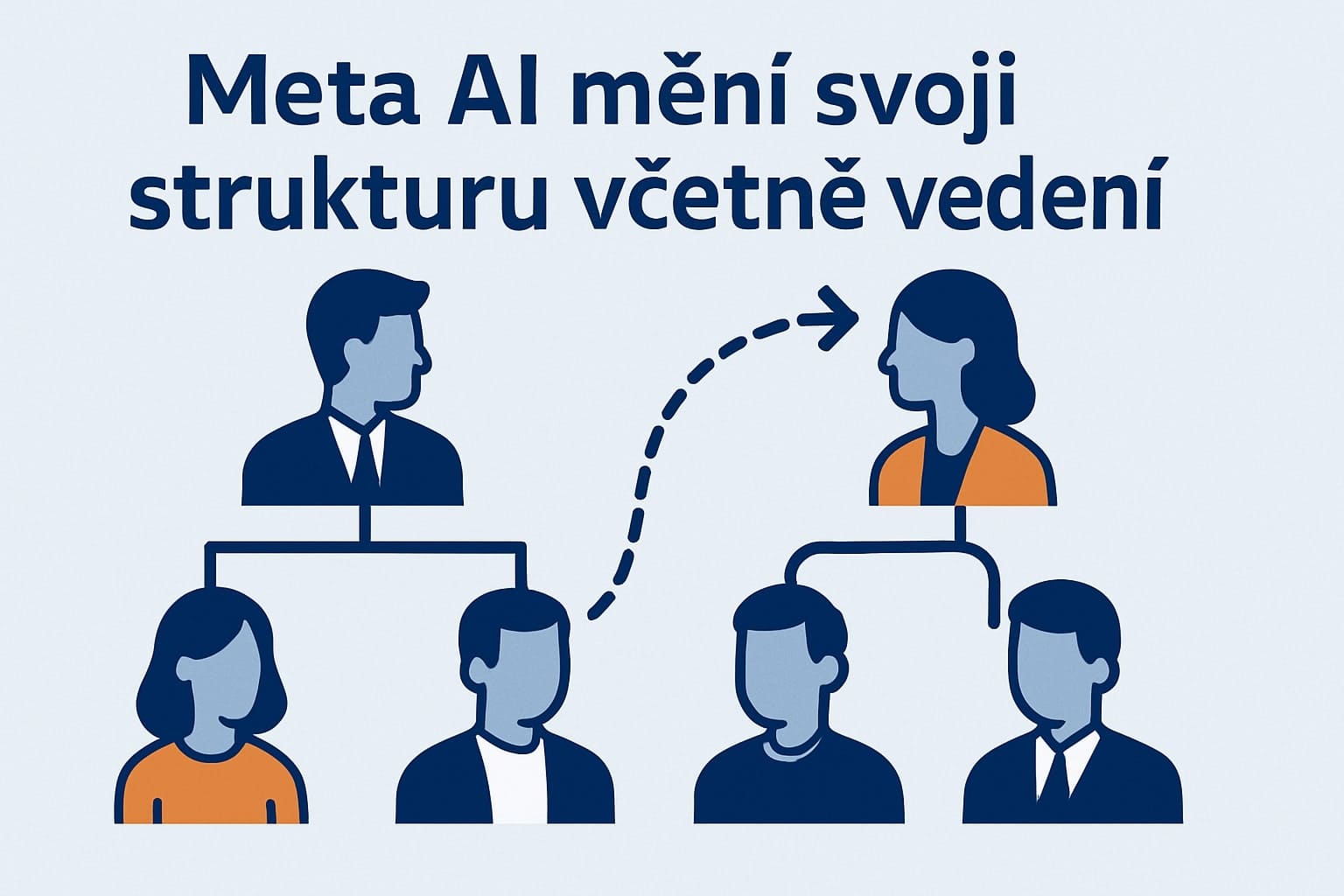
Meta AI splits its artificial intelligence division for faster development
Meta Platforms carried out a major reorganization of its artificial intelligence division in May 2025, representing one of the company’s most significant moves in AI in recent years. The restructuring comes as Meta seeks to keep pace with competitors such as Google and OpenAI in the rapidly evolving fields of generative artificial intelligence and artificial general intelligence (AGI). The reorganization was announced in an internal memo by Meta Chief Product Officer Chris Cox, who emphasized the goal of promoting greater ownership, reducing dependencies, and making team responsibilities clearer. Cox wrote in his post: "I believe this structure will be a major upgrade that addresses the biggest challenges I’ve heard from many people and helps accelerate our overall progress."
The new structure of Meta’s AI division
The main change is the division of Meta’s generative artificial intelligence group into two specialized teams, each with a clearly defined mission and responsibilities. The AI Products team, led by Connor Hayes, a longtime Meta product manager, focuses on developing and deploying artificial intelligence features across Meta’s key products. This team is responsible for the Meta AI assistant, AI Studio, and the integration of generative AI tools into Facebook, Instagram, and WhatsApp. Hayes will be responsible for ensuring that AI technologies effectively reach the millions of users of these platforms.
The AGI Foundations unit is jointly led by Ahmad Al-Dahle, previously head of the entire group, and Amir Frenkel, former vice president of mixed reality technologies. This unit is tasked with continuing foundational AGI research and oversees Meta’s Llama models, which are central to the company’s open-source AI strategy. The unit also focuses on innovation in reasoning, multimodal capabilities, and voice AI.
The future of the FAIR research laboratory
Meta’s renowned research laboratory, FAIR (Fundamental AI Research), remains operational and retains relative independence from the new product- and AGI-focused teams. The only exception is its multimodal team, which has now been integrated into the AGI Foundations unit. This decision reflects Meta’s targeted approach to preserving long-term foundational research while ensuring better coordination in key areas. Responsibility for the Llama family of large language models, which is central to Meta’s open-source AI strategy, has been transferred to the AGI Foundations unit. This change is intended to ensure better coordination between the research and development of these critically important models.
Problems that led to the reorganization
The restructuring follows months of significant challenges. In January 2025, Meta was surprised by the performance of models from Chinese developer DeepSeek, revealing potential shortcomings in its own systems. To improve the quality and speed of its work, Meta had already made changes to its generative AI group in February, appointing a new head of product and reassigning two engineering leaders. However, the group’s problems continued to mount. Meta struggled with the development of Llama 4, the latest generation of its model, and had to postpone the release date because the model did not perform as well on technical benchmarks as the company had hoped. These problems reflected growing pressure on the company to address increasing competition in AI. Meta eventually released the first versions of Llama 4, known as Scout and Maverick, in April 2025. The models performed well on popular leaderboards but sparked controversy when it was revealed that Meta had uploaded an experimental version of Llama 4 Maverick to a leaderboard that performed better than the version actually released to the public.
Staff changes and departures
Although no executive-level layoffs or job cuts were announced as part of this restructuring, Meta has experienced significant departures among its AI researchers. Many of the original creators behind the Llama models have left, with several joining rival companies such as Mistral AI. Particularly significant is the departure of Joelle Pineau, former head of FAIR and a key figure in Meta’s AI efforts, who announced that she would leave effective May 30, 2025. These departures indicate continued talent turnover as Meta competes in the global AI race. Connor Hayes was placed in charge of AI Products with a focus on the Meta AI assistant, AI Studio, and AI features for Facebook, Instagram, and WhatsApp. The AGI Foundations team is led by Ahmad Al-Dahle and Amir Frenkel, with a focus on Llama models, reasoning, multimodal capabilities, voice, and foundational AGI research. The position of head of the FAIR (Research) team, which focuses on foundational AI research and remains independent except for the multimodal team, is currently vacant.
Meta’s leadership believes that dividing the organization into smaller, more focused teams will increase agility and accelerate innovation, both in launching consumer products and advancing AGI research. The move comes as Meta seeks to regain momentum in the rapidly evolving AI landscape, with more explicit alignment between product and research teams and new technical leaders at the helm. For Meta, whose future is increasingly tied to success in artificial intelligence, this restructuring represents a critical step toward achieving its ambitious AGI goals and maintaining its position among the world’s leading technology companies. The success of this reorganization will be crucial for Meta in the coming months and years as the company faces growing pressure from investors and users to demonstrate its leadership in artificial intelligence and compete with the world’s best AI systems.


