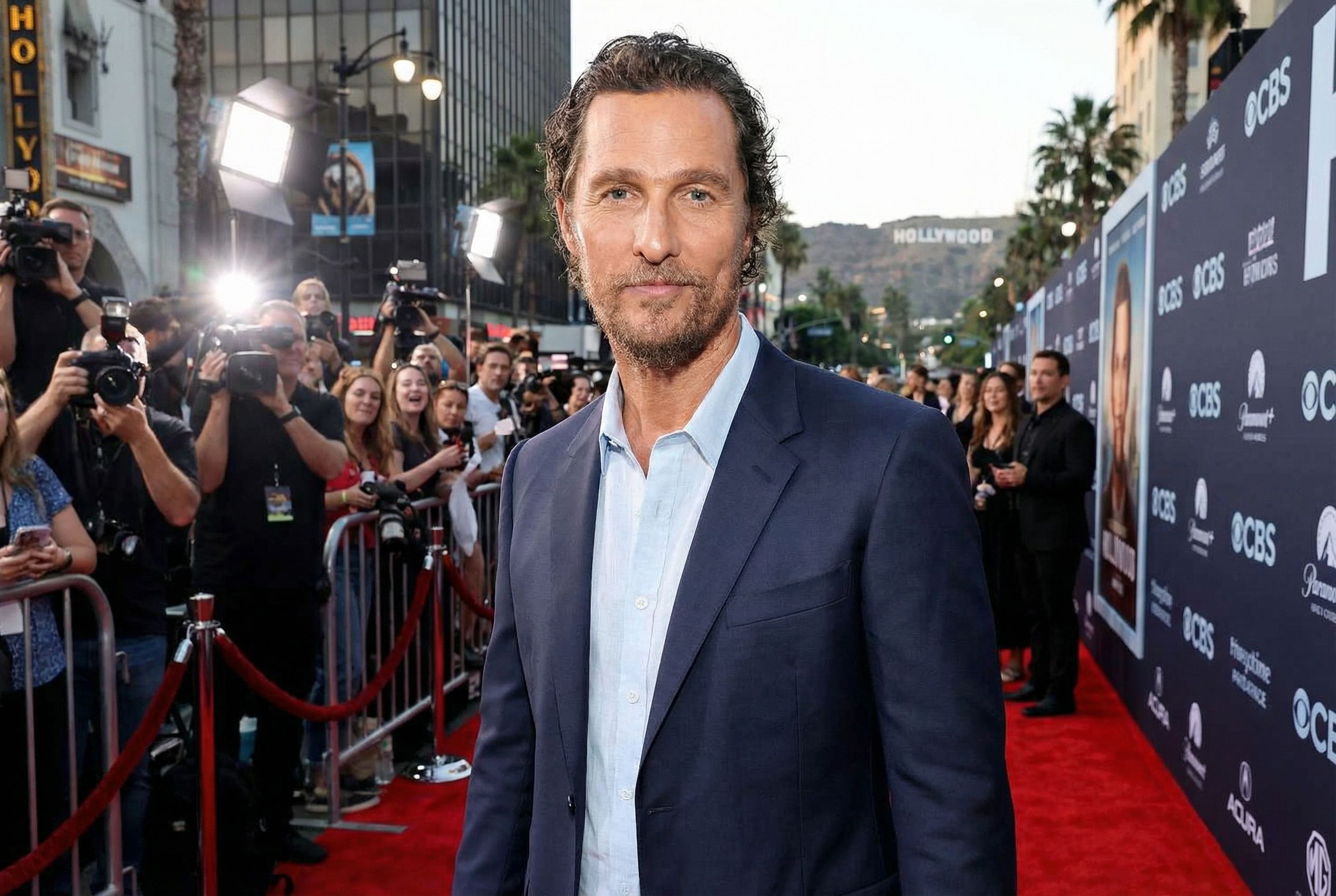
Matthew McConaughey, the likable actor from films such as Interstellar and Magic Mike, has decided to take matters into his own hands. In recent months, he has had eight trademark applications approved by the United States Patent and Trademark Office. These trademarks include short video clips in which he is seen standing on a porch, smiling, or speaking directly to the camera. One seven-second clip, for example, shows him on a porch, while another three-second clip captures him in front of a Christmas tree. And then there are audio recordings—such as the famous phrase "Alright, alright, alright" from his 1993 film Dazed and Confused, where he improvised it.
Why is he doing all this? McConaughey wants to prevent anyone from using his voice or likeness in artificial intelligence (AI) without his consent. Deepfakes are fake images, videos, or audio created by AI that look and sound like a real person. The actor said in an email: "My team and I want to know that when my voice or likeness appears somewhere, it is because I approved and signed off on it." He added that they want to establish clear boundaries of ownership, where consent and attribution will be the norm in the world of AI.
His lawyers at the firm Yorn Levine explain that these trademarks are intended to serve as a weapon against unauthorized use. The lawyers said: "In a world where everyone is looking for ways to address AI misuse, we now have a tool that can stop someone or bring them before a federal court." They added: "We don’t know what a court will ultimately say, but we at least have to try." So far, there are reportedly no known cases of anyone misusing McConaughey’s likeness with AI, but they want to be prepared.
Examples of deepfakes
Deepfakes have already affected many celebrities, including Taylor Swift, Tom Hanks, and Oprah Winfrey. These celebrities have appeared in fake advertisements for products or Ponzi schemes. Even Elon Musk faced criticism when his AI chatbot Grok generated inappropriate images on the X platform (formerly Twitter), including revealing images of women and children. This only underscores how quickly these technologies are spreading and how harmful they can be.
McConaughey is not opposed to AI technology. On the contrary, he has invested in ElevenLabs, a company specializing in AI audio. He works with them on Spanish-language versions of his Lyrics of Livin' newsletter, in which they use his own voice. So he sees the potential, but wants to keep it under control.
More details about the trademarks
The approved trademarks also include an audio clip in which McConaughey says: "Just keep living, right? ... I mean ... what are we gonna do?" This is another of his signature phrases. His lawyers say these protections are intended to cover a wide range of uses—from videos in which he smiles, speaks, or simply looks into the camera.
This is not the first time celebrities have protected their phrases. Paris Hilton has a trademark for "That’s hot" and Lizzo for "100% that B****". But according to reports, McConaughey is the first person to trademark himself so comprehensively—his voice, likeness, and specific clips all together.
This approach will most likely inspire other artists. In an era when AI can imitate anyone, it is important to have tools for protecting one’s identity. McConaughey is thus setting an example for others of how to defend themselves against digital forgers.
Sources: nzherald.co.nz and wsj.com