Tyler Cadwell drives through the canyons of Arizona in his Ford Bronco. On the passenger seat, he has a Mac Mini. It is plugged into a portable battery and connected to a Starlink antenna and a touchscreen monitor attached to the dashboard. Cadwell talks to it while driving. The machine writes code, prepares marketing copy, responds to customer emails, and manages inventory on Etsy. Its name is Etchie.
Cadwell runs a small business called Everything Etched, which sells engraved glasses on Etsy and Shopify. And Etchie is, as he puts it, his "first AI employee." Bloomberg put his story on the cover of its Businessweek supplement. He was there because Cadwell is not alone. There are thousands of them.
Etchie is built on a framework called OpenClaw. It is a free, open-source tool that makes it possible to run AI agents directly on your own computer, without having to pay for cloud services. Since its release, it has accumulated more than 247,000 stars on GitHub, and interest in it continues to grow. OpenClaw works with models from both Anthropic and OpenAI. Users can switch between providers behind the scenes without rebuilding the entire agent. That is one of the things that has made this tool something of a standard for personal AI agents.
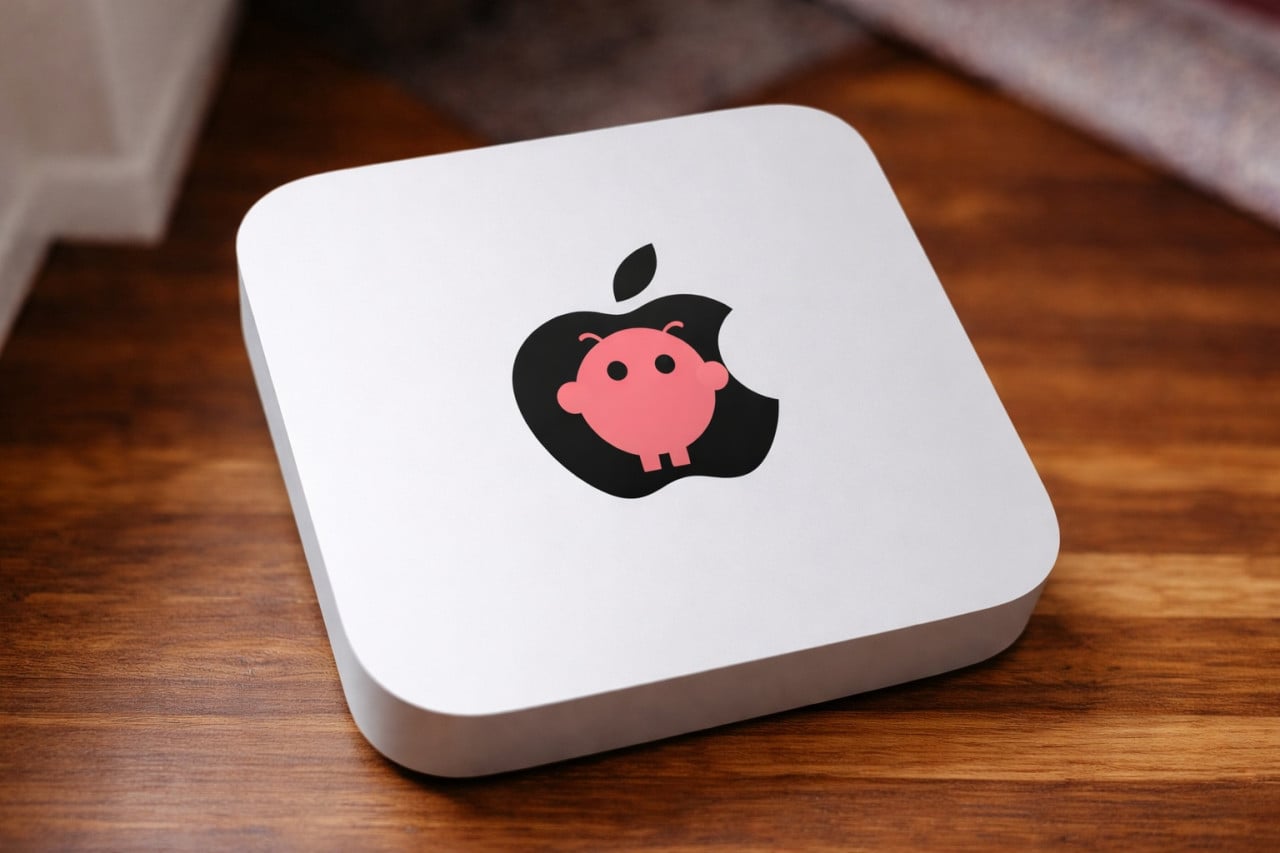
And why the Mac Mini in particular? Apple built its architecture around so-called unified memory, where RAM and the GPU share a single chip. This makes it possible to run large language models locally at a significantly lower cost than on a comparable Windows or Linux machine. A 64GB Mac Mini is the cheapest way to run OpenClaw smoothly. A Mac Studio with 128 or 256 GB is more expensive, but still a sensible choice for intensive use. Both options are now sold out.
Apple pulled the models from its store, and delivery times are now up to four months
Apple stopped accepting orders for the 32GB and 64GB Mac Mini in early April. The 128GB and 256GB Mac Studio met the same fate. What remains in stock has a delivery time of 16 to 18 weeks in the US. Just a few months ago, Apple was struggling to convince iMac owners to buy the $599 base model at all. Now you have to wait months for it.
Mac revenue for the quarter reached $8.4 billion, up 6% from a year ago. But this figure is constrained by supply, not demand. Tim Cook admitted during the quarterly earnings call that the company has "less supply chain flexibility than usual" and that memory prices are "rising significantly."
Interest in AI agents is not the only reason behind the supply shortage. Chipmakers simply cannot keep up with demand for DRAM memory because data center builders are buying it up in massive quantities. Demand for AI infrastructure is absorbing capacity across the entire market. Others are feeling the effects as well. Sony raised the price of the PlayStation 5. Nintendo added $50 to the price of the Switch 2. The same pressure on memory is affecting Apple’s prices as well as rising cloud bills. That is why Apple removed the 512 GB Mac Studio variant from its lineup last month and raised the price of the 256 GB upgrade by 25%.
Prices on secondhand markets are also rising rapidly. On eBay, 96GB and 192GB Mac Studio models are selling 15 to 20% higher than in February.
Small business vs. million-dollar enterprise software
Cadwell pays hundreds of dollars a month for Etchie’s API access. No enterprise contract with Anthropic and no OpenAI Pro plan. Just standard API access at consumer rates, routed through OpenClaw. What Etchie does would have been sold in 2023 as a Salesforce or HubSpot CRM module. The companies Cadwell competes with pay many times more for comparable features through SaaS contracts. The arbitrage is real. Bloomberg mentions several thousand small-business owners who work in the same way.
For Apple, the situation is paradoxically advantageous. The company spent two years facing criticism for missing the generative AI wave. Apple Intelligence arrived late, the Siri overhaul dragged on, and its own language models lagged behind Anthropic, OpenAI, and Google by a year or more. And yet Apple now happens to have the hardware that is in the greatest demand.
Mark Gurman reports that Apple is preparing M5 chips for new Mac Mini and Mac Studio models, due for release around June. The top-end configurations will probably return to sale, only at higher prices.
Source: thenextweb.com