

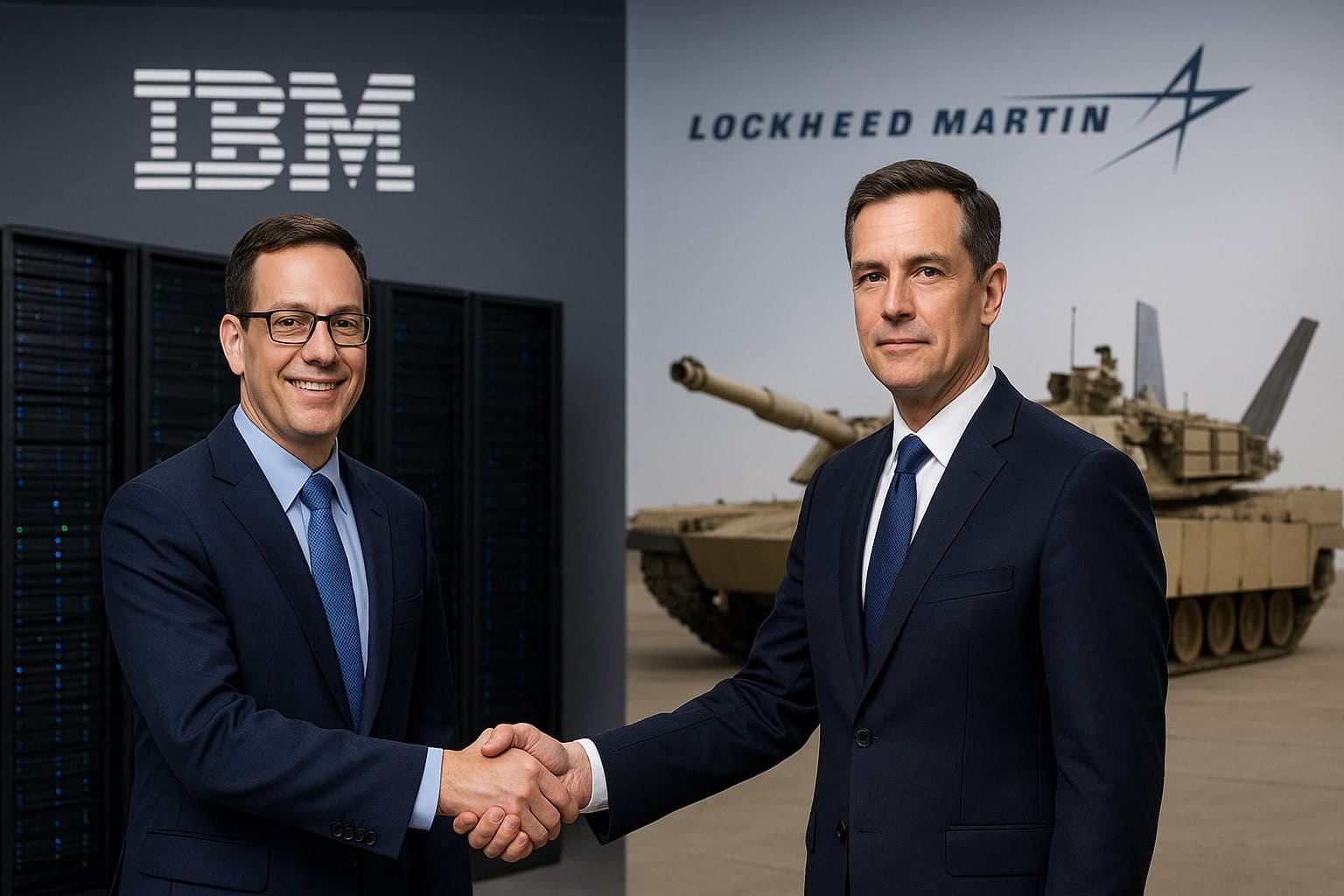
Lockheed Martin Joins Forces with IBM AI to Accelerate Innovation
Lockheed Martin, a global leader in the aerospace and defense industry, has decided to undertake a profound transformation of its operations using artificial intelligence. The company is collaborating with IBM to overcome the complexities associated with data integration and create a modern, AI-driven system. This initiative has enabled Lockheed Martin to integrate advanced technologies, such as generative AI (artificial intelligence capable of creating new content) and agentic AI (artificial intelligence that autonomously manages processes), into its internal processes. The goal is to ensure that customers stay one step ahead of their toughest challenges. According to Stephan Gerali, Chief Architect and Senior Fellow at Lockheed Martin, AI helps solve problems that are too complex for humans due to the volume of data, complexity, or urgency.
Modernizing the Data Environment
Lockheed Martin selected IBM Cloud Pak for Data as its central data management platform. These solutions, featuring a built-in data fabric architecture, made it possible to connect a complex network of databases, data lakes, data lakehouses, and data reporting tools. As a result, the number of data and AI tools was reduced by half. With a unified and scalable data foundation, the company can now reliably access the highest-quality data, accelerating the deployment of AI solutions across the organization through the AI Factory ecosystem. This ecosystem serves as a secure environment where engineers can build, test, and deploy AI solutions at scale. The IBM Granite family of open large language models, complemented by other cutting-edge models, is hosted directly in Lockheed Martin's AI Factory, supporting the work of 10,000 engineers as they innovate and accelerate business transformation.
Using AI for Internal Efficiency
Products from the IBM watsonx portfolio for data management, governance, and orchestration are radically improving internal operations. Generative AI models eliminate the need for specialized coding by allowing employees to ask questions about source data in natural language. Agentic frameworks and virtual assistants created in the AI Factory help manage complex workflows, simplify interactions between people and technology, and increase efficiency through automation and process optimization. An important component is the initiative to establish trusted and secure guardrails for scaling AI, under which Lockheed Martin adopted IBM watsonx's end-to-end AI governance toolkit. This approach ensures the responsible, transparent, and explainable use of AI, which is essential for complying with ethical standards, industry practices, and data protection regulations.
Results and Benefits to Date
Lockheed Martin's data and AI transformation has already delivered significant results. IBM solutions helped consolidate 46 different data systems and tools into a single integrated platform. Internal operations and data management processes are now streamlined, enabling rapid and cost-effective innovation. The company is better able to handle employee inquiries and human resources-related tasks using conversational AI chatbots from watsonx, which facilitate quick answers to questions and improve HR processes. A generative AI question-answering pilot program showed a marked improvement in response accuracy—from 45.45% to 56.8% with prompt engineering and to 66.0% with query optimization. This advanced approach to AI technology, supported by a strategic partnership with IBM, positions Lockheed Martin to exceed customer requirements and build a strong foundation for future growth in a dynamic technology landscape.
The Future of AI at Lockheed Martin
Lockheed Martin sees AI as a key tool for accelerating decision-making and improving its quality for customers. Integrating IBM Granite into the AI Factory enables a faster transition from ideas to deployment, reducing the timeline from months to weeks, and streamlines mission-critical insights. The company operates hundreds of AI projects through its AI Center (LAIC) and AI Factory, which provide centralized tools, computing capacity, data, security, and integrated model and data governance. The partnership with IBM, along with others such as Red Hat and NVIDIA, underscores its commitment to the responsible use of AI in defense and aerospace. This collaboration not only increases internal efficiency but also strengthens the success of national security missions through advanced assistants and agents.


