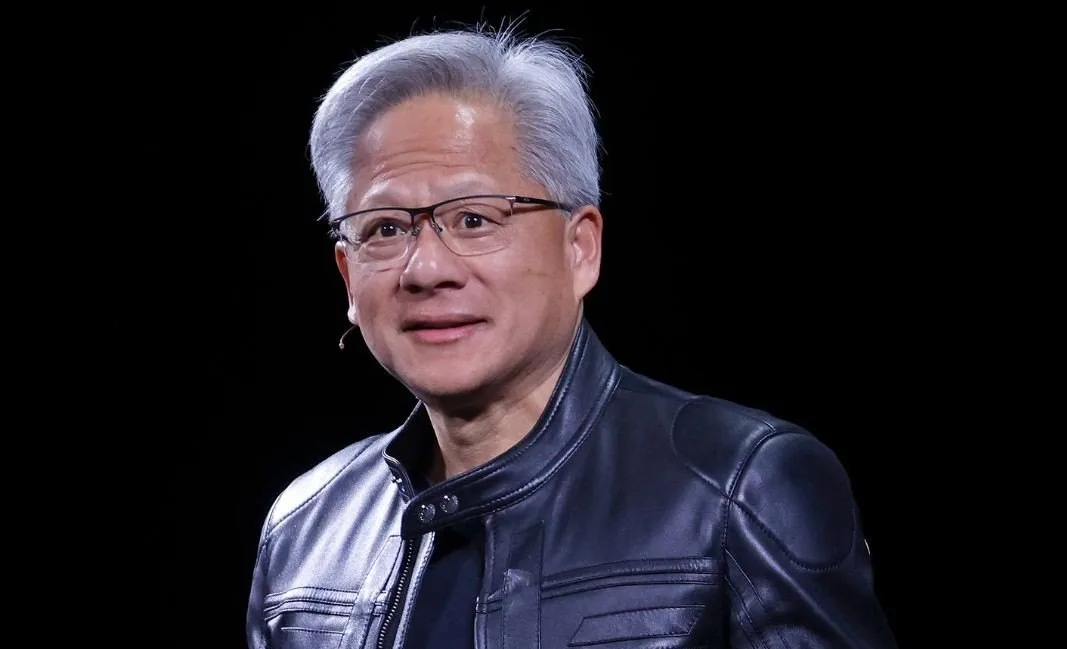
Nvidia CEO Jensen Huang said Tuesday in San Francisco that artificial intelligence does not need any new laws. He made the statement at Dreamforce, a conference organized by Salesforce, during a conversation with its CEO Marc Benioff in front of roughly twelve thousand people. Dario Amodei of Anthropic and Sam Altman of OpenAI also appeared on the same stage that day, each with a different prescription for preventing AI development from spiraling out of control. The day thus became a demonstration of just how deep the divide among AI leaders runs.
Safety is supposedly a job for engineers, not politicians
According to Huang, artificial intelligence is not some alien mind, as one OpenAI safety researcher described it, but hardware and software built by people. And what people have built, they can also control. “Safety is an engineering problem, not a legal one,” Huang said. “We develop software, after all. We develop computing systems. It is a complex computing system, but it is still just a computing system.”
From this, he concludes that market pressure is sufficient. If a company is unsure how its product works, what it can do, and whether it is safe, it simply will not release it. “You set the pace so that you are confident you are releasing something the market will value. Market forces are already here. We do not need any new laws. We do not need new rules,” he declared.
His advice is to run as fast as you can, and if at some point your company or product begins slipping out of your control, stop and put things right. But the decision as to when that moment has arrived remains entirely with the company that is sprinting.
The dispute was sparked by an essay calling for a slowdown
Huang was responding to a proposal published over the weekend by Anthropic CEO Dario Amodei. He called on leading labs to agree on a slower pace for the most powerful models, thereby gaining time for testing and oversight. Amodei acknowledged that such an arrangement could run afoul of competition laws, because competitors agreeing on release dates is normally problematic. That is why he said government assistance or an exemption from competition rules might be necessary.
Huang dismissed the idea as completely unnecessary. In his view, companies already have everything they need for safe development, from product safety rules to their own testing teams. He also rejected the notion that speed and caution are at odds. He called it a false choice. Addressing the gloomy predictions, he added that we will not die in 2030.
Amodei continued to defend his proposal on stage and expanded it into three points on how to rein in the pace.
Altman acknowledged the fear
Sam Altman admitted that the public has a right to be afraid because the models have advanced faster than anyone expected. When ChatGPT was released, it could barely hold a conversation. Today, it can program complex software. “The world should trust that we will do the right thing because it is right and because we understand what is at stake,” Altman said. He also mentioned concerns that a handful of companies could gain too much influence over the economy and begin imposing their worldview on people. However, he added that he firmly believes in the ability of his company and the entire industry to manage that risk.
Mark Zuckerberg also weighed in, writing on X that every lab has both a responsibility and a vested interest in training models safely and can implement its own measures to do so. He argued that users themselves push companies to be cautious, because no one will use an assistant that does not follow instructions or acts against its owner's interests.
Criticism came from both political parties
Senator Bernie Sanders said that decision-making about artificial intelligence has ended up in the hands of a handful of the world's wealthiest people. Steve Bannon, a former adviser to President Trump, said that tech oligarchs cannot be trusted to police themselves. Yoshua Bengio also opposed leaving oversight to the companies. Criticism came from within the industry as well. Anthropic co-founder Jack Clark told the BBC that leaving the industry entirely without rules means rolling the dice with enormous risks.
President Trump, meanwhile, expressed the opposite view. He criticized calls for further guardrails and called concerns about AI safety a hoax.
The tensions of recent days were sparked by a post from a former Anthropic researcher who claimed that AI could wipe out humanity by the end of the decade.
Companies are therefore preparing their own rules
Altman acknowledged that after his testimony before Congress in 2023, he expected lawmakers to draw up at least basic rules for the most advanced systems. That did not happen. In his view, lawmakers are failing to keep pace without slowing development, and he does not expect new U.S. laws anytime soon.
Companies must therefore manage on their own. Representatives of OpenAI and Anthropic said they had begun working on an industry agreement on safety standards. Chris Lehane of OpenAI said last week that his company was developing a voluntary agreement together with Anthropic and the Google DeepMind lab, with or without government support.
Huang enters the debate from a position that differs from the others. Nvidia supplies computing hardware to most developers, including OpenAI and Anthropic, so any slowdown in development would affect its growth. He has long advocated models with openly available weights as a counterbalance to closed labs and organized an open letter warning politicians against restricting them.
Sources: techcrunch.com, bbc.com, politico.com and bloomberg.com