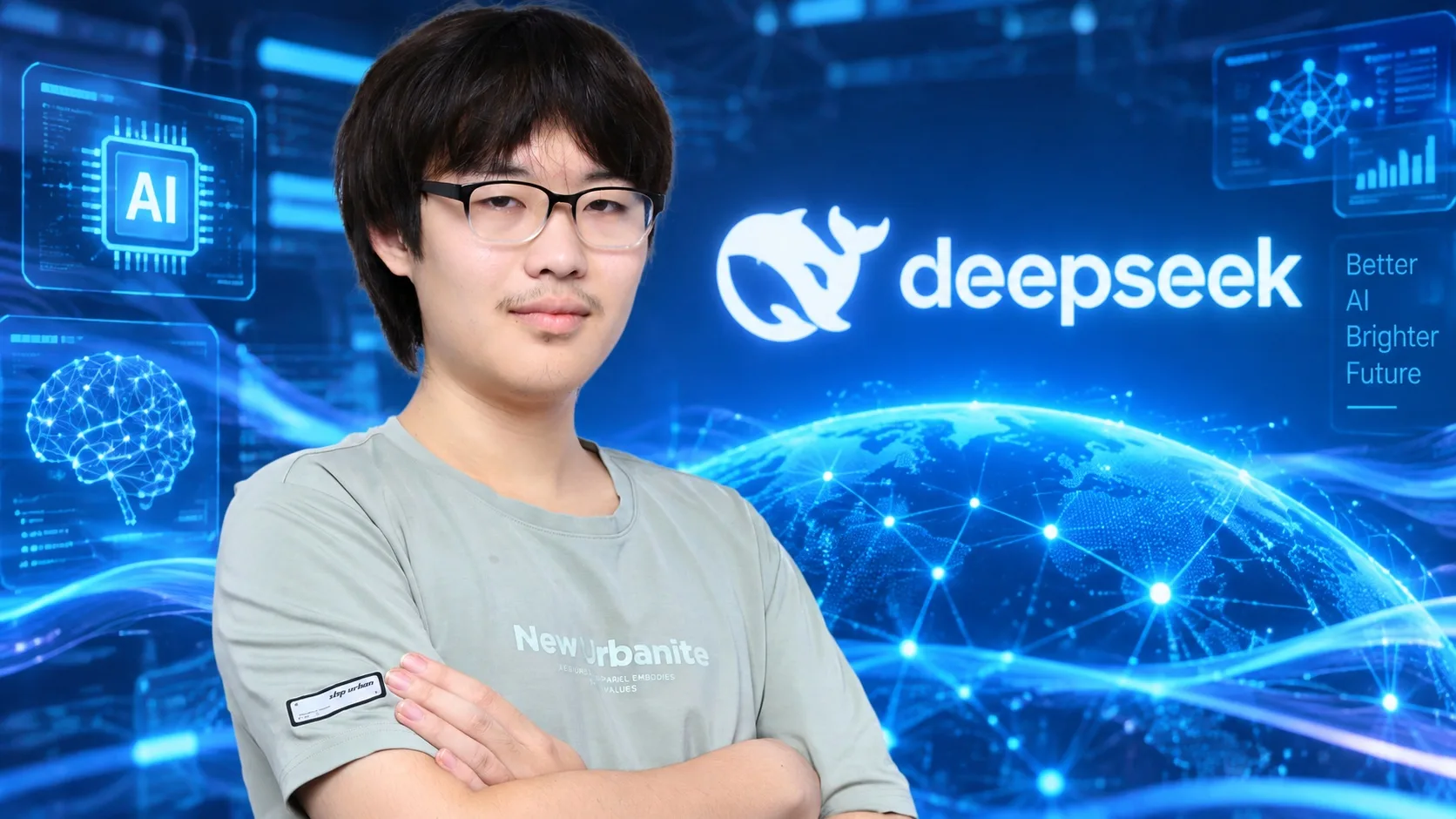
DeepSeek engineer Liu Shengyu described on his blog what it is like to build technology that will most likely cost him a job he loves. And why he does not believe Anthropic or OpenAI would ever make the most advanced artificial intelligence available to everyone and keep it affordable.
Liu is one of the people who wrote an important component of the company’s latest model, DeepSeek V4.1. He develops so-called kernels, low-level code that runs directly on graphics chips and determines how quickly a model trains and responds. It is a craft practiced by only a handful of specialists.
AI has become a competitor
Just a year ago, artificial intelligence helped him search documentation and catch bugs in code. Today, it can already read code for graphics cards and optimize it on its own. He is pleased with how well V4.1 turned out, but he also writes that operators created by artificial intelligence will most likely be as good as his, or better. This creates a loop that he described himself: the better he does his job, the faster the models train and the sooner they replace him. “People have never hesitated when it came to engineering their own destruction,” he wrote, immediately asking himself why he continues improving those kernels.
The first reason is the joy he finds in the work. He compared writing kernels to playing a video game. When he devises a new approach or gets his code to run faster than before, he says he feels excitement comparable to that of a runner who has improved their personal best. And when his code outperforms even the official version from the chip manufacturer, he is proud of it. Even if he slowed down or deliberately obstructed development, competing companies would keep going and he would end up being replaced anyway. Rather than have someone else do the work for him, he would prefer to do it himself. If everyone is so determined to bring about their own end, he believes he has no choice but to take part as well.
He is not afraid of losing his job. He fears something else: that he will keep a job from which the hands-on part has disappeared, and that instead of being someone who writes code himself, he will become someone who mainly supervises agents. He compared it to a skilled knitter who has to put down her needles and use a machine because the entire industry has adopted one in the meantime.
Liu writes in the post that he usually keeps reason and emotion separate, but that his emotional side occasionally makes itself heard. He recalls crying when moving out of an apartment where he had lived for barely a year because he could not say goodbye to the memories. Saying goodbye to an era when kernels were written by people and relied on human ingenuity is, he says, much more painful. He asks readers whether they know the feeling too—having to work with artificial intelligence to protect their livelihood while knowing that it will take away the part of their work they love most.
He does not trust Western labs
The second half of the text concerns who will control the most powerful systems. Liu warns against allowing them to end up in the hands of a few companies because, in his view, this would deepen inequality between people. Anyone with access to the most capable models would gain a lead that others would find difficult to overcome. He added that it would also make upward social mobility more difficult. From this, he concludes that cutting-edge intelligence should be open and affordably available to everyone. “I don’t believe Anthropic or OpenAI will do that,” he wrote, contrasting their closed approach with DeepSeek’s practice of releasing its models’ weights.
His strongest criticism is aimed at Anthropic. Liu wrote that he particularly does not want this company to control the most advanced artificial intelligence or AGI, meaning systems at or above the level of human intelligence. While noting that he was deliberately exaggerating, he compared it to a situation in which Hitler had obtained the atomic bomb before the Allies. According to him, belief in open development accessible to everyone is among the reasons why he has remained at DeepSeek.
He wrote the post at a tense time
The text became part of a dispute that had meanwhile erupted on both sides of the Pacific. A week earlier, researcher Jacob Coxon, who had previously also worked at OpenAI, left Anthropic over safety concerns. He wrote on X that companies were heading straight toward self-improving superintelligence and gambling with human lives in the process. On Saturday, Anthropic CEO Dario Amodei followed up with a call for leading labs to slow down. According to him, model capabilities are growing faster than companies can evaluate them. Sam Altman and Elon Musk also joined the debate.
It is precisely this call to slow down that Liu opposes, and he is not alone in China. According to the SCMP, calls by American companies for a slower pace have triggered growing opposition there. They came shortly before an anticipated meeting between Presidents Xi Jinping and Donald Trump, scheduled for September 24, where artificial intelligence safety could be one of the main topics. Meanwhile, Chinese labs are pushing hard. Following DeepSeek, Moonshot AI drew attention with its Kimi K3 model and demonstrated how quickly Chinese teams are advancing.
Sources: weixin.qq.com, yahoo.com, timesofindia.indiatimes.com and neoteo.com