

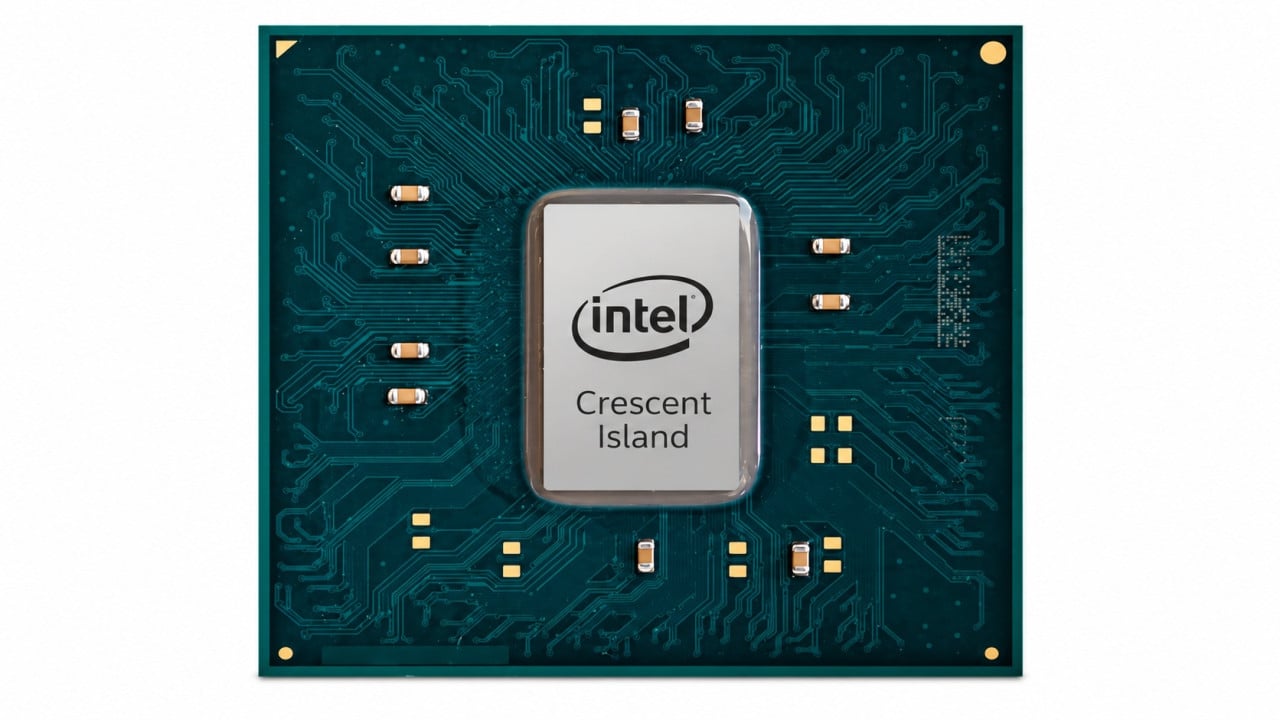
Intel is preparing a new AI chip for data centers. It is called Crescent Island and is expected to launch by the end of the year. Instead of the fastest and most expensive memory, Intel has chosen a more affordable route. Crescent Island is a graphics processor built on the Xe3P architecture and designed exclusively for inference, the phase when a user actually enters something into a model and waits for a response. This is where demand is growing fastest, and where customers scrutinize every cent of operating costs.
Why LPDDR5X Memory Instead of HBM
Both Nvidia and AMD pack their top-of-the-line accelerators with HBM memory. It is fast, expensive, and has three manufacturers—SK Hynix, Samsung, and Micron—which control more than 95 percent of the entire market for this type of memory. The result is shortages, rising prices, and dependence on a narrow group of suppliers.
That is why Intel has equipped Crescent Island with LPDDR5X, a type of memory commonly used in mobile phones and laptops. The reference card will offer 160 GB of this memory, while partners will be able to build their own versions with up to 480 GB. For comparison, Nvidia Vera Rubin supports a maximum of 288 GB of HBM4, while AMD Instinct MI450X reaches 432 GB. In terms of raw capacity, Crescent Island beats them all.
Of course, there is a catch. LPDDR5X bandwidth is estimated to be well below 1 TB/s, while the older Nvidia H200 exceeds 4.7 TB/s. Memory bandwidth directly determines how quickly a chip can process computations. Intel, however, views this disadvantage differently. For inference workloads, extreme bandwidth is not as critical as it is when training models. Moreover, LPDDR5X consumes less power, relies on a different group of suppliers, and allows the entire card to operate in a conventional air-cooled server without liquid cooling.
350 Watts and No Special Cooling
This is one of the compelling arguments Intel will present to customers. Crescent Island consumes 350 watts and requires only standard air cooling, which most data centers already have. Nvidia and AMD cards at the top of the performance pyramid require liquid cooling, which increases the cost not only of the hardware itself but also of the entire server room infrastructure.
Today, data center operators are not concerned solely with the price of the chip. They consider electricity, heat, and simply what can fit into a rack without having to rebuild the entire facility. Crescent Island fits perfectly into existing infrastructure.
Kechichian, Gaudi, and Lessons from the Past
The strategy for the new chip is being led by Kevork Kechichian, who took over Intel's data center division from the previous team last year. Among other things, he inherited the wreckage of the Gaudi accelerator, which was originally intended to be Intel's entry into the world of AI training. Gaudi failed to attract customers, its planned successor was canceled, and Intel wrote off unsold inventory in 2024 and 2025.
Crescent Island therefore makes no secret of the fact that it does not intend to beat Nvidia in training. According to Kechichian, Intel is "going back to basics" and targeting areas where customers need computing at a reasonable price, rather than the world's most powerful hardware at any cost. The chip was developed over 18 months and was first publicly mentioned in October 2025 as part of the turnaround launched by new CEO Lip-Bu Tan.
Tan replaced Pat Gelsinger amid considerable investor dissatisfaction, and Intel's shares have since risen by more than 200 percent. Crescent Island is the first concrete AI product heading to customers under his leadership.
In-House Manufacturing
Intel plans to manufacture Crescent Island in its own factories rather than at TSMC, as it has done with a number of other recent products. This could give it better control over supply and allow it to drive costs lower than competitors that depend on the Taiwanese foundry.
Intel is also considering whether it could sell a modified version of the chip in the Chinese market in compliance with U.S. export restrictions. Nvidia and AMD have lost a large share of the Chinese AI market precisely because of these bans. A cheaper chip that complies with the rules could enter markets their rivals cannot access.
Intel plans to ship samples to customers in the second half of 2026. Only then will the real performance tests and first orders arrive, along with an answer to the question of whether Crescent Island is truly a viable alternative or merely another promise in a long line of Intel announcements that have so far failed to convince the market.
Sources: startupfortune.com, finance.biggo.com and theinformation.com


