

Shortly after Amazon CEO Andy Jassy announced a $50 billion investment in OpenAI, an unexpected invitation arrived. AWS (Amazon Web Services) invited TechCrunch journalist Julie Bort on a private tour of its chip lab in Austin, Texas. The very same lab at the heart of the massive deal. Would anyone turn it down? Certainly not.
The lab is housed in a gleaming building with chrome windows in Austin's The Domain district, nicknamed the local Silicon Valley. From the outside, it looks like any other tech company office. Open-plan spaces, kitchenettes, conference rooms. But in the back, on one of the upper floors overlooking the entire city, something different is hidden.
Behind the Doors of AWS
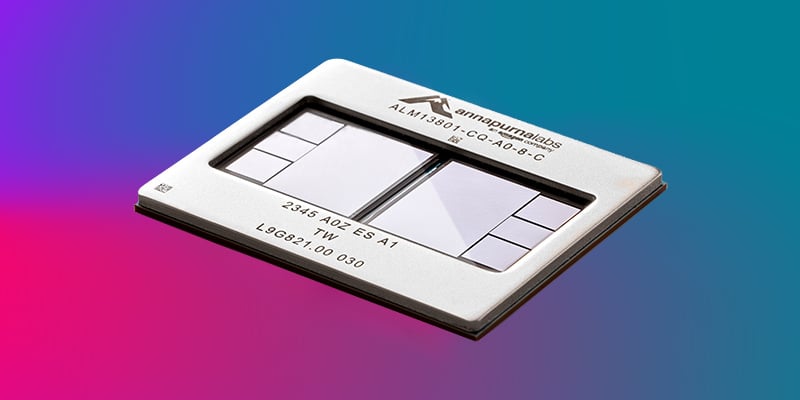
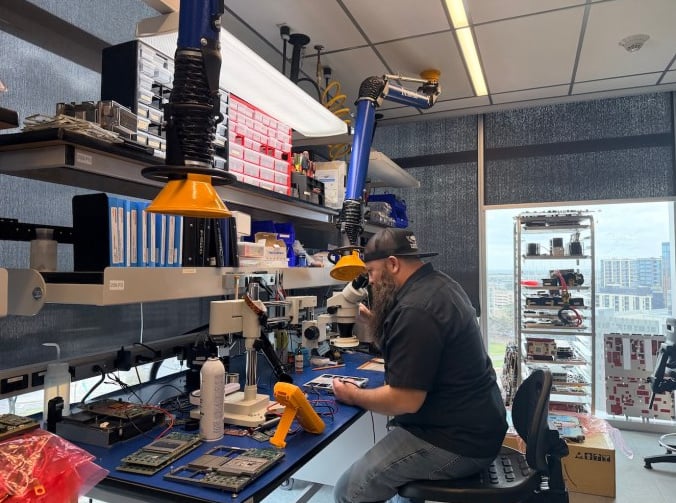
The lab is roughly the size of two large conference rooms. The noise of fans, shelves full of equipment, engineers in jeans. No white protective suits. Chips are not manufactured here; they are brought to life here. Trainium3 is manufactured by TSMC using a 3-nanometer process, the absolute cutting edge of what chip manufacturing can do today. But whether the chip works properly is determined right here in Austin.
The entire ritual is called "bring-up." Lab director Kristopher King describes it as follows: "You get your hands on the chip for the first time, and it's like a big overnight party. You simply stay here, like at summer camp." After 18 months of work, the team powers up the chip for the first time and waits to see whether it works. Spoiler: It is never trouble-free.
With Trainium3, the prototype had the wrong dimensions for mounting the heatsink. The chip could not even be powered on. What did the team do? They grabbed a grinder and started grinding down the metal. So as not to disturb the party atmosphere, they slipped away to grind it in the conference room next door. That's simply how things work there.
One Million Chips for Anthropic and Plans for OpenAI
More than 1.4 million Trainium chips have been deployed in total across all three generations. And more than one million of them power Anthropic's Claude, one of the world's most popular AI assistants.
The largest deployment is called Project Rainier, one of the world's largest AI computing clusters. It launched in late 2025 with half a million Trainium2 chips and runs exclusively for Anthropic. But now OpenAI is entering the picture. AWS has committed to delivering 2 gigawatts of Trainium-based computing power specifically for OpenAI. And that is a monumental commitment, especially when Anthropic and Amazon Bedrock are consuming chips faster than Amazon can manufacture them.
The agreement with OpenAI is not entirely straightforward. Times magazine reported that Microsoft may feel disadvantaged because it has its own agreement with OpenAI granting access to all models and technologies. What will ultimately come of it remains to be seen.
Trainium vs. Nvidia
This brings us to what analysts around the world are watching. Nvidia holds a near-monopoly in AI computing hardware. Amazon, however, is succeeding in disrupting this dominance, and Trainium3 is its strongest argument to date.
Amazon claims that its new chips running on specialized Trn3 UltraServers cost up to 50 percent less while delivering comparable performance to conventional cloud servers. Engineering director Mark Carroll attributes this to a combination of Trainium3 and the new Neuron switches, which the team also designed itself.
"That gives us something huge," Carroll says. The switches connect every chip to every other chip in a mesh network configuration, dramatically reducing latency. That is precisely why Trainium3 is breaking records, particularly in terms of performance per unit of energy consumed.
And what about switching costs—the cost of moving away from Nvidia? Historically, that was the main argument for staying with Nvidia. Applications written for CUDA, Nvidia's proprietary platform, had to be completely rewritten. Amazon now says that Trainium supports PyTorch and that switching requires "practically one code change, recompiling, and running on Trainium." It sounds almost too simple, but if it works, it changes the entire equation.
This month, AWS also announced a partnership with Cerebras Systems, whose specialized inference chip will be deployed directly on servers with Trainium. Amazon is thus making a multilayered bet on the future of AI computing power.
The $350 Million Israeli Startup
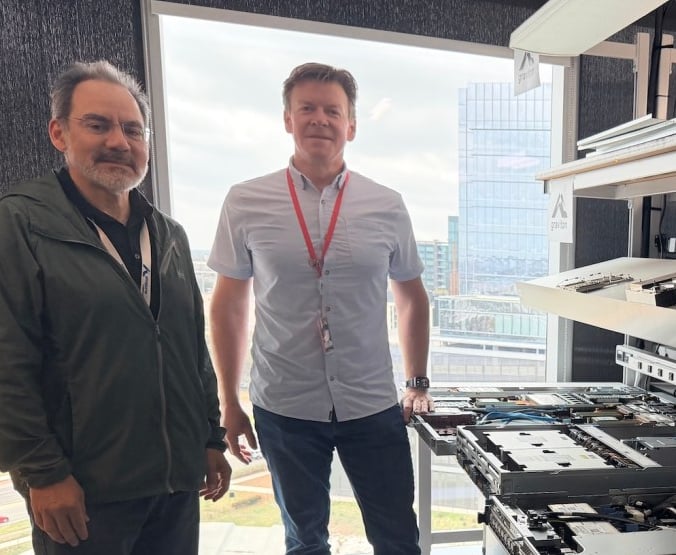
This entire chip team exists thanks to a single acquisition. Amazon acquired Israel's Annapurna Labs in January 2015 for approximately $350 million. Ten years later, this team produced Graviton, Inferentia, and now Trainium. The Annapurna Labs logo still hangs in the offices today.
Graviton, a low-power ARM-based server processor, was the first major success. It was the chip Apple publicly praised at the AWS re:Invent conference in 2024. Apple, a notoriously secretive company, had its AI director publicly describe how Apple uses both Graviton and Inferentia. For Amazon, it was confirmation that it was on the right track.
Trainium2 now handles most inference traffic on Amazon Bedrock, the cloud service through which thousands of companies build their own AI applications. "Our customer base is growing as fast as we can deliver capacity," King says. Then he adds a striking statement: "Bedrock could one day be as big as EC2." EC2, AWS's computing cloud, is one of the largest and most profitable cloud services in the world.
A Lab Where Even Welding Is Done Under a Microscope
Back to the lab. One of the most impressive moments of the tour was the welding station. Hardware engineer Isaac Guevara welds miniature integrated-circuit components there under a microscope. The work is so precise that Carroll, a senior team leader, openly admitted he could not do it. Guevara laughed. So did the engineers around him.
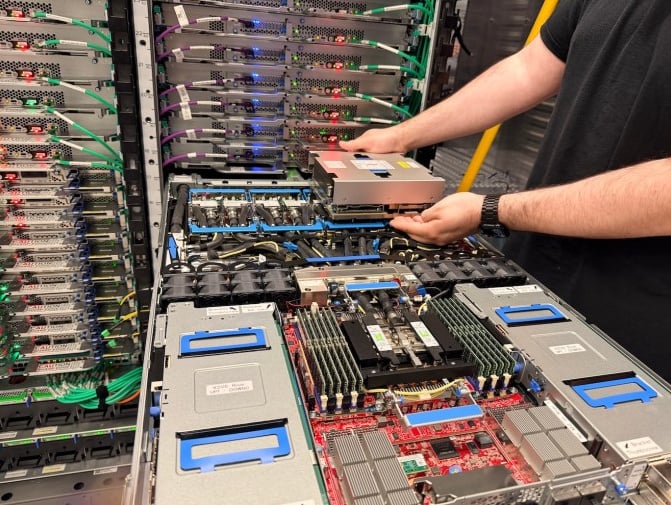
The star of the lab, however, is an entire wall of "sleds", the trays that hold Trainium and Graviton chips and supporting components. Each generation has its own display piece. It is a bit like a museum, but a functional one. Assemble the sleds in a rack, add network components, and you have the heart of the entire Anthropic Cloud.
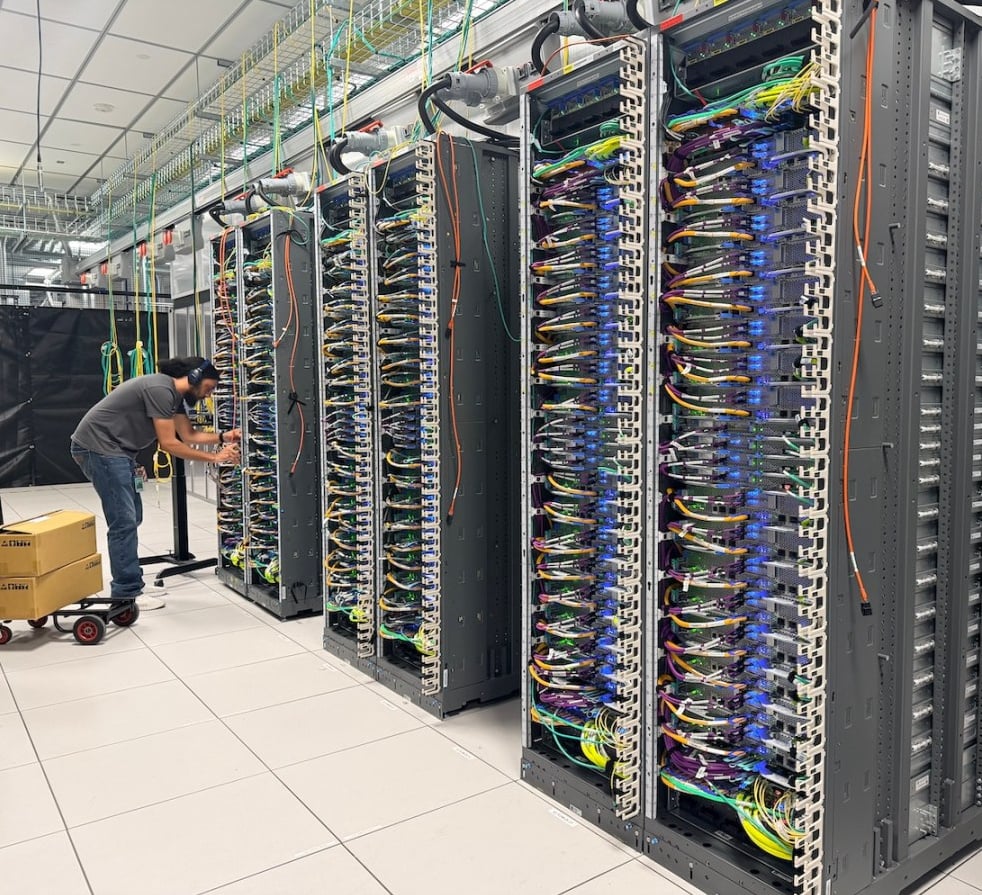
Not far from the main lab, the team also has its own private data center for testing. Entry is strictly controlled. The cooling system is so loud that earplugs are mandatory. The air smells of hot metal. Rows of servers are packed with Graviton, Trainium3, and Nitro chips, all cooled by liquid in a closed loop.
Engineers work here 24 hours a day, 7 days a week for three to four weeks around each chip's initial bring-up. The pressure is immense. Andy Jassy personally monitors their results and speaks about them publicly with enthusiasm. In December, he said that Trainium is already a multibillion-dollar business for AWS and called it one of the technologies that excites him most.
The team is now working on Trainium4. No one has yet said what it will bring.
Source: techcrunch.com


