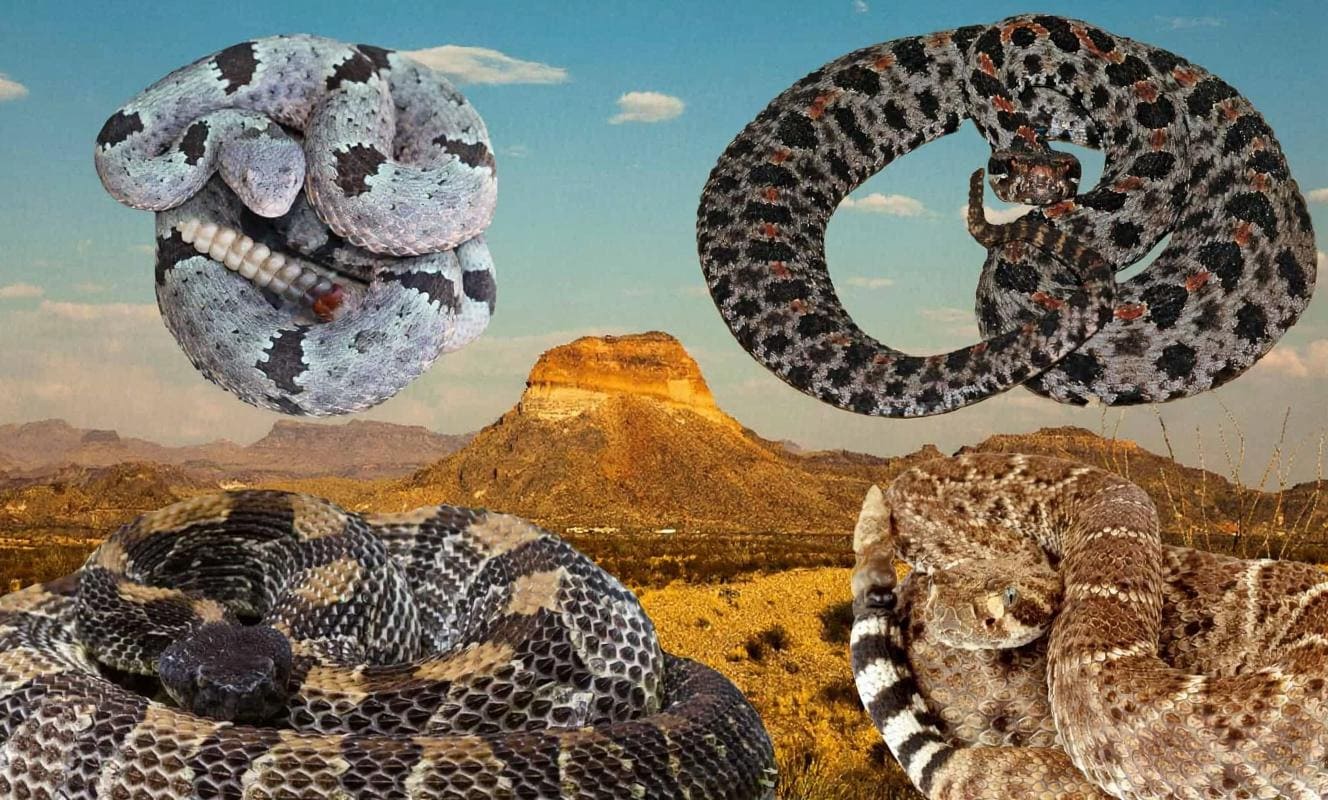
If you could put the whole of Texas culture into one football stadium—which would be the ideal place for it—you would have to reserve a large section for rattlesnakes. After all, rattlesnakes have always played a prominent role in Texas legends and folklore.
A friend of mine from Austria told me that when Europeans picture Texas, they think of cowboys, cattle, oil, and rattlesnakes. That is hardly surprising. It seems that every Western ever made includes a scene where a cowboy is startled by a rattlesnake and dispatches it with a single perfect shot from his revolver. My uncle grew up in the Texas brush country and never considered a pistol particularly reliable. He preferred a shotgun, ideally a twelve-gauge, and double-barreled if possible.
My old uncle once told me that if I heard a rattlesnake nearby rattling a warning, I did not even have to look or aim. Just point the barrel in its direction, Uncle said, and it will aim itself at you. It will line up its head with the end of the barrel, and you will hit it most of the time. I did not like the way he used the phrase “most of the time” in those instructions.
Uncle filled my head with all kinds of frightening stories about rattlesnakes. Supposedly, they can put their tails in their mouths and form a wheel to chase you. If you shoot one, it will not die until the sun goes down, and its mate will search for you forever. “They always hide under the car,” he would say, “waiting for you to get out, so don’t linger and hurry indoors.”
If you cut off a rattlesnake’s head, never carry it in your pocket—because you might accidentally reach into it several days later, and it can still bite you. One boy who did that was bitten and died.
Even the rattles themselves were dangerous, because dust from them could blind a person. Uncle later told me that he knew most of it was exaggerated—but, he said, you cannot raise boys with reason alone; it is better to keep them afraid.
The great folklorist J. Frank Dobie said that the character of Texans is measured by two things: Do they close every gate they pass through, and do they kill every rattlesnake they encounter? Dobie considered the subject of snakes so important that he wrote an entire book about it. And, being a professor, he gave it one of those profound philosophical titles. He simply called it “Rattlesnakes.”
In it, he discusses stories about the largest rattlesnakes ever found in Texas. Several accounts from the frontier settlement era claim that there were rattlesnakes 10 to 12 feet long (approximately 3 to 3.7 meters), weighing 25 to 30 pounds (11 to 14 kilograms). Some speculate that such giants lived back then because human settlement had not yet become extensive enough to limit their growth.
Such monsters are not found today, except in those ubiquitous internet photos that use perspective tricks. At the annual rattlesnake roundups in Snyder and Freer, six-foot (approximately 1.8-meter) specimens are not unusual, and an eight-footer (approximately 2.4 meters) occasionally appears, but never a 10- or 12-footer. Dobie says that the best way to set rattlesnake records is to do so far away from measuring tapes and rulers—and with as few witnesses as possible. Such things, he observes, compel a person to be careful with the facts.