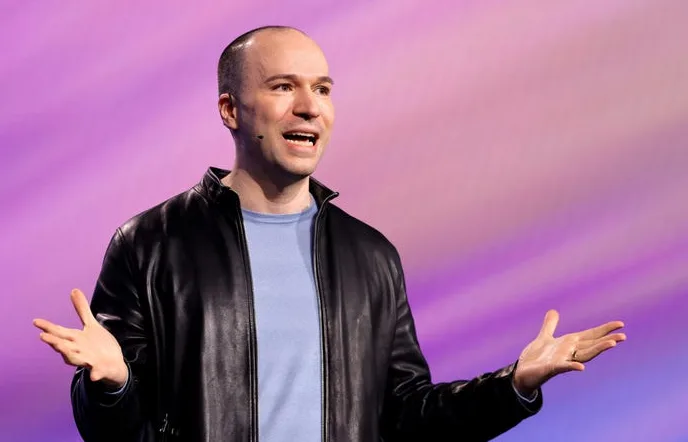
When people hear OpenAI, most think of Sam Altman. However, the company was also co-founded by Greg Brockman, whose influence within the company has grown sharply over the past year. He now oversees both OpenAI’s product division and its computing infrastructure, representing nearly fifteen hundred employees in total. Forbes estimates his net worth at $25.5 billion, roughly eight times Sam Altman’s fortune. This amount earned him forty-fifth place on the list of the four hundred richest Americans.
Greg’s early years
Brockman grew up in Thompson, North Dakota, as the son of doctors. He enjoyed mathematics and the natural sciences from an early age and also excelled in chemistry and computer science at Red River High School. In 2006, he won a silver medal at the International Chemistry Olympiad, and a year later he became the first student from North Dakota since 1973 to reach the finals of the prestigious American science competition Intel Science Talent Search. However, he earned his first money in a completely different way, reportedly receiving one hundred dollars for performing at a local theater.
He did not begin programming seriously until taking a gap year after high school. He read Turing’s paper on whether machines can think and set out to create a chatbot. He managed to develop a program that could convincingly converse about the weather, but he got no further. At the time, he could not find any methods that would move his project forward, so he set it aside.
In 2008, he enrolled at Harvard, but stayed for only one year. He subsequently transferred to MIT, though he did not remain there long either. In 2010, he left school and joined Stripe, a payments startup founded by the Collison brothers. He had met Patrick Collison at MIT. Brockman spent five years at Stripe, working his way up from a regular employee to the company’s first chief technology officer. During that time, the team grew from five people to more than two hundred employees. He left the company in May 2015.
Founding OpenAI in a living room
In August 2015, he met for dinner with Elon Musk, Sam Altman, Ilya Sutskever, and several others. At the time, Musk and Altman had a clear vision of a laboratory that would develop safe artificial intelligence for the benefit of humanity. Brockman then took charge of assembling the founding team, recruiting top researchers from well-paid positions and persuading Sutskever to become the project’s chief scientist. OpenAI was officially established in December 2015, and for its first few months it operated directly out of Brockman’s living room in San Francisco.
His personal and professional lives also overlapped later on. He married his wife Anna in November 2019, directly in OpenAI’s offices during a workday, with Sutskever officiating the wedding ceremony.
Brockman led several projects that raised OpenAI’s profile. He was behind the creation of OpenAI Gym and the OpenAI Five system, which learned to play Dota 2 by training against itself. After its first public match in 2017, he explained that the bot had trained for just two weeks and that it represented a step toward software capable of handling complex tasks, such as a surgeon’s work. Two years later, the OpenAI Five system defeated the reigning world champions.
In March 2023, Brockman unveiled GPT-4 during a live broadcast. Then came November 2023, when the board unexpectedly dismissed Altman and informed Brockman that he was being removed from the leadership team. Brockman left the company in protest later that same day. Microsoft CEO Satya Nadella promptly announced that both men would join his company to lead a new research team. Five days later, however, they were back at OpenAI. In 2024, Brockman took a several-month break to rest and returned to work in November.
He taught himself machine learning
His own account of how long it took him to catch up with the scientific side of the field is particularly interesting. On his blog, he wrote that during his first three years at OpenAI, he dreamed of becoming a machine learning expert but made almost no progress. The change began during the 2018 Christmas holidays, when he fully committed himself to studying. Within nine months, he became someone who was actually developing machine learning. According to him, the greatest obstacle was neither mathematics nor programming, but the need to accept that he was once again a beginner.
This year, he described on his blog how OpenAI defends its systems after an attack carried out by autonomous agents targeted the Hugging Face platform. According to Brockman, models around the world are now capable of automating parts of real cyberattacks, which means companies must improve their security at an unprecedented pace.
The Musk trial and political donations
This spring, Brockman appeared in court in the lawsuit brought against OpenAI and its leadership by Elon Musk. During questioning, he described how angrily Musk reacted when they refused to give him control of the company. He said that at the time, he expected Musk to physically attack him. He also testified under oath that his stake in OpenAI was worth more than twenty billion dollars, which estimates suggest represents between two and a half and three percent of the company, even though he did not invest any of his own money in it. In May, the jury ruled in favor of Altman, Brockman, and OpenAI, finding that Musk’s claims were time-barred.
He also attracted attention for where he sends his money. Together with his wife, he donated tens of millions of dollars, with twenty-five million going to a movement supporting Donald Trump and fifty million to Leading the Future, an organization that backs politicians who favor looser rules for artificial intelligence. Some OpenAI employees and users criticized the move, but Brockman defends it as support for an environment in which the technology can continue to develop.
Sources: wikipedia.org and forbes.com