Google has announced a partnership with Mill, a startup that makes smart trash bins. The company will provide Mill with food waste data it collected in its corporate cafeterias, while also giving it access to unreleased versions of its Gemini AI model. The result is intended to be a system capable of identifying exactly what people throw away and helping companies do something about it.
In 2017, Google launched an internal initiative called Project Delta, housed within its moonshot division X. Researchers installed cameras directly in the kitchens of corporate buildings and began photographing and documenting what employees threw away. Every piece of food was manually labeled and categorized. Chefs then reviewed the results. The goal was to create a kind of "air traffic control system for food" that would help food companies, logistics firms, and food banks manage supplies more effectively.
Project Delta ultimately never became a standalone product. In 2020, Google moved it into its regular corporate structure and renamed it Project Chorus, focusing it on the supply chain. But the original dataset, comprising thousands of annotated images of food waste, remained unused. "We are sort of the heirs to this project," Matt Rogers, CEO of Mill, told Forbes.
A thousand-dollar bin with a camera inside
Mill is no ordinary startup. It was founded by Matt Rogers, the co-founder of Nest, who worked directly for the tech giant for a while after its acquisition by Google in 2014, before leaving in 2020 to focus on a single problem: food waste.
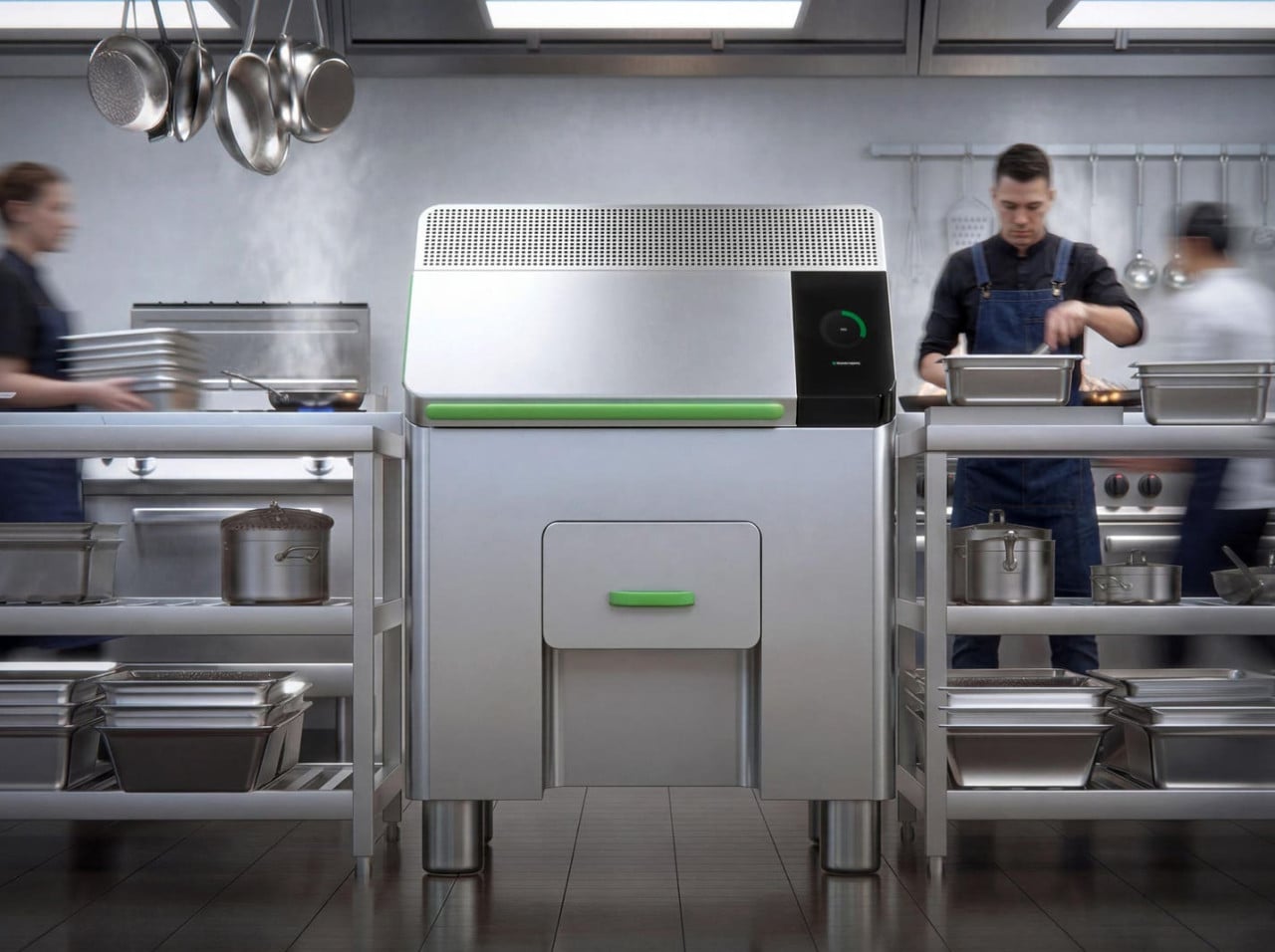
Mill's product is a smart trash bin that costs a thousand dollars. It processes food scraps into granules that can be used as poultry feed or a soil additive. For an additional fee, customers can also have these granules transported directly to farms. The company sells both a household version of the bin and a commercial model for restaurants, stores, and corporate kitchens. One of its announced customers is Whole Foods, the Amazon-owned grocery chain.
The new camera inside the bin is intended to do more than just help process waste. The Gemini AI-powered system will identify in real time what is being thrown into the bin and in what quantities. A corporate chef will therefore have access to data showing that kilograms of Caesar salad end up in the trash every Tuesday and Thursday. Buyers will find out that the macaroni is not being eaten. Management will get an overview of where money is being wasted, without anyone having to sort through the trash manually.
Gemini in the kitchen
The partnership operates through the Google AI Futures Fund. Through the program, Google works with startups by giving them access to pre-production versions of its AI models and a team of engineers. In return, it receives feedback on how the models perform in the real world. According to Google, Mill is the program's first hardware partner. "Access to these Gemini models allows us to significantly accelerate the development of our waste recognition technology and test it in a pre-production environment," said Harry Tannenbaum, co-founder and president of Mill.
For Google, this is an unusual move. Instead of leaving the food waste data sitting on a server somewhere, it is now being handed over to a company that can actually use it. And Gemini will gain a new type of environment in which it will have to learn to recognize food scraps on a commercial scale, under varying lighting conditions, at high volume, and with real economic consequences.
$380 billion a year in the trash
Why is food waste even an issue for technology companies? In the US, 30 to 40 percent of all food produced ends up in the trash every year. That amounts to approximately 70 million tons of food, with an economic value exceeding $380 billion annually, according to data from the nonprofit ReFed. Rogers puts it simply: "When we look 10 or 20 years into the future, we'll be ashamed of how much food we wasted. Technology and design can help with that."
And while Rogers was speaking to Forbes via video call, a garbage truck drove past outside. Rogers noticed it and remarked: "Wouldn't it be great if the garbage truck didn't come every day? That's really the whole idea. We could get it down to once a month. I think we'll get there."
Additional source: morningstar.com