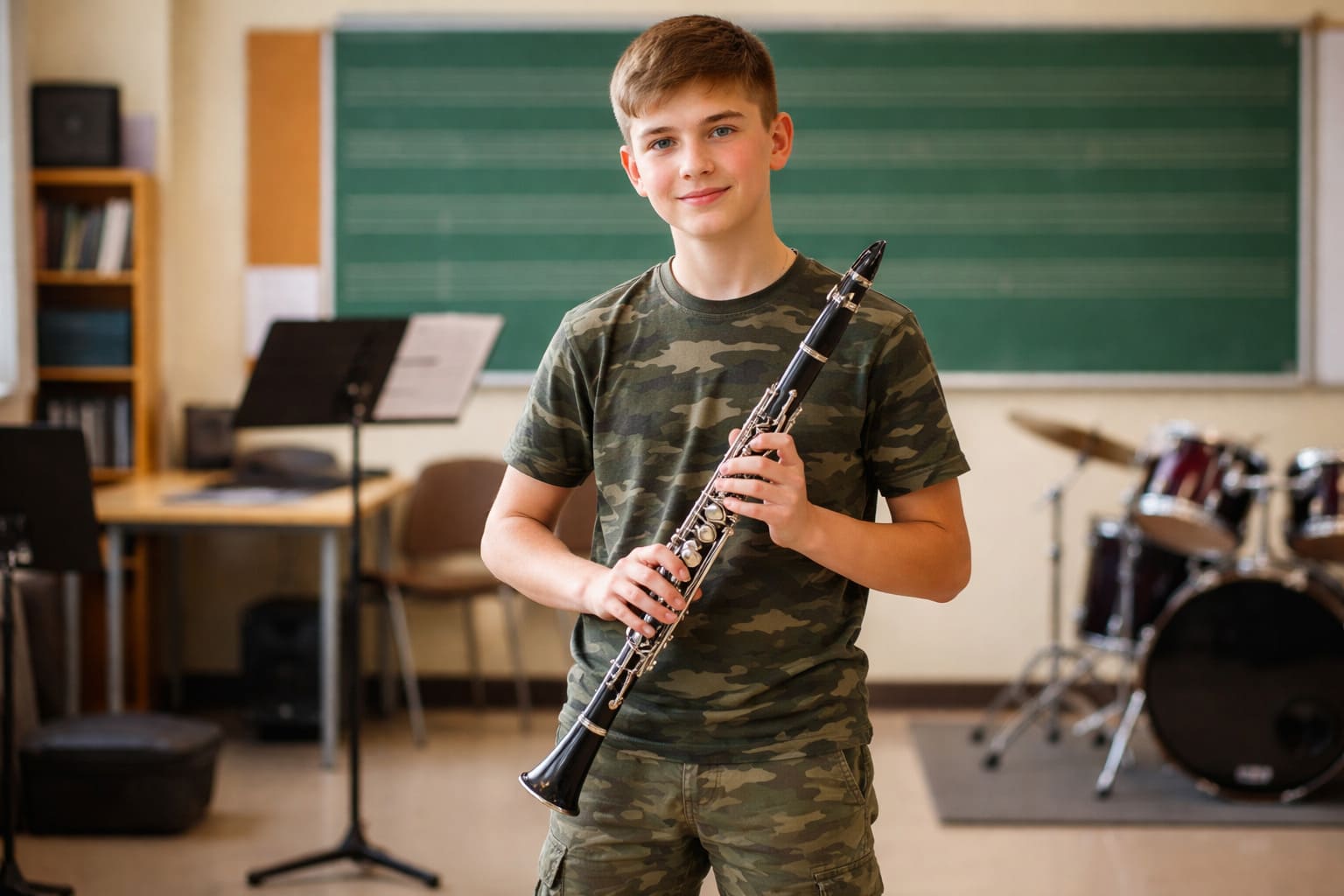
In mid-December, Lawton Chiles Middle School in Florida was placed on lockdown. The artificial intelligence security system ZeroEyes mistakenly identified a clarinet as a weapon. Police immediately rushed to the scene after receiving a report of a man in camouflage clothing holding a suspicious weapon as if it were a rifle slung over his shoulder. Instead of a shooter, however, officers found only frightened students hiding in the music room. It turned out that the "suspect" was a student dressed as a military character from the Christmas movie Red One because the school was holding a Christmas costume day. The student was holding a clarinet, and the system misidentified it.
ZeroEyes co-founder Sam Alaimo said the system worked correctly and that it was better to flag a potential threat than overlook it. A ZeroEyes spokesperson confirmed that school security staff and administrators often request that alerts be sent even at the slightest suspicion. After investigating, police confirmed that the student did not understand how the way he was holding the clarinet could have triggered the alarm. However, a ZeroEyes spokesperson claimed that the student had deliberately held the instrument like a rifle slung over his shoulder. The school agreed with this version and blamed the student.
Warnings and other false alarms
Principal Melissa Laudani sent parents a letter asking them to talk to their children about the dangers of pretending to have a weapon on school grounds. Seminole County Public Schools communications representative Katherine Crnkovich emphasized in an email that the student was not merely carrying the clarinet but was holding it like a weapon. However, this approach does not address all the problems. In Texas in 2023, the ZeroEyes system mistakenly identified a shadow as a weapon and triggered a school lockdown. Last year, it also raised an alarm over prop weapons being used by two students during a play rehearsal. A similar system called Omnilert mistook an empty Doritos bag for a weapon, leading to the arrest of a 14-year-old student in Baltimore, where eight police cars responded.
ZeroEyes is popular in 48 U.S. states, and schools invest tens of thousands of dollars in it annually. In Seminole County, for example, officials want to add about 850 cameras equipped with ZeroEyes, which would cost $500,000 (approximately CZK 11,500,000). Senator Keith Truenow is requesting this funding to increase protection against gun violence. The system costs schools around $60 (approximately CZK 1,380) per camera per month. In Kansas, a plan covering 1,300 schools with 25 cameras each was expected to cost $8.5 million annually (around CZK 195,500,000), while doubling the coverage would cost $15.2 million (approximately CZK 349,600,000).
Risks of false alarms
Experts describe these systems as "security theater" that entices schools to invest in expensive technologies without evidence of their effectiveness. ZeroEyes reports that it has detected more than 1,000 weapons over three years, including a case in Texas where it found a minor with an AK-47 rifle at an elementary school without a shooting occurring. People review the alerts and decide whether to call the police, which is intended to minimize errors. Nevertheless, experts warn that frequent false alarms can cause stress among students, exhaust police resources, and lead to dangerous situations when officers arrive prepared to confront a shooter. Seminole County has used ZeroEyes since 2021 but does not provide details about successful detections. A ZeroEyes spokesperson says that most schools have no false alarms, but the company does not disclose exact figures.
Source: arstechnica.com