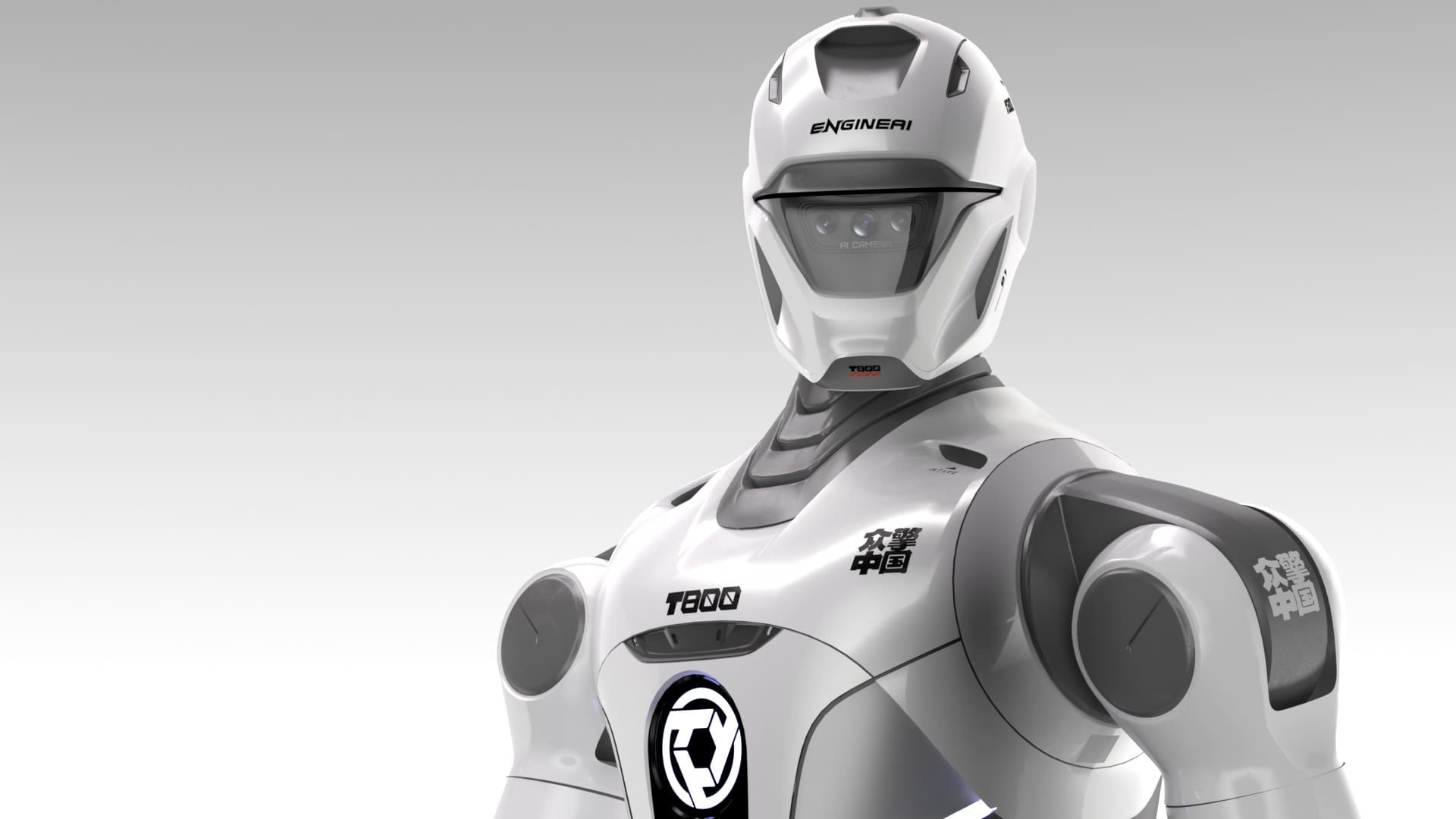
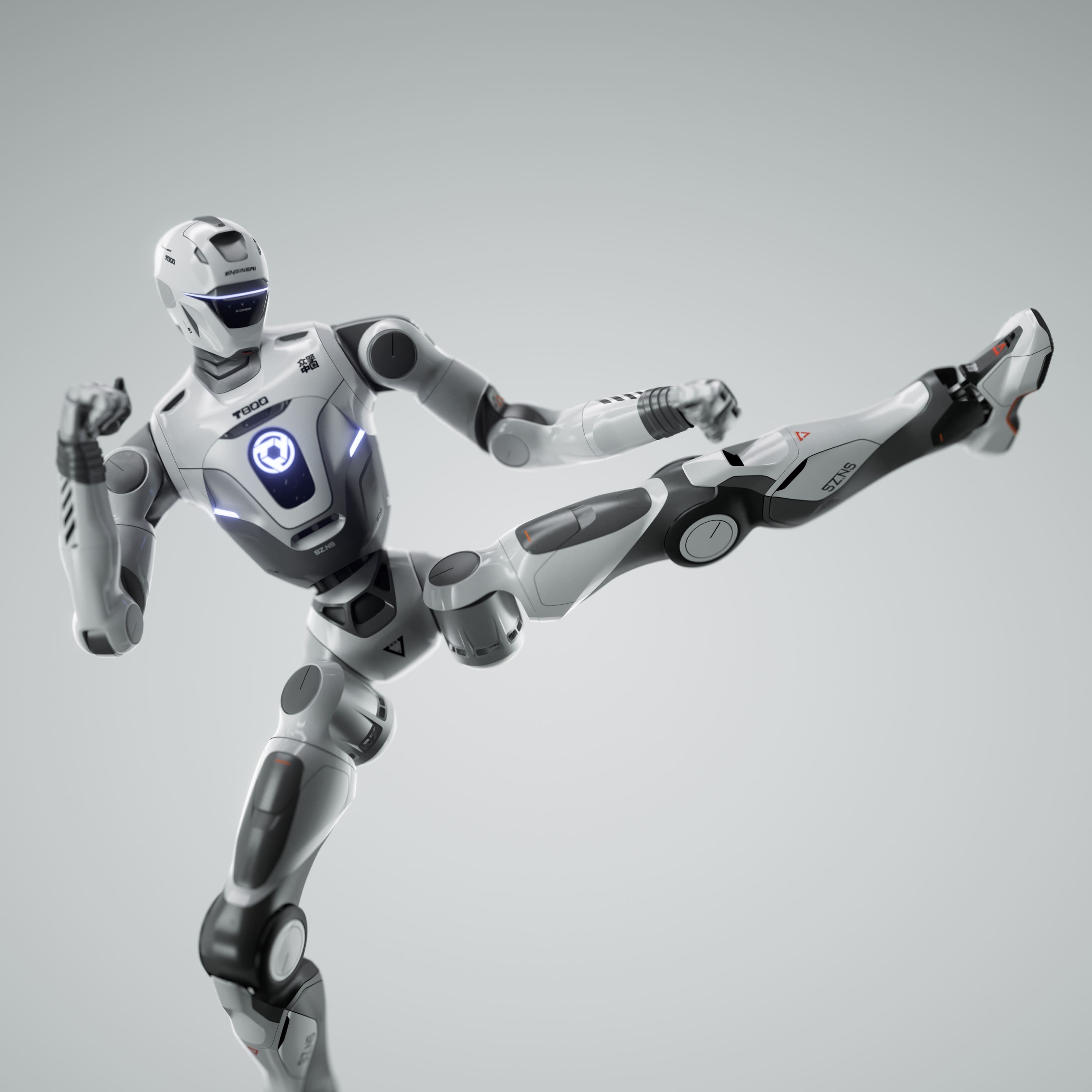
Chinese company EngineAI from Shenzhen unveiled its new T800 humanoid robot only a few days ago, but it has already sparked a storm online. In the original video, the robot smashes through doors, delivers rapid spinning kicks, and moves with such speed and power that many viewers immediately began to question whether it was a computer-generated image rather than a real machine. When releasing the video, the company claimed that it contained no CGI (computer-generated imagery), no artificial intelligence, and no sped-up footage, but viewers on social media pointed to the dramatic lighting and stylized editing, which they said suggested digital effects. For example, user MiquelVilam on the X platform argued that the robot could not move with such precision without digital enhancement.
The video takes place in a dark studio, where the T800 demonstrated its strength and agility. The company explained that these movements are possible thanks to the robot's technical specifications, such as 450 newton-meters of joint torque and 29 degrees of freedom. This allows the robot to perform complex actions that look almost too good to be true. But it was precisely this perfection that led to the rapid spread of skeptical comments, revealing a general problem in the field of humanoid robots—when movements are this advanced, people can easily mistake them for cinematic tricks.
Behind-the-scenes footage as proof of authenticity
To dispel these doubts, EngineAI released a new behind-the-scenes video on the X platform with a title. This post shows the robot in an ordinary studio without color grading or dramatic editing. The T800 performs the same actions, but this time mechanical details such as the joints and movement mechanisms are visible. In this way, the company sought to prove that the robot's performance comes from engineering design, not digital artistry.
The video is accompanied by a description emphasizing that the movements are real and depend on the physical characteristics of the T800. This approach is not new—EngineAI is trying to show that its robot is capable of real-world feats that were merely presented in a stylized manner in the original clip. Viewers can now see how the robot works without filters, which should reassure those who doubted its authenticity.
EngineAI T800 BTS Footage: Setting the Record Straight on CGI Rumors #EngineAI #robotics #newtechnology #newproduct pic.twitter.com/Z1HrxQLhLT
— EngineAI (@engineairobot) December 3, 2025
Similar cases involving other companies
EngineAI is not the only Chinese company facing such accusations. Xpeng recently dealt with similar doubts when it unveiled its Iron robot with an unusually natural gait at AI Day 2025. Viewers speculated that it might be a person in a suit, but Xpeng later released additional footage of the mechanical frame and drive systems to put an end to the debate.
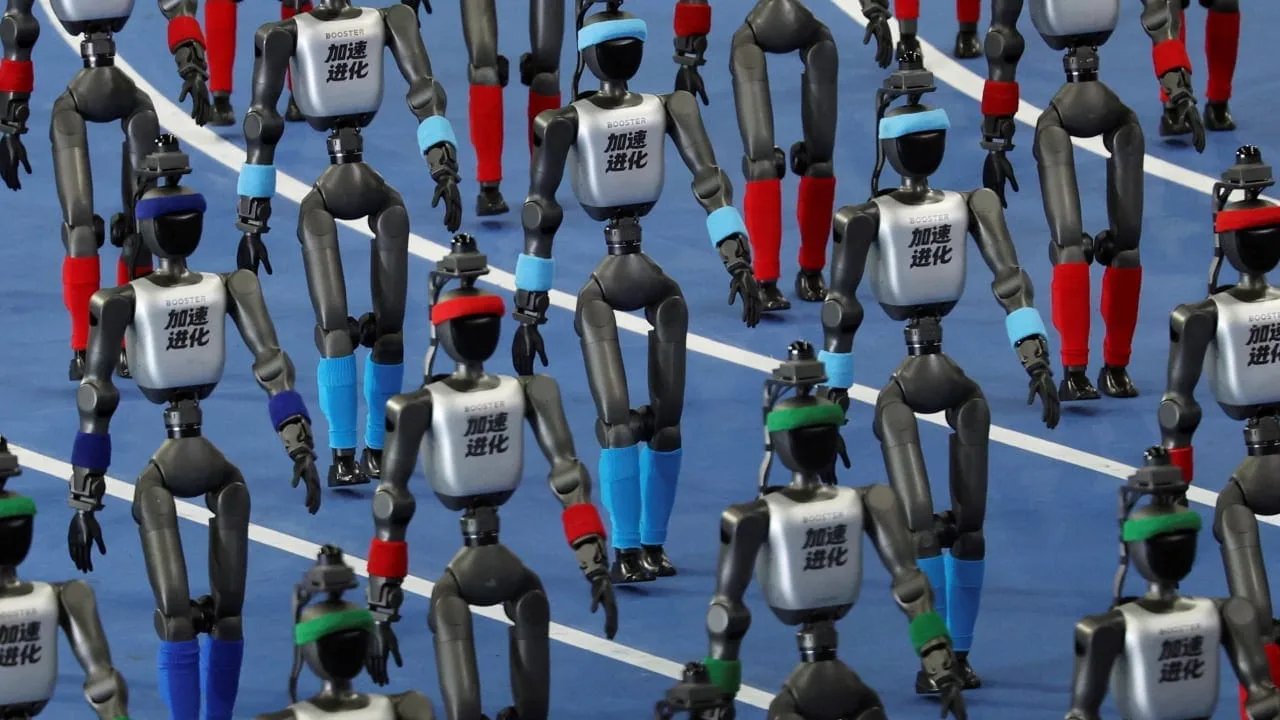
UBTECH Robotics triggered an even greater reaction when it released a warehouse sequence showing hundreds of Walker S2 robots moving in perfect synchronization. Figure CEO Brett Adcock publicly questioned the video and pointed to inconsistencies in the reflections, suggesting that most of the robots had been digitally inserted. UBTECH responded with drone footage featuring the original audio and stated in an interview with the Global Times that the footage was “100% real, filmed on location.” In addition, the company released an unedited single-take shot to support its claims. The company's chief brand officer, Tan Min, said that critics underestimate China's manufacturing capabilities and should visit the country to see the development of humanoid robots with their own eyes.
EngineAI is not focusing solely on viral videos—the company has ambitious plans. In a statement accompanying the behind-the-scenes video, it describes a dual strategy. One part focuses on entertainment, including a Robot Boxer event scheduled for December 24. The other focuses on practical applications. It has already deployed several T800 units as “cyber staff” in retail stores in Shenzhen.
According to the company, the Zhongqing team will fully support scenario-based validation and large-scale product deployment in 2026. This will unlock various areas of application, such as industrial manufacturing, commercial services, and family companionship. The T800 is thus expected to move from laboratory demonstrations to real-world deployment, where it will have to prove its reliability.
The new behind-the-scenes footage may have reduced doubts about the authenticity of the T800, but the company now faces another challenge: proving that the robot can deliver reliable performance as its deployment expands in 2026.
Source: interestingengineering.com