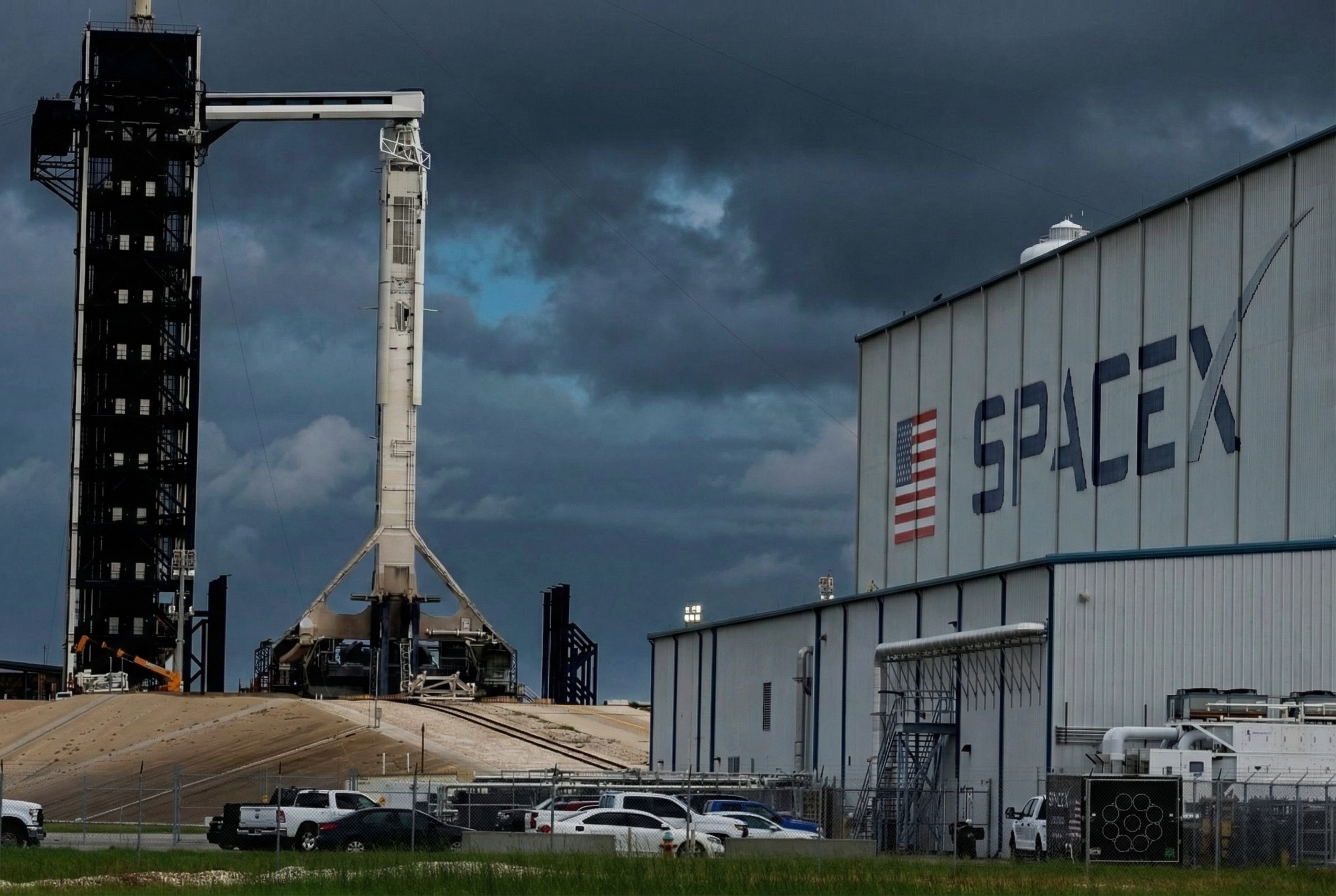
SpaceX has filed an application with the Federal Communications Commission (FCC) for permission to launch a constellation of up to one million solar-powered satellites intended to serve as data centers for artificial intelligence. Elon Musk's company claims that orbital data centers represent the most efficient way to meet the growing demand for AI computing power.
The application outlines an ambitious vision that describes the satellites not only as the "most efficient way to meet the growing demand for AI computing power," but also frames them as "the first step toward humanity becoming a Kardashev Type II civilization" - that is, a civilization capable of harnessing the Sun's full power. The document also discusses securing "humanity's multiplanetary future among the stars."
An unrealistic number
The Verge notes that the figure of one million satellites is unlikely to be approved in full and instead serves as a starting point for negotiations. SpaceX has a history of filing applications for unrealistically high numbers of satellites as an opening position in negotiations with regulators. The FCC recently granted SpaceX permission to launch an additional 7,500 Starlink satellites, but deferred authorization of the remaining 14,988 proposed satellites. According to the European Space Agency, approximately 15,000 satellites currently orbit Earth, with Starlink accounting for most of them - according to Jonathan's Space Report, more than 9,600 are active.
Solar power
SpaceX argues that orbital data centers would be a cheaper and more environmentally friendly alternative to traditional terrestrial data centers, which form the backbone of the growing artificial intelligence industry. Instead of draining water from communities, contaminating groundwater, and raising electricity bills, orbital data centers could radiate heat into the vacuum of space and rely almost exclusively on real-time solar power with limited battery use.
The company claims that the system would provide the computing capacity needed to serve "billions of users around the world". The satellites would operate in low Earth orbit at altitudes between 500 and 2,000 km and communicate with one another using lasers, similarly to the existing Starlink network that provides high-speed internet.
Opposition to data centers on Earth is growing, and communities are increasingly winning battles to block their construction. It is therefore no surprise that the biggest names in AI are turning their attention to one of the few places where there is no community for them to upset. Google is also exploring the concept of orbital data centers as part of a project called Suncatcher.
The satellites will actually be so far apart that it will be hard to see from one to another. Space is so vast as to be beyond comprehension. https://t.co/oDuBtJQCHj
— Elon Musk (@elonmusk) January 31, 2026
Concerns about crowded space and space debris
Musk wrote on his social media platform X: "The satellites will actually be so far apart that it will be hard to see from one to another. Space is so vast as to be beyond comprehension." However, experts are expressing concerns. The growing number of objects in low Earth orbit increases the possibility of collisions between objects, which could damage equipment or cause materials to fall back to Earth. In 2024, astronomers complained that radio waves from the Starlink network were "blinding" their telescopes and hindering their research.
One expert previously told the BBC that launching hardware into orbit remains expensive and that the infrastructure needed for its protection, cooling, and power supply can be complex - while the growing amount of space debris threatens the physical hardware.
Meanwhile, Amazon, which is facing a rocket shortage, is asking the FCC to extend the deadline for placing more than 1,600 satellites into orbit. Musk previously rejected claims that his satellites take up too much space and crowd out competitors. The application does not specify a timeline for implementing the one-million-satellite plan.
Source: bbc.com