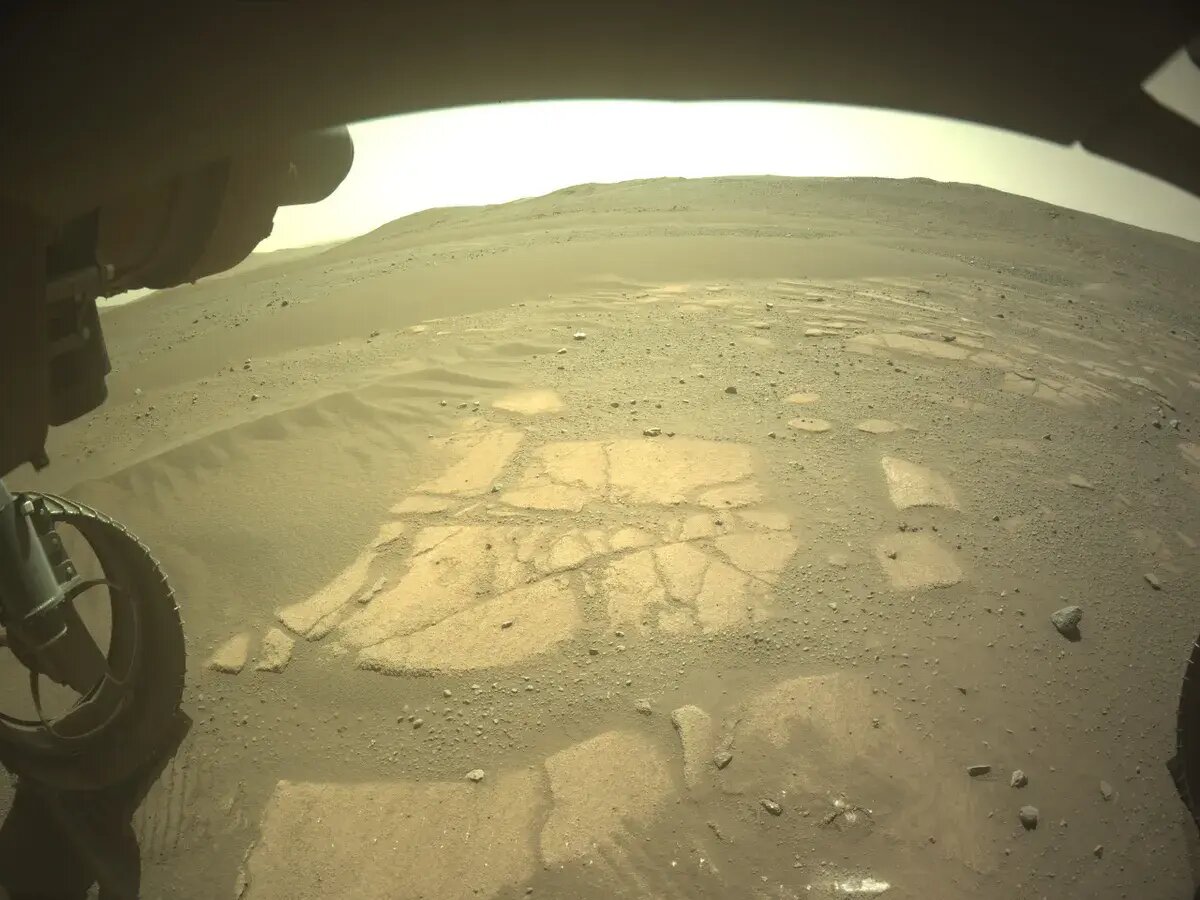
December 8 and 10, 2025 marked a historic moment for space exploration. For the first time in history, NASA used artificial intelligence to plan a route for a rover on another planet. The Perseverance rover successfully completed two drives across the surface of Mars following routes created by the Claude AI model from Anthropic.
Four Hundred Meters with Claude
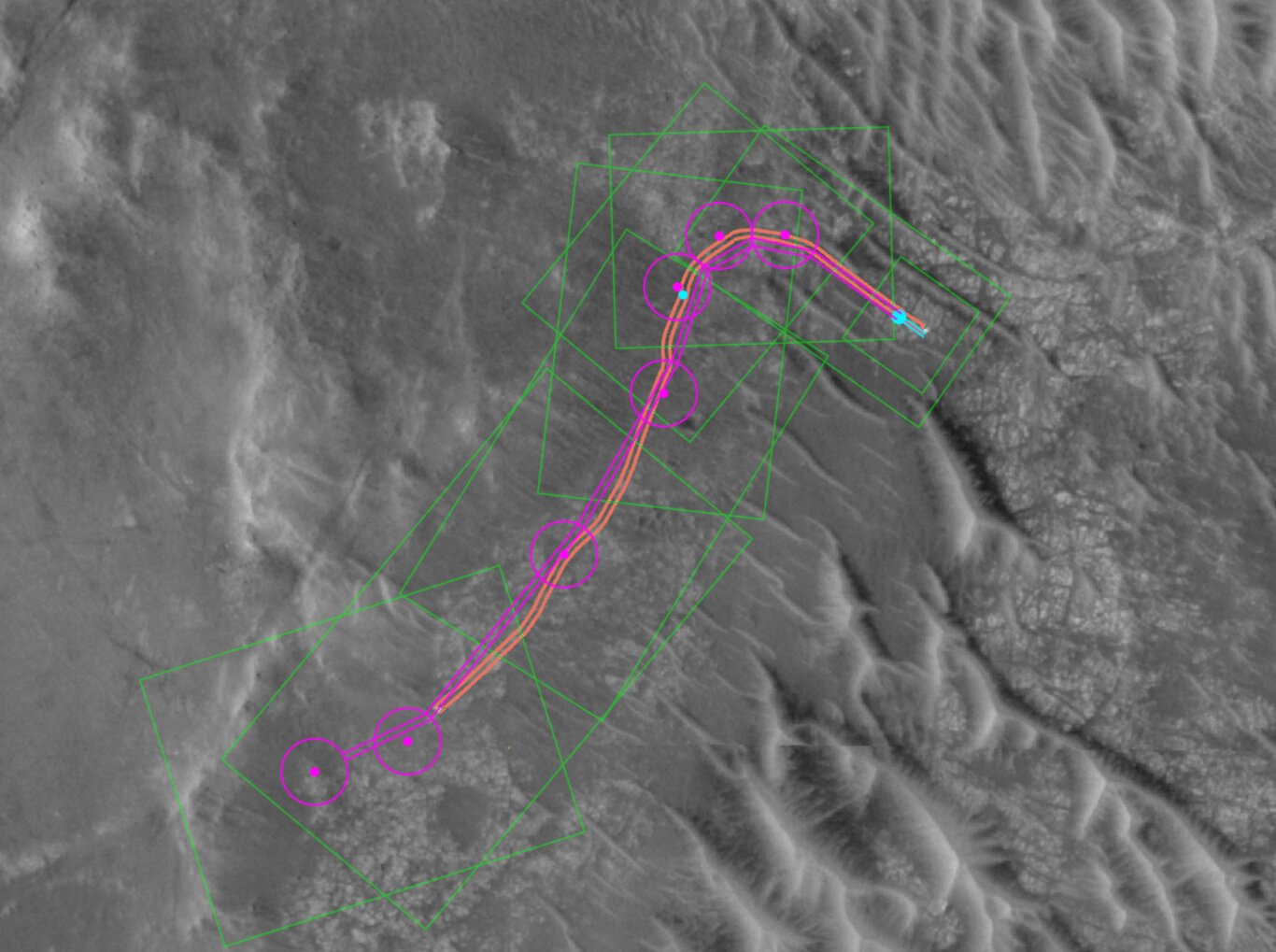
Engineers at NASA's Jet Propulsion Laboratory (JPL) used the Claude AI model to plan an approximately four-hundred-meter route through a field of rocks on the surface of Mars. Four hundred meters may not seem like much—it is equivalent to one lap around a running track. But this is the beginning of something much bigger. The challenge of controlling a rover on Mars lies in the communication delay. A signal from Mars to Earth takes approximately twenty minutes. This means that operators cannot control the rover in real time. They must plan the route, send it, and only see the results later. Until now, this planning had always been performed by human experts.
Claude could not complete the task with a single prompt. The model needed context before it could plan the route effectively. JPL engineers gathered data and experience accumulated over years of operating the rover and provided it to the system Claude Code. With this information, Claude used its programming capabilities to write commands in Rover Markup Language—a specialized XML-based programming language originally developed for the Mars Exploration Rover mission.
Claude used its visual capabilities to analyze images from orbit and planned the route point by point for sol 1707 and sol 1709 (a sol is a Martian day; these days corresponded to December 8 and 10 on Earth). The AI connected ten-meter segments into a route and then iteratively refined the individual points—critiquing its own work and proposing revisions.
Thorough Verification Before Implementation on Mars
As with any AI output, it was important to check Claude's work. The AI-generated routes were run through the simulation that Perseverance uses every day to confirm the accuracy of commands. More than 500,000 variables were modeled to verify the rover's predicted positions and anticipate potential hazards along the route.
When JPL engineers reviewed Claude's plans, they found that only minor adjustments were needed. For example, ground-level images (which Claude had not seen) provided a clearer view of sand ripples along the sides of a narrow corridor. The rover drivers decided to divide the route more precisely than Claude had proposed. Otherwise, however, the route passed review. The plans were sent to Mars, and the rover successfully completed the planned journey.
The Perseverance Mission
On December 8 (sol 1707), the Perseverance rover traveled 210 meters with AI-generated waypoints stored in its memory. Two days later, on December 10 (sol 1709), it traveled 246 meters. Engineers estimate that using Claude in this way will cut route-planning time in half and make drives more consistent. Less time spent on laborious manual planning and less time spent on training will allow rover operators to complete even more drives, collect more scientific data, and perform more analyses.
The Perseverance rover—a car-sized robot equipped with cameras and scientific instruments—has been active on Mars since February 2021. Its mission is to characterize the planet's geology and past climate, collect samples of Martian rocks and regolith (broken rock and dust), and pave the way for human exploration of the Red Planet.
The landing site, the 45-kilometer-wide Jezero Crater, was selected because of evidence that it contained water billions of years ago—water that may have supported microbial life. The rover has already discovered intriguing signs of what could be ancient biology on Mars.
A Vision of Autonomous Systems in Space
Vandi Verma, a space roboticist at JPL and a member of the Perseverance engineering team, explained: "The foundational elements of generative AI show great potential for streamlining the pillars of autonomous navigation for extraterrestrial driving: perception (seeing rocks and ripples), localization (knowing where we are), and planning and control (deciding on and executing the safest route)."
Matt Wallace, manager of JPL's Exploration Systems Office, added: "Imagine intelligent systems not only on Earth, but also in applications within our rovers, helicopters, drones, and other surface assets, trained with the collective wisdom of our NASA engineers, scientists, and astronauts. This is the game-changing technology we need to build the infrastructure and systems required for a sustained human presence on the Moon and to take people to Mars and beyond."
Claude's role in the Perseverance mission is, in many ways, merely a test run for what comes next. The autonomous capabilities Claude demonstrated while guiding the Mars rover will be useful for longer and more ambitious space missions, including the upcoming Artemis campaign, which aims to return humans to the Moon and ultimately establish a base at the Moon's south pole.