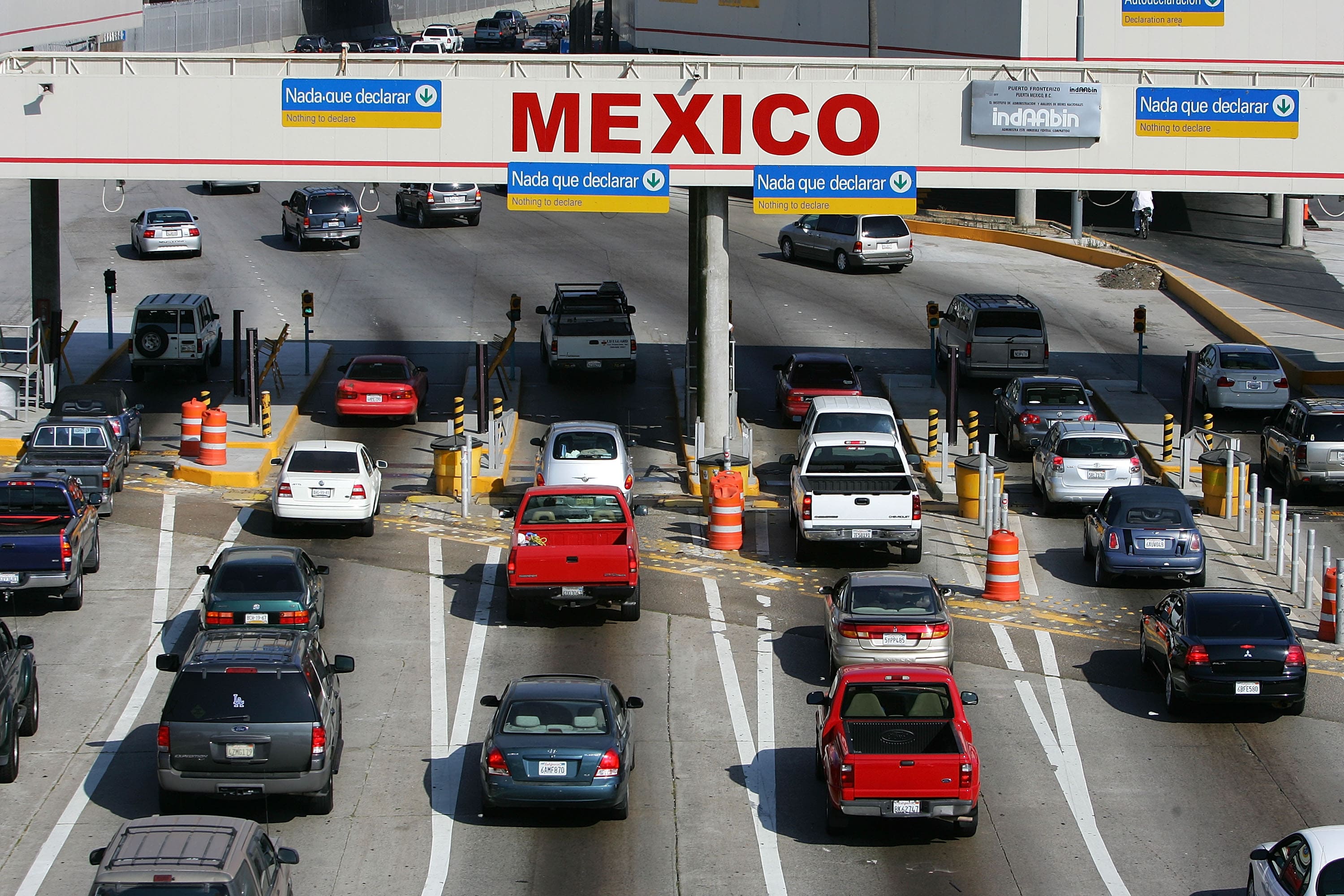
Driving in Mexico used to be one of my favorite pastimes. I drove all over the country by myself and encountered nothing but kindness toward a foreigner. I enjoyed much of the country as an ecotourist: monarch butterfly migrations, enchanting rainforests, exotic tropical birds. Now, when I go there—which is rare—I feel more like a narco-tourist, risking my life at every turn, especially along the border. I like that they call it the frontera—the frontier, which is what they used to call the Wild West in Texas. Today, the name fits.
As soon as many Mexicans cross the river and head home from a vacation in Texas, they take off their seat belts. They are free. Seat belts are required by law in Mexico, but the law is not enforced much. Most Mexican traffic laws operate more like recommendations than commands. There are posted speed limits, but they are merely suggested safe speeds. If you see a sign saying “NO ENTRE,” it actually means: “It is better not to enter here, but if you must, be careful.”
Stop signs apply to whoever arrives at the intersection last. I do not think defensive driving courses exist in Mexico. Instead, they offer offensive driving. It has always seemed strange to me that Mexico is a country where people live slowly but drive fast. They live at a relaxed, wonderfully civilized pace, but as soon as they get behind the wheel, everyone becomes Mario Andretti.
Then there are topes. Topes are speed bumps. They are the most popular form of traffic control in Mexico. I recently drove into Matamoros; while crossing the bridge and passing through customs, I patiently drove my Jeep diagonally over—and I am not making this up—33 topes. That was a preview of what Mexican streets and roads generally have to offer.
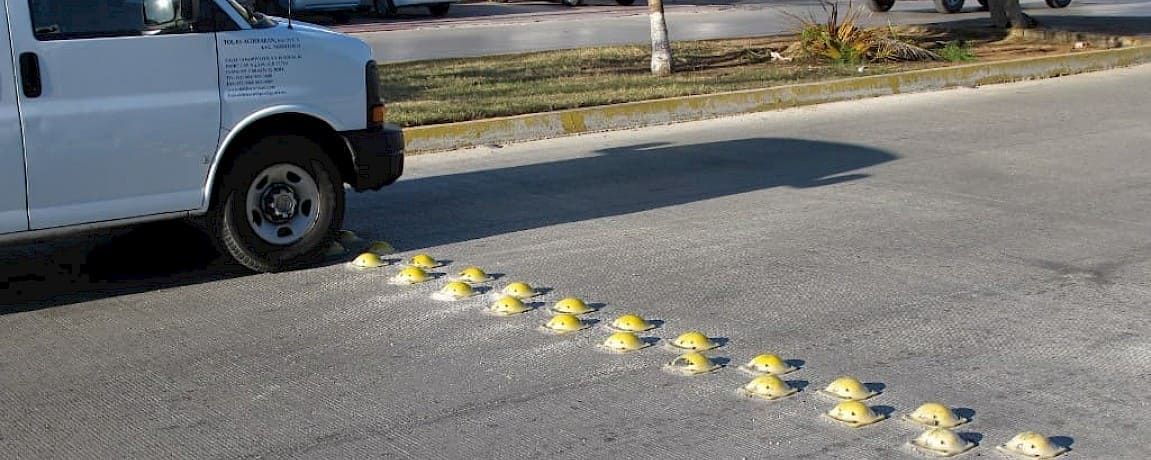
There are two types of topes. The gentle, rolling asphalt kind that you can take at 20 miles per hour. And then there is the steel-reinforced concrete kind that rattles your teeth even at 0.2 miles per hour. I think it was designed by Lego. And I would not object to topes so much, except that they have a habit of placing the topes sign right next to them. So you are driving along a nice, quiet country road and suddenly—TOPE! They might as well put SORPRESA! (“Surprise!”) on the sign. It looks as if it popped out of the road like something from a jack-in-the-box.
And then there is another interesting detail: You will often see an auto repair shop just 90 meters beyond a tope. That is good marketing, because about 90 meters after the tope, you realize that your muffler has fallen off, and the only reason is that the transmission tore it off when the tope punched through it.
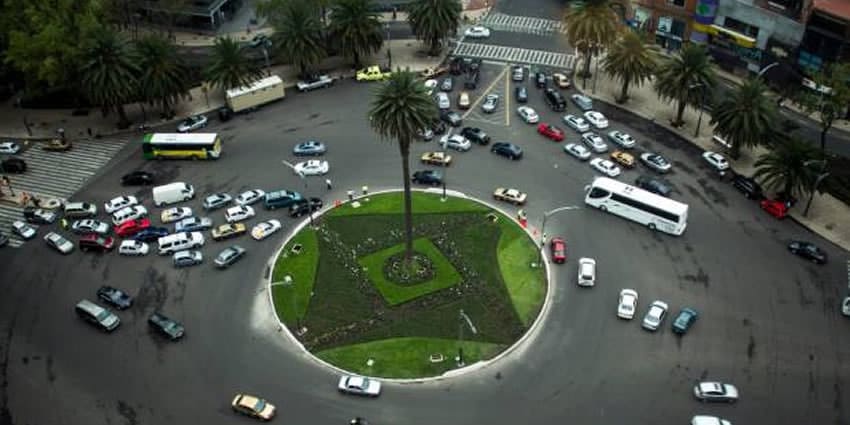
Glorietas, or roundabouts, are also very popular. They are tricky during rush hour. People are said to get lost in them and never reappear.
Something I have always appreciated about driving in Mexico is that if you ever get pulled over—which is rare, but more common if you are a big gringo with Texas plates—you can hold traffic court right there by the side of the road.
I was pulled over for allegedly exceeding the suggested speed. I asked whether I could pay the fine on the spot. They said the fine was “50 dollars” (1,050 CZK). I thought they meant pesos, but for my convenience, they had already done the conversion.
And here is the great thing about that moment, if you know the custom: The police officers are both judge and jury. You can argue your case right there by the roadside.
So I told them I would pay 10 dollars (210 CZK). They countered with 40 dollars (840 CZK). I said I only had 20 dollars (420 CZK) on me and could not pay any more. This plea for leniency went to a higher court. The officer and his partner together constitute the court of appeals. They walked to the other side of the car and spent five minutes discussing my appeal. I think they were only doing it for effect and were actually talking about good places to have lunch. They came back and said that 20 dollars (420 CZK) would be fine. So I paid and drove on.
What I especially love about this kind of justice is its efficiency. The same offense in Texas would have cost me much more money, about 200 dollars (4,200 CZK). And it would also have affected my insurance premiums. If I wanted to contest it, I would have had to take a day off, go to court, and defend myself before a judge.
No, no. I prefer my traffic court by the side of a Mexican highway. Not only is it more efficient justice, but it is cheaper as well.