... The Fort Worth Police Department had a particularly complicated relationship with streetcars. In 1918, Dallas traffic officer Max Doughty explained to reporters how officers directing traffic had to be nimble because they were regularly “brushed" by passing streetcars. Such a risk is understandable for traffic officers, but other officers also had an unfortunate attraction to streetcars. In July 1906, Henry P. Shiel, a former police officer, saloon owner, and alderman, was struck by a streetcar “while walking on Main St." He suffered an unspecified “permanent injury," which prompted him to file a $10,000 lawsuit against the NTTC. On May 7, 1919, FWPD officer Sterling Price “Dick" Warren was heading home after the morning shift in a downpour. He ran to catch a streetcar on Front St. and failed to notice a streetcar traveling in the opposite direction. It struck and killed him instantly. Then, on the evening of Sunday, August 8, 1920, three officers, including the night commander, were involved in an accident while responding to a call in the department’s “rescue automobile." Upon arriving at the scene, they stopped in the middle of the street and sat there when a streetcar approached, failed to see them in time, and struck their vehicle, hurling it onto the sidewalk. Three pedestrians were injured, but the officers were unharmed.
Although streetcars were involved in far more accidents than interurbans or trains, the latter two were deadlier because they were heavier and traveled much faster. Interurbans sped between Fort Worth, Dallas, and Cleburne at dizzying speeds of up to sixty miles per hour. Moreover, their tracks generally ran at grade, without barriers or signals to stop approaching traffic. On November 16, 1916, Colonel Paul Waples, a wealthy businessman who lived in Arlington and commuted to his Fort Worth office, was struck and killed by a speeding interurban car as his chauffeur crossed the tracks just outside the gates of his estate. Waples’s funeral caused city and county offices to close and drew thousands of mourners. On September 26, 1918, J.D. Spearman was killed when his motorcycle was struck by an interurban car on the line to Cleburne near Everman. His death did not prompt the same public display of grief as Waples’s, but his widow received $50,000 in damages from the Tarrant County Traction Company.
Railroad safety problems began with trains passing through the city at grade, with only a watchman stationed even at the busiest crossings to prevent disasters. Mechanically operated barriers and electric signals lay far in the future. In Fort Worth, the busiest crossings were those where Main and Jennings Avenue crossed the T&P yards on the way to the Near South Side. Pedestrians and vehicle drivers risked their lives every time they crossed the eight rails. As the Near South Side grew and automobiles multiplied, the risk of accidents only increased. Calls for underpasses and overpasses fell on deaf corporate ears.
Victims of railroad accidents generally did not live long enough to file lawsuits, leaving that to their families. The causes of such accidents were usually the same as those involving streetcars and interurbans: poorly maintained equipment, negligent employees, and inattentive victims. They did not always involve being struck by a speeding train. Slow-moving giants could be just as deadly, and human carelessness often contributed to every accident. On March 30, 1890, William Dial, a “well-known newspaperman," was struck and killed in the T&P yards by a morning switching engine after sitting down on the tracks and apparently dozing off. That is the only explanation for why he did not hear it approaching. Another victim of a rail-yard accident was Captain H.C. Edrington. On May 7, 1915, the seventy-three-year-old Confederate veteran and bank president died while crossing the Texas and Pacific yards on his way home. His house on Pennsylvania Ave. was located on the south side of the yards, and Edrington preferred walking across the tracks to using the viaduct on Jennings Ave. He stumbled and fell into the path of a slow-moving train and was “run over by a string of freight cars." The engineer could do nothing. Edrington’s body was so badly mutilated that the medical examiner called to the scene could barely recognize him. Because of his social standing, his death made the front pages.
Fortunately, trains traveled more slowly within the city and made a great deal of noise, but dangerous crossings and inattentive drivers still caused disasters. Crossings without watchmen were marked with “Stop! Look! Listen!" signs, which served more to avert legal liability than to provide genuine safety. Road users had to watch carefully for approaching trains themselves. In 1913, Dr. R.H. Gough, his wife, and their five-year-old daughter were driving along Ballinger St. beside the T&P tracks when the doctor turned left across the tracks. He neither heard the warning bell ring nor saw the approaching freight train. The locomotive struck the rear of the car, but none of the occupants was seriously injured. The accident was nevertheless noteworthy because this crossing had long been considered exceptionally dangerous. The street served as a popular shortcut to the Near South Side, and a tall wooden fence along the road blocked the view of the tracks. Earlier complaints had prompted the railroad to install a warning bell as a “compromise." The narrow escape of the Gough family, especially their young daughter, sparked a wave of outrage. The city council demanded an explanation from the T&P, which responded by establishing a permanent watch at the crossing. Hostility toward the railroad, however, did not disappear so easily. Fort Worth could not do without the railroads, yet at times it seemed unable to live with them.
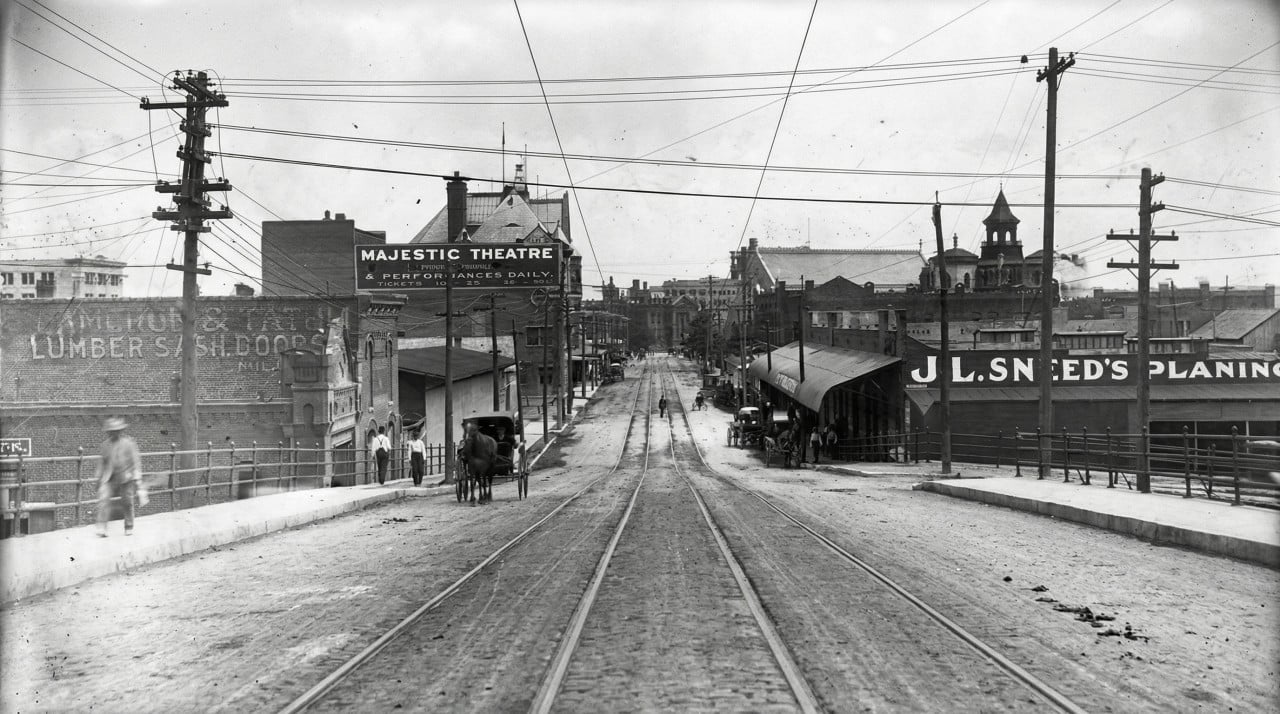
The most terrifying accidents were three-way collisions involving a horse or horse-drawn wagon, a streetcar, and a train. Because railroad tracks within the city limits ran at grade, they intersected streetcar tracks, while both crossed busy streets, creating the potential for disaster. Accidents involving multiple vehicles were a legal nightmare because each party blamed the others. In 1905, during the early evening hours, a Frisco freight train crashed into an NTTC streetcar near the northern city limits. The streetcar was crushed, a cattle car derailed, and the animals inside were trapped. Twenty people were seriously injured. The crossing was particularly dangerous because two sets of railroad tracks (Frisco and Cotton Belt) intersected two sets of streetcar tracks (NTTC and Rosen Heights), and there were neither barriers nor a watchman. It was one of the worst accidents in the history of Fort Worth rail transportation. Yet it was far from an isolated incident. In 1912, on South Boaz, a horse was struck by an automobile and thrown into the path of an approaching streetcar, which hit it. Fortunately, the horse was the only casualty. Three years later, two cars, one of which was passing the other, collided with a streetcar on the Paddock Viaduct. Newspapers reported “passengers hurled in every direction" and two people injured so severely that they were not expected to survive.
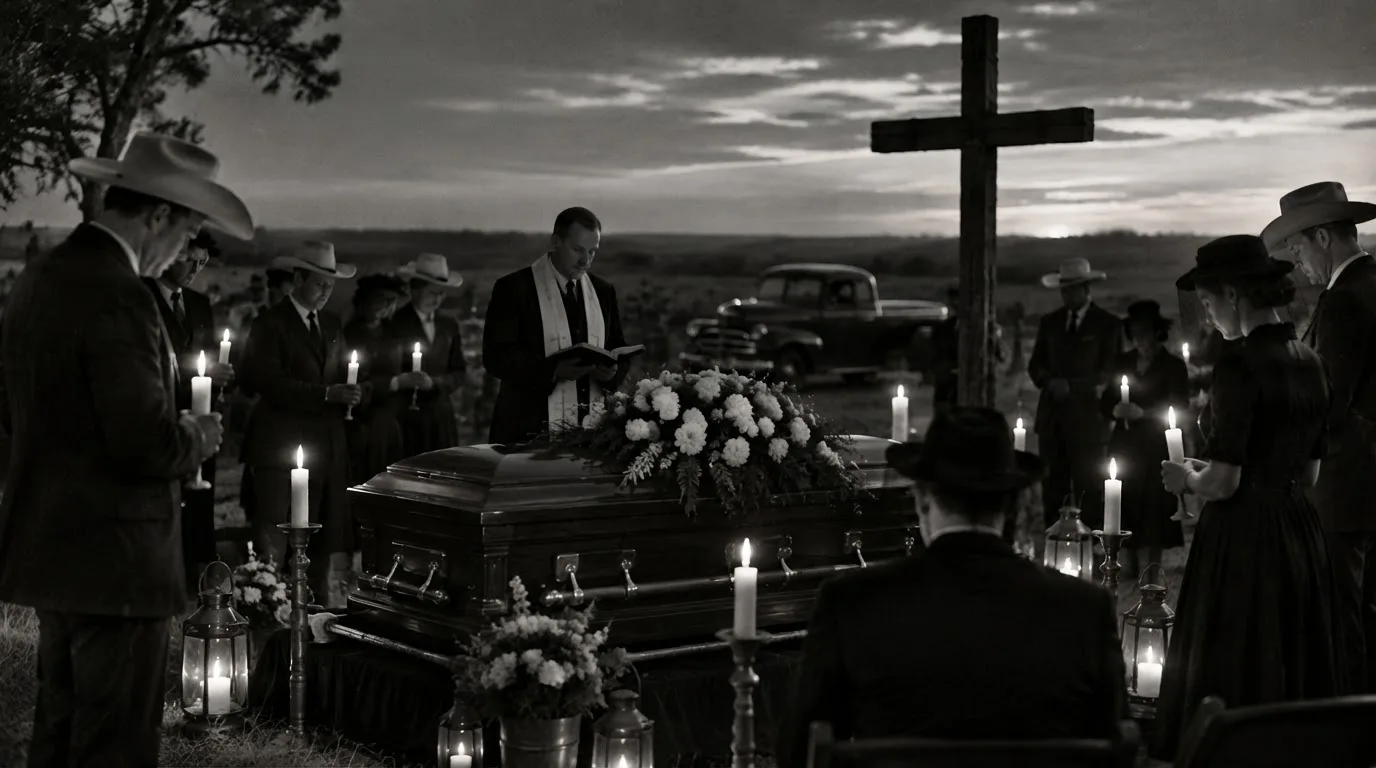
Most people injured or killed in rail accidents were anonymous individuals whose deaths were reported on the inside pages of newspapers and mourned by only a handful of relatives and friends. But several victims, such as Paul Waples, were prominent citizens whose deaths merited the front page. On April 12, 1890, Joe Rowland, a longtime city employee and candidate for street commissioner, was run over and killed by an electric streetcar at the intersection of W. Weatherford and Main St. As the Dallas Morning News reported, “the poor man’s body was horribly mutilated," and the coroner opened an investigation.
On the morning of February 12, 1912, Neil P. Anderson, one of the wealthiest cotton merchants in the state, was heading to his office in his large chauffeur-driven car with two companions. Their car was traveling north on the Hill St. viaduct when it collided head-on with a streetcar traveling south on Summit Ave. The car was completely destroyed and the streetcar badly damaged. Anderson, who was sitting in the front passenger seat, was the only person seriously injured, prompting the Star-Telegram to comment that it was “almost miraculous" that no one had been killed. In accordance with the practice of the time, Anderson was taken home and a doctor was summoned. He prescribed several days of bed rest, and on February 15 it was reported that the sixty-five-year-old magnate was “improving slightly." On February 27, however, he died from his injuries. It was never explained how a head-on collision could have occurred in daylight and clear weather on a straight stretch of roadway. It apparently had something to do with the relatively narrow roadway shared by streetcars and other vehicles, with the streetcar tracks occupying the center of the road.
Some prominent Fort Worth citizens survived encounters with streetcars. On May 15, 1894, Will F. Lake, one of the city’s leading cattle magnates, was injured while crossing Main St. in front of the Pickwick Hotel that morning. He stepped in front of a streetcar whose operator rang a warning bell. Startled, the magnate tried to jump out of the way, putting himself in the path of an approaching delivery wagon, which knocked him to the ground and ran over his leg. Although the accident was not the fault of the streetcar operator, it nevertheless illustrates the constant danger posed by public transportation on the streets of a growing city. In 1917, John W. Baskin, a respected attorney and former county prosecutor, was driving east on Second Street across Houston when his automobile was struck by a northbound streetcar, spun around, and then hit by a southbound streetcar. Fortunately, Baskin was uninjured, but his car was “practically destroyed." The investigation found neither party at fault.
The Missouri, Kansas and Texas Railroad (KATY) had the worst accident record, especially the KATY Flyer, which sped along the tracks and barely slowed even after entering the city. In 1905 alone, it claimed two prominent victims. On July 5, the northbound Flyer, traveling at an estimated 30 miles per hour, struck Dr. Charles Harris’s Oldsmobile at the East Second St. crossing. The car was destroyed and a sixteen-year-old passenger seriously injured, but the doctor escaped unharmed, which was fortunate because he went on to build a distinguished career that ultimately led to Harris Methodist Hospital being named after him.
Almost exactly three months later, the Flyer claimed the life of beloved Fort Worth photographer Charles Swartz. “Charlie," as everyone knew him, had accepted a commission to photograph the Fort Worth Iron and Steel Manufacturing plant on South Hemphill for advertising purposes. On the morning of October 6, he arrived at the site with his view camera, selected a position for the best shot, and settled on an elevated railroad embankment. While clearing the area in front of the lens for the shot, he heard the southbound KATY Flyer approaching. He rushed to save the camera and lost. The locomotive’s cowcatcher hurled both him and the camera into the air. Neither survived the collision. A doctor called to the scene pronounced Swartz dead. But the story did not end there. A minor notice printed in the Fort Worth Telegram several days earlier now seemed to foreshadow the tragedy. It was an announcement bearing the words “C.L. Swartz No More." Charles had written it himself, and it was not intended to be prophetic; it merely informed Fort Worth residents that his long-established studio was closing. In retrospect, it seemed eerily prescient, if one believed in such things. The surviving family received modest compensation from the KATY railroad.
On April 25, 1916, KATY once again made newspaper headlines. A switching engine was moving a string of cars north of Fort Worth. Where the tracks crossed Denton Road at Hodge, the train struck E.A. Jackson’s roadster, which was carrying Jackson and his wife. The train crew claimed that the train was moving at “only four or five miles per hour," yet it destroyed the car and dragged the Jacksons’ bodies ninety yards down the tracks. The couple were horribly disfigured and died shortly afterward in the hospital. They belonged to Fort Worth high society, wealthy landowners and residents of Quality Hill on the city’s south side. The accident site was a blind crossing where an embankment blocked the view of both sets of tracks. For more than twenty years, people traveling to and from Denver had regarded it as a “death trap." Fort Worth officials had long tried to compel the railroad to repair the crossing, but because it lay outside the city limits, they could do nothing. This time, County Judge Jesse Brown intervened, not intending to sue the railroad but to force it to remedy the situation. It is remarkable that it took two prominent victims to spur the authorities into action. As a result, the city also pressured the Texas and Pacific and the Frisco to address the Ballinger St. crossing.
Rail accidents kept many Fort Worth attorneys busy and substantially increased their bank accounts—not only salaried corporate lawyers, but also small-practice attorneys who represented the weaker party and occasionally won handsome damages. These cases also gave impetus to medicine in Fort Worth. Among other uses, X-ray machines were first employed specifically to support plaintiffs’ claims in lawsuits. Jurors no longer had to accept the testimony of one doctor or another as the final truth. In the long run, the city also benefited when the railroads reluctantly built overpasses above their tracks, beginning with the Jennings Viaduct in 1903, to ease traffic while also reducing the number of accidents they had to contend with.