1. Problem - Power Supply
Imagine that you want to build a data center in space because there is supposed to be plenty of energy from the Sun. But the reality is completely different. The article's author, a former NASA engineer with a PhD in space electronics and ten years of experience at Google, including YouTube and the part of Cloud responsible for deploying capacity for artificial intelligence (AI), explains why this is nonsense. The electronics required for a data center, especially with graphics processing units (GPUs) and tensor processing units (TPUs) for AI, are exactly the opposite of what works in space.
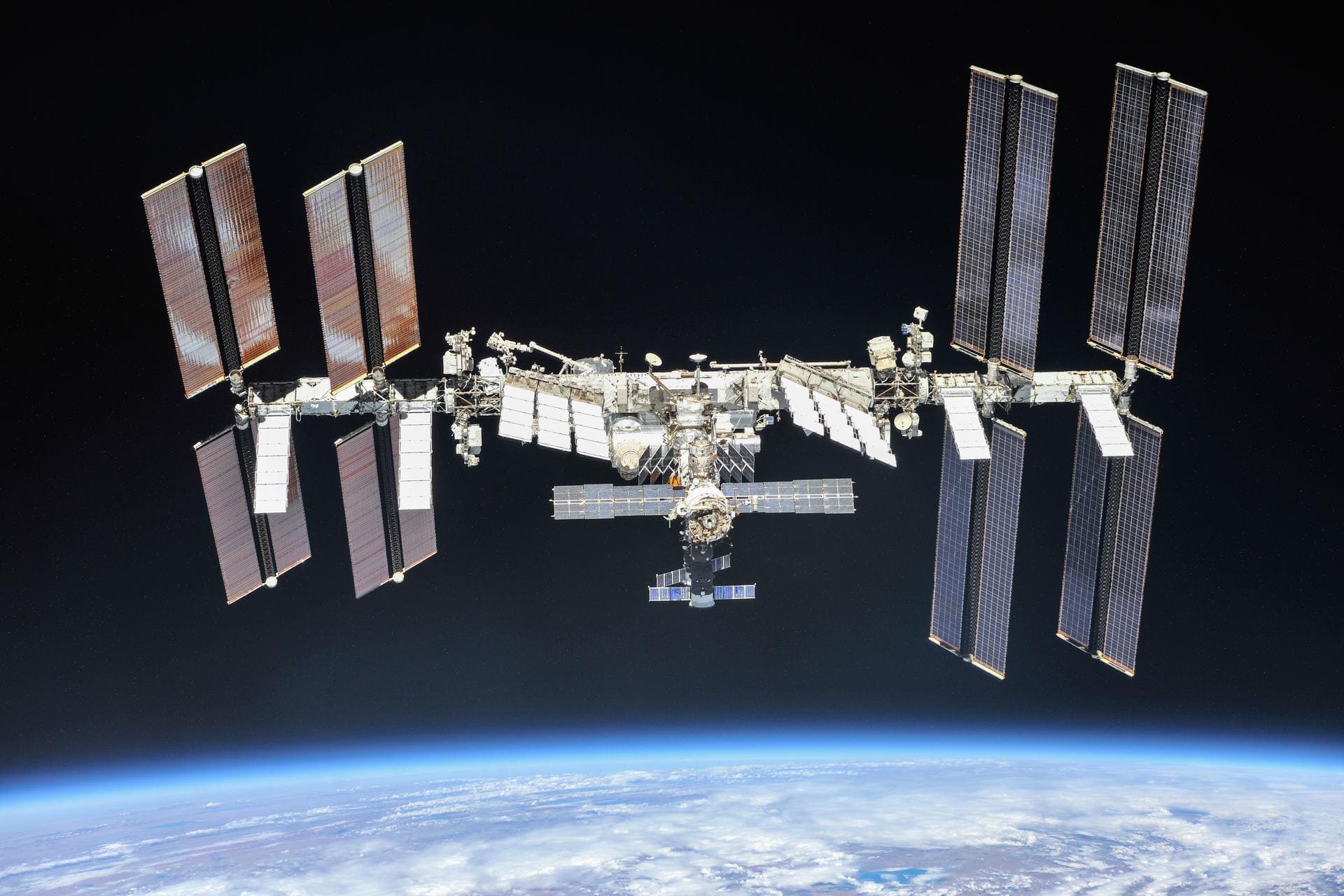
There are only two power options: solar or nuclear. Solar panels work much like those on the roof of a house in Ireland, except in space. They are not much better than on Earth because the atmosphere does not block as much energy as you might think. The largest solar array in space is on the International Space Station (ISS), and it can generate a maximum of just over 200 kilowatts (kW). That array measures about 2,500 square meters, which is more than half the size of an American football field, which is approximately 5,350 square meters. Deploying such a system required several Space Shuttle flights and a great deal of work.
For comparison, consider the NVIDIA H200 graphics processor—each chip consumes about 0.7 kW, but with power conversion and other losses, it realistically requires 1 kW per chip. Such a huge array from the ISS would therefore power roughly 200 GPUs. That sounds like a lot, but OpenAI's data center in Norway plans to use 100,000 GPUs, each probably more power-hungry. To achieve that, you would need 500 satellites the size of the ISS. One standard server rack on Earth holds 72 GPUs, so each such gigantic satellite would replace only three such racks.
Nuclear power sources will not help. These are not reactors, but radioisotope thermoelectric generators (RTGs), which produce only 50 to 150 watts. That is not enough even for one GPU, and you would also have to obtain plutonium and risk it being scattered across the surrounding area during a rocket launch.
2. Problem - Temperature Control
People often think that space is cold, so cooling will be easy. But that is a misconception. There is no air in space; it is an almost perfect vacuum, so convection—the transfer of heat through moving air—does not work. On Earth, you cool electronics with air flowing through heat sinks or with a liquid that transfers heat into the air. In space, you have to manage temperature carefully because materials heat up or cool down depending on whether they are rotating or facing the Sun. The side facing away from the Sun can cool to as low as 4 kelvins, almost absolute zero, while the side facing the Sun can heat up to hundreds of degrees Celsius.
The author designed a camera system for space that consumed no more than 1 watt while capturing images and then shut down to save energy and reduce heat. Heat was dissipated only through the metal structure. For H200 chips, this would be a nightmare. A liquid-cooled version would transfer heat to a radiator that radiates it into space, ideally facing away from the Sun.
The active thermal control system (ATCS) on the ISS uses an ammonia loop and radiators measuring 13.6 x 3.12 meters, or about 42.5 square meters. It can dissipate 16 kW, which is enough for 16 H200s, or one-quarter of a rack on Earth. For 200 kW, you would need a system 12.5 times larger, about 531 square meters—2.6 times larger than the solar array. The satellite would be enormous, larger than the ISS, and all of that for only three racks.
3. Problem - Radiation Resistance
Another problem is radiation. In low Earth orbit, it is similar to what is experienced in aircraft at high altitudes—worse than in a commercial airliner, but tolerable. In medium Earth orbit, where GPS satellites are located, it is worse because they are inside the Van Allen belts. Farther out, conditions are like those in deep space.
Radiation comes from the Sun and deep space—charged particles such as electrons or atomic nuclei traveling at close to the speed of light. They can damage chips directly or indirectly, for example by causing single-event upsets in which a data bit flips, or a short circuit that can destroy the chip.
During long-term missions, the total dose accumulates, causing transistors to slow down and consume more power. Chips must be adjusted, for example by reducing their clock frequency. Shielding does not help much because it can create a shower of particles, and mass is expensive in space.
GPUs and TPUs are the worst affected by radiation—small transistors and a large chip area increase the risk. Chips designed for space have larger structures and performance comparable to 20-year-old PowerPC chips. Adapting them would reduce performance to a fraction of the original.
4. Problem - Communication
Satellites communicate by radio, at a maximum of 1 gigabit per second (Gbps). Lasers are experimental and depend on the weather. On Earth, racks have 100 Gbps connections, which is an enormous difference.
It is possible, but extremely difficult, expensive, and offers terrible performance compared with terrestrial data centers. Space is a harsh environment. On the other hand, we have to start somewhere if we are ever to expand throughout our solar system.