

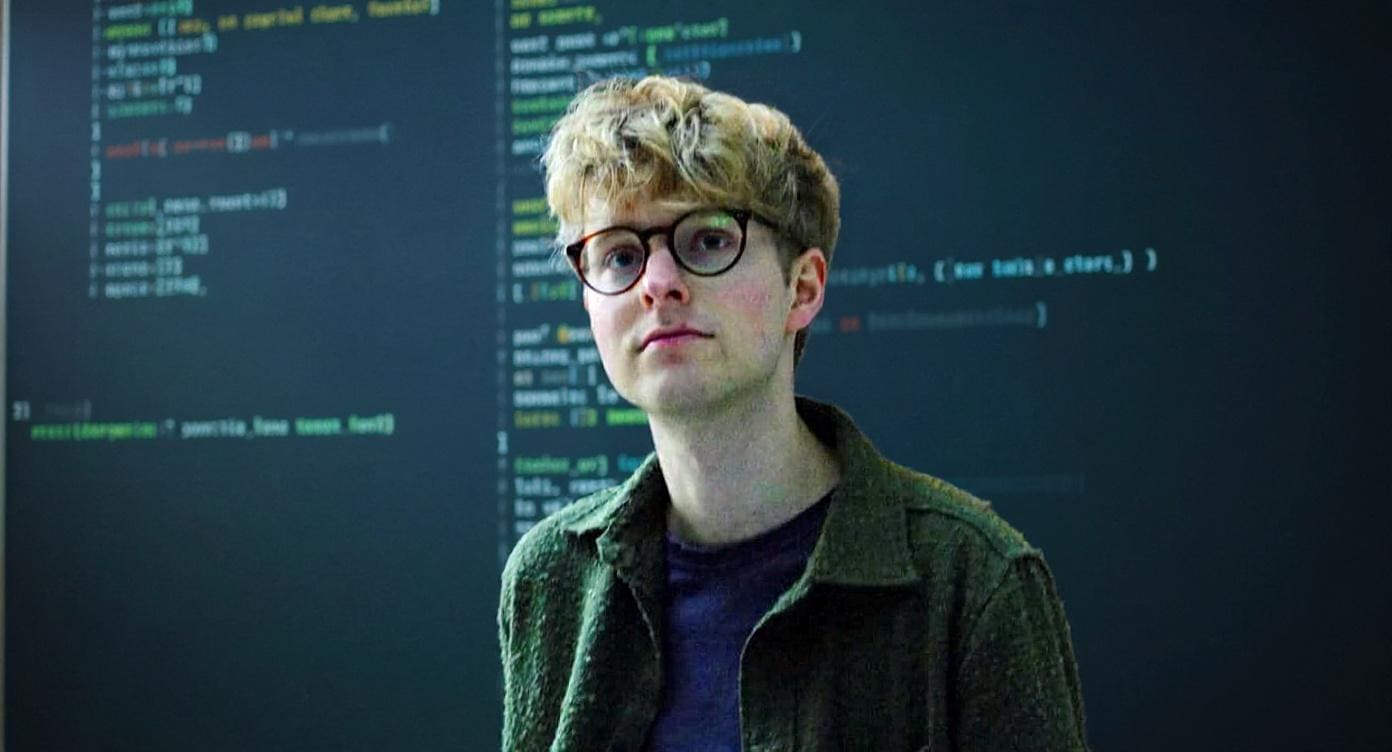
Arvid Lunnemark, one of the four co-founders of Anysphere, the company behind the AI coding tool Cursor, has announced his departure. The 25-year-old Swede, who previously worked as a quantitative trader at Jane Street and later at Stripe, shared his decision in a short post on his website. "Today I told the team that I have decided to leave Cursor (or Anysphere, as it was called for most of my time here). Of course, I have mixed feelings. I am sad to leave the team and the product; I am excited about the ideas I will explore next," Lunnemark wrote on October 18, 2025. He thanked the entire team and expressed gratitude for their work together.
Lunnemark studied mathematics and computer science at the Massachusetts Institute of Technology, where he met his co-founders. Together with Michael Truell, Sualeh Asif, and Aman Sanger, he founded Anysphere in 2022. The four MIT graduates from the class of 2022 focused on developing a tool that changes the way programmers write code. Cursor quickly became one of the fastest-growing SaaS products in history, reaching $100 million in annual recurring revenue (ARR) within 12 months of its launch. In October 2025, the company had an ARR of $48 million (approximately CZK 1.1 billion).
Cursor's meteoric growth
Anysphere recently announced a new $900 million funding round (approximately CZK 20.7 billion) at a valuation of $9.9 billion (approximately CZK 227.7 billion). The investors included firms such as Thrive, Accel, Andreessen Horowitz, and DST. This growth is staggering—the company's ARR is doubling approximately every two months. Cursor went from $1 million to $500 million in ARR faster than any other SaaS product in history. In 2024, it generated $100 million in revenue (approximately CZK 2.3 billion), up from $1 million in 2023, and $200 million (approximately CZK 4.6 billion) is expected for 2025.
Cursor is used by more than half of Fortune 500 companies, including OpenAI, Midjourney, Perplexity, Replicate, Shopify, and Instacart. The company has just 12 employees, which increases the responsibility of each team member. Cursor offers a freemium model priced at $20 per month for the Pro version (approximately CZK 460) or $40 per month for a business subscription (approximately CZK 920) after a two-week trial. In August 2025, Cursor switched its default model from Anthropic Claude Sonnet 4 to OpenAI GPT-5, thanks to a better price-to-performance ratio and a score of 74.9% on the SWE-bench Verified benchmark, while being 40–45% cheaper than the previous model.
Competition in AI coding
Cursor faces competition from tools such as GitHub Copilot, Replit Ghostwriter, CodeWhisperer, Tabnine, CodiumAI, and Magic.dev. Larger players include Microsoft with GitHub Copilot, Vercel with v0, and the emerging Windsurf. Anysphere sees its advantage in the speed of innovation—a small team enables rapid changes, unlike large companies that cannot risk losing users.
The company recently acquired Supermaven, the creator of a popular AI coding tool, and the new funding could enable further acquisitions. CEO Michael Truell emphasized the long-term mission: "Over the next few years, our goal is to make programming ten times faster, more fun, and more creative." Cursor focuses on the hybrid engineer—a combination of human and AI that is more effective than a purely AI system. According to Polaris Research, the AI coding tools market will be worth $27.17 billion by 2032 (approximately CZK 625 billion). AI investment in the US increased from $420 million in 2023 to more than $780 million in 2024 (approximately CZK 9.7 billion to CZK 18 billion), accounting for 35% of the total $366 billion in venture capital (approximately CZK 8.4 trillion).
Speculation about Arvid Lunnemark's future
Lunnemark's departure comes at the height of the company's success, raising questions about his reasons. Although he has not revealed anything specific, founders leaving during hypergrowth is often linked to burnout or a desire to pursue new projects. With a valuation of more than 50 times ARR (in October 2025) and rapid scaling from zero to billions of dollars in less than three years, the pressure can be immense. Lunnemark expressed enthusiasm for new ideas, suggesting a possible focus on other projects in developer tools or artificial intelligence.
While Cursor continues under the leadership of the three remaining co-founders—Michael Truell, Sualeh Asif, and Aman Sanger—with no plans for an IPO, it is focusing on product development and growth. The company has more than 360,000 users, including Andrej Karpathy, a former OpenAI researcher who popularized the term "vibe coding" for intuitive AI-assisted coding. The departure of one founder does not necessarily threaten its success, as seen with companies such as Facebook and Apple, which survived similar changes.
Sources: theinformation.com and thehindu.com


