

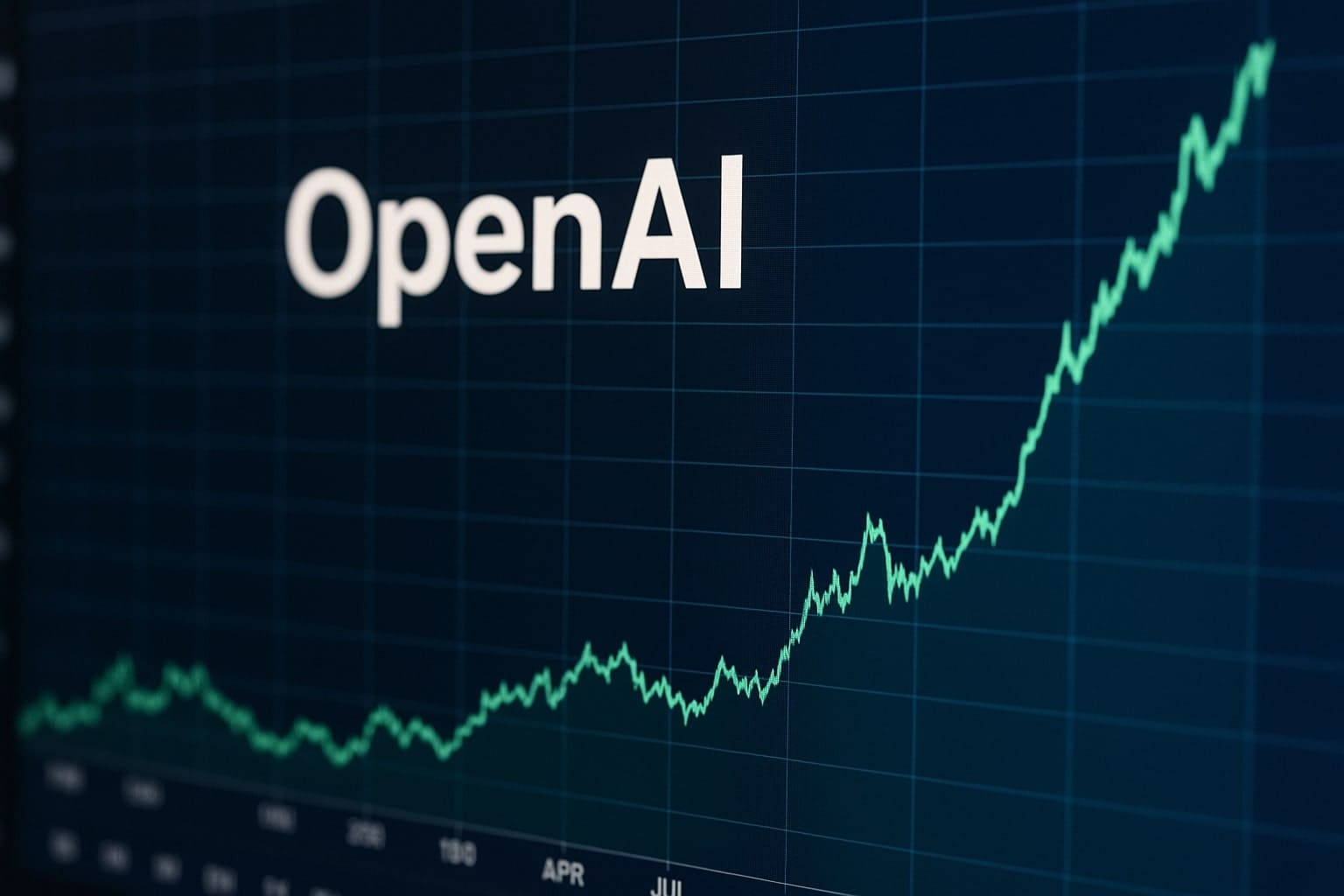
OpenAI, the company known for ChatGPT, is preparing for one of the largest stock market debuts in history. According to sources close to the company, it is targeting a valuation of up to $1 trillion (approximately CZK 23.3 trillion). The plan includes an effort to raise at least $60 billion (about CZK 1.4 trillion) through an initial public offering. Discussions are still at an early stage and the details may yet change, but the ambition is clear—to secure more funding for massive artificial intelligence projects.
OpenAI Chief Financial Officer Sarah Friar indicated that the target date for the IPO (Initial Public Offering) is 2027, although some advisers have suggested the possibility of an earlier date, such as late 2026. The company’s annual revenue is expected to reach roughly $20 billion (around CZK 466 billion) by the end of the year, even as losses mount due to heavy investment in training and developing AI systems. This growth underscores OpenAI’s position in the rapidly expanding artificial intelligence sector, where other players are also thriving, such as CoreWeave, with its recent IPO at a valuation of $23 billion (about CZK 536 billion), and Nvidia, with a market capitalization of $5 trillion (more than CZK 116.5 trillion).
A key role is being played by the restructuring agreement with Microsoft, which invested $13 billion (roughly CZK 303 billion) in OpenAI and now holds a 27% stake. This agreement allowed OpenAI to move away from its original nonprofit structure and transition to a more traditional model, opening the door to further expansion. Major investors include SoftBank, Thrive Capital, and Abu Dhabi-based MGX, which could profit significantly from a successful IPO.
Key Agreement with California
Just under two weeks ago, OpenAI CEO Sam Altman held a phone call with California Attorney General Rob Bonta. Altman made it clear that he wanted OpenAI to remain in California. Behind this message was a subtle threat—during months of negotiations, OpenAI emphasized its role as the economic heart of the state and suggested it might leave if Bonta blocked the transition to a simpler corporate structure.
Altman emphasized his commitment to his home state and rejected actions such as lawsuits or leaving, as his rival Elon Musk had done. The conversation proved decisive and ended a lengthy investigation by Bonta’s office, which had faced pressure from OpenAI’s critics. The agreement, reached on Monday evening, includes OpenAI’s pledge to remain in California and expand its presence there. In exchange for Bonta’s approval, the company accepted extensive rules that keep it under the oversight of the original nonprofit organization, now called the OpenAI Foundation, and the attorney general.
Altman wrote on Twitter: “California is my home, and I love it here. We really wanted to figure this out and are thrilled with how it turned out.” This stance contrasts with the tensions that arose between OpenAI and state authorities, with the company facing aggressive enforcement by Bonta, who is known for his tough stance toward tech giants.
California is my home, and I love it here, and when I talked to Attorney General Bonta two weeks ago I made clear that we were not going to do what those other companies do and threaten to leave if sued.
— Sam Altman (@sama) October 28, 2025
We really wanted to figure this out and are really happy about where it all…
Overcoming Obstacles and Opposition
During the negotiations, OpenAI had to overcome a campaign by opponents, including major labor unions, nonprofits, and corporate rivals, who claimed that the restructuring violated the company’s charitable mission. In May, OpenAI made a major concession by agreeing to keep the nonprofit parent organization in control of the new for-profit company.
The company released several economic reports underscoring its importance to California’s economy. For example, an August report argued that California leads in productivity gains, is home to most private AI companies, and attracted 68% of all U.S. venture capital dollars in the first half of the year.
In September, the attorneys general of California and Delaware wrote to OpenAI with safety concerns related to recent suicides linked to interactions with ChatGPT, including a murder-suicide in Connecticut reported by The Wall Street Journal. In their September 5 letter, Bonta and Kathy Jennings stated that OpenAI and the industry as a whole were not adequately prepared to ensure safety in the development and deployment of AI products.
Altman met with Bonta that month and presented a series of child safety improvements, including parental controls. After these changes were announced, Bonta told Bloomberg News that he had previously met with Altman and felt that he was “authentically committed” to addressing these issues.
New Structure and the Future
The agreement means that the California attorney general will not sue OpenAI over the restructuring, but will closely monitor compliance with its commitments to the public. The OpenAI Foundation will remain in control of the company and will appoint the board of directors of the new public benefit corporation. It also includes a safety committee that can halt the release of new AI models.
During the negotiations, San Francisco Mayor Daniel Lurie called Bonta to emphasize the importance of OpenAI remaining in San Francisco. Altman served on Lurie’s transition team and was part of a group of tech executives who persuaded President Trump not to send federal troops to San Francisco. OpenAI also hired influential Democratic operatives, including former Senator Laphonza Butler, to build support for the restructuring plan.
This agreement paves the way for an IPO that could come as early as 2027 and become one of the largest in history. The discussions are preliminary, and the listing could be postponed or canceled, but Altman confirmed on Tuesday that an IPO is likely, although there are no specific plans regarding its timing. OpenAI is thus strengthening its position in the global AI race, where investors see enormous potential.
Sources: wsj.com and reuters.com


