

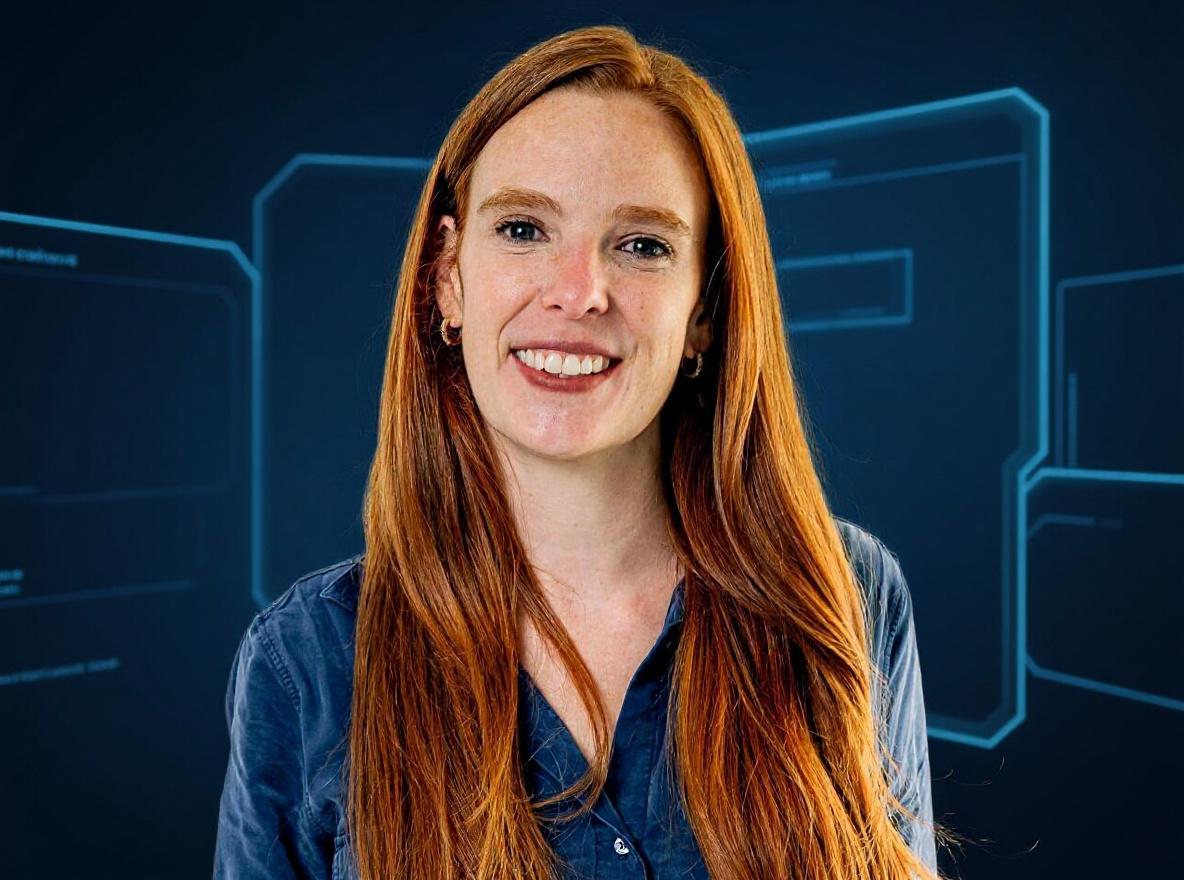
Sara Hooker, who previously served as vice president of AI research at Cohere and also worked at Google Brain, has decided to take a different path in AI. She left Cohere in August and, together with Sudip Roy, another veteran of Cohere and Google, founded the startup Adaption Labs. This new project focuses on creating artificial intelligence systems that can continuously adapt and learn from real-world experience, and do so very efficiently. Hooker announced it on X, where she mentioned that they are looking for talent to join the team in engineering, operations, and design.
I'm starting a new project.
— Sara Hooker (@sarahookr) October 7, 2025
Working on what I consider to be the most important problem: building thinking machines that adapt and continuously learn.
We have incredibly talent dense founding team + are hiring for engineering, ops, design.
Join us: https://t.co/eKlfWAfuRy
AI labs are currently building data centers the size of Manhattan, each costing billions of dollars and consuming as much energy as small cities. Such efforts are driven by a deep belief in "scaling" – the idea that adding more computing power to existing AI training methods will eventually create superintelligent systems capable of handling a wide range of tasks. However, a growing group of AI researchers argues that scaling large language models is reaching its limits and that other breakthroughs will be needed to improve AI performance.
Criticism of the Current Scaling Approach
In an interview, Hooker explained that scaling large language models has become an inefficient way to squeeze better performance out of AI models. According to her, a tipping point has been reached where it is clear that simply making these models larger – scaling-focused approaches that are appealing but extremely boring – does not produce intelligence capable of navigating or interacting with the world. Adaption Labs aims to prove that learning from the environment can be much cheaper.
An example of adaptation is when someone stubs their toe on a dining table and walks past it more carefully the next time. AI labs have tried to capture this idea through reinforcement learning (RL), which allows AI models to learn from mistakes in controlled environments. However, current RL methods do not help AI models in production – that is, systems already being used by customers – learn from mistakes in real time. These models simply keep bumping into the same table.
Some AI labs offer consulting services to help businesses fine-tune their AI models for specific needs, but this comes at a cost. OpenAI reportedly requires customers to spend more than $10 million with the company before it will offer its fine-tuning consulting services.
Growing Doubts in the Industry
Adaption Labs is the latest sign that the industry's confidence in scaling large language models is waning. A recent study by MIT researchers found that the largest AI models may soon face diminishing returns. The mood in San Francisco is changing. Popular AI podcaster Dwarkesh Patel recently hosted skeptical interviews with prominent AI researchers.
Richard Sutton, a Turing Award winner regarded as the "father of RL," told Patel in September that large language models cannot truly scale because they do not learn from real-world experience. This month, Andrej Karpathy, an early OpenAI employee, told Patel that he has reservations about the long-term potential of RL to improve AI models.
These concerns are not unprecedented. In late 2024, some AI researchers expressed concern that scaling AI models through pretraining – where AI models learn patterns from vast amounts of data – was encountering diminishing returns. Until then, pretraining had been the secret recipe used by OpenAI and Google to improve their models.
These concerns about scaling pretraining are now showing up in the data, but the AI industry has found other ways to improve models. In 2025, breakthroughs involving reasoning AI models, which take additional time and computing resources to solve problems before responding, pushed the capabilities of AI models even further.
Adaption Labs' Plans and Goals
AI labs seem convinced that scaling RL and reasoning AI models is the new frontier. OpenAI researchers previously said that they developed their first reasoning AI model, o1, because they believed it would scale well. Researchers from Meta and Periodic Labs recently published a study examining how RL could further scale performance – a study that reportedly cost more than $4 million, underscoring how expensive current approaches remain.
Wish to build scaling laws for RL but not sure how to scale? Or what scales? Or would RL even scale predictably?
— Devvrit (@Devvrit_Khatri) October 16, 2025
We introduce: The Art of Scaling Reinforcement Learning Compute for LLMs pic.twitter.com/gmpxOCPSJx
Adaption Labs, by contrast, is pursuing another breakthrough and aims to prove that learning from experience can be much cheaper. The startup was in talks to raise a seed round of $20 million to $40 million in early fall, according to three investors who saw its presentations. They say the round has since closed, although the final amount is unclear. Hooker declined to comment.
Hooker previously led Cohere Labs, where she trained small AI models for enterprise use. Compact AI systems now routinely outperform their larger counterparts on benchmarks such as coding, mathematics, and reasoning – a trend Hooker wants to continue advancing. She has also built a reputation for expanding access to AI research globally by hiring talent from underrepresented regions such as Africa. While Adaption Labs will soon open an office in San Francisco, Hooker says she plans to hire globally.
Hooker said that there are only a handful of frontier labs determining the set of AI models that are served to everyone in the same way and are very expensive to adapt. According to her, that no longer has to be true, and AI systems can learn from their environment very efficiently. Proving this will completely change the dynamics of who controls and shapes AI and, ultimately, whom these models serve.
Source: techcrunch.com


