A few weeks ago, a draft blog post about a model no one was supposed to see yet appeared in Anthropic's publicly accessible database. That was how the world first learned about Claude Mythos. It is ironic that a model presented as a breakthrough in cybersecurity was exposed by a simple misconfiguration of file access permissions.
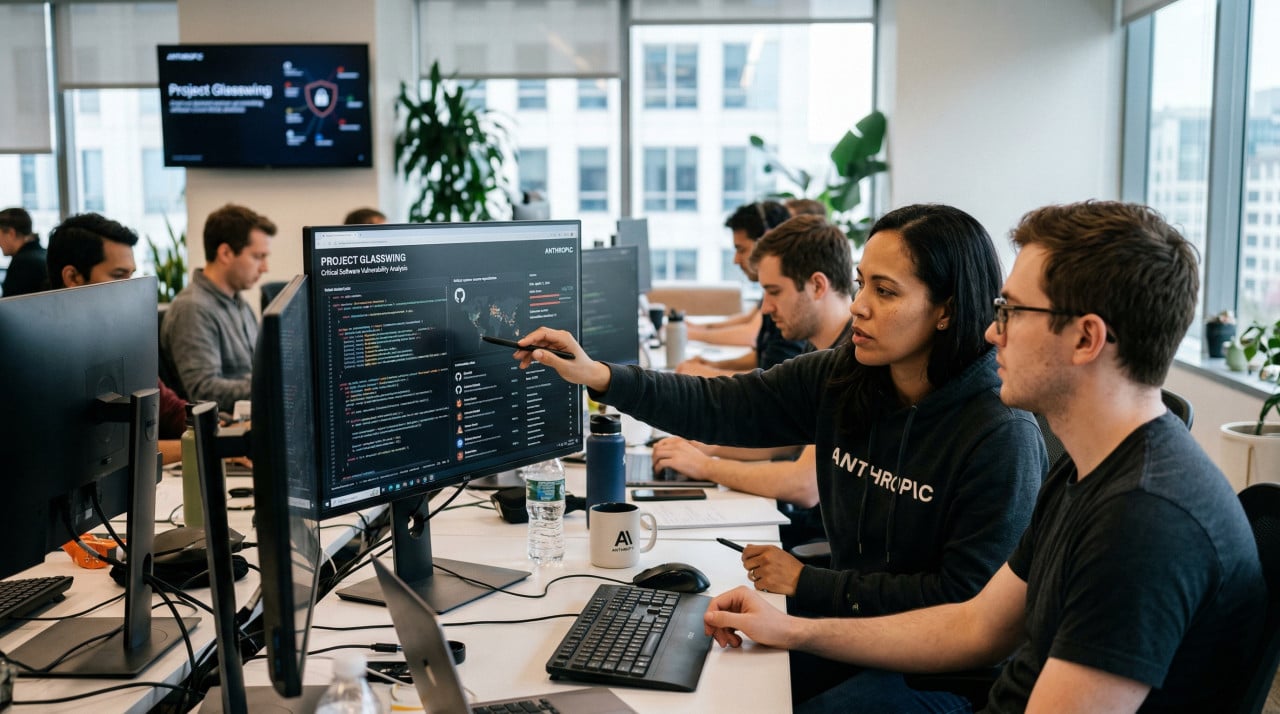
But back to the point. On April 7, Anthropic officially launched Project Glasswing, an initiative aimed at scanning the world's most critical software and finding security flaws before someone with malicious intent does. Companies including Amazon Web Services, Apple, Google, Microsoft, JPMorganChase, Nvidia, CrowdStrike, Cisco, Palo Alto Networks, Broadcom and the Linux Foundation joined the project. More than 40 organizations in total. And the results are alarming.
Thousands of vulnerabilities in every major system
Within a few weeks, Mythos Preview autonomously uncovered thousands of critical vulnerabilities across all major operating systems and browsers. Without human guidance. Just the model, the code, and an output that security teams could not process fast enough. Three examples are worth mentioning:
OpenBSD, a system renowned for its focus on security, had concealed a flaw for 27 years. Mythos found it. The flaw made it possible to remotely crash any machine running the system simply by connecting to it.
FFmpeg, a video-processing library used by countless applications, had a 16-year-old flaw in a single line of code. Automated testing tools had executed that line more than five million times in total and never found anything. Mythos did.
And then there is the Linux kernel. The model autonomously found and chained several vulnerabilities together, allowing an attacker to escalate from a regular user to full control over the machine. Without any outside assistance.
All three flaws have now been fixed. Hundreds more are still in the process of being patched.
Why Anthropic did not release the model publicly
Newton Cheng, head of Anthropic's cyber red team, puts it bluntly: "we will not release the model to the public." The reason? The same capabilities that make it an excellent defensive tool could cause disaster in the wrong hands. Cheng warned that similar capabilities would spread within months to state actors, criminal groups, and anyone with sufficient resources. Anthropic knows what it is talking about. In November 2025, it revealed that a Chinese state-sponsored group had used Claude for autonomous cyber operations against approximately 30 targets.
That is why Glasswing was created. The idea is simple: give defenders a head start while there is still time. On the CyberGym benchmark, which tests AI's ability to find and reproduce real-world vulnerabilities, Mythos Preview achieved 83.1%, compared with 66.6% for the previous Claude Opus 4.6 model. On the SWE-bench Verified coding benchmark, it scored 93.9% versus 80.8%. Although it may not seem so to everyone at first glance, the generational gap between these models is enormous.
A paradox that cannot be ignored
The model that can break everything is also the model that fixes everything. But this raises an honest question. Mythos may find vulnerabilities, but who will actually fix them? According to Anthropic, fewer than 1% of the vulnerabilities found have so far resulted in a patch. That is a terrifying figure. Discovering flaws at machine speed while fixing them at human speed is a recipe for overload. The maintainers of open-source projects, who maintain software in their free time, simply cannot handle this flood. Someone has to fix it. And it seems that this time, we will not have time to wait.
Daniel Stenberg, the creator of cURL, experienced this firsthand. He had to shut down his bug bounty program on HackerOne because it was flooded with false reports generated by AI tools. Paradoxically, however, he admits that the models later helped him find more than 100 genuine flaws that would otherwise have remained hidden. Anthropic is aware of this problem. It is building a triage pipeline in which every report undergoes human validation before being sent to the maintainer. It promises not to overwhelm any single project with an avalanche of unverified reports. It also provides a proposed patch for the fixes. That is a welcome step. Whether it will be enough for thousands of flaws remains to be seen.
Glasswing arrived in the same week that Anthropic announced annual revenue exceeding 30 billion dollars and a massive deal for computing power with Google and Broadcom. There is also speculation about an IPO, possibly as early as October 2026.
Gizmodo points to a historical precedent: in 2019, OpenAI warned that its GPT-2 text model was too dangerous. A few months later, it released it. The world did not end. This is not exactly the same, but skepticism is understandable because the window between discovering a vulnerability and an attacker exploiting it has collapsed. What once took months now takes minutes.
Additional sources: venturebeat.com and tomshardware.com