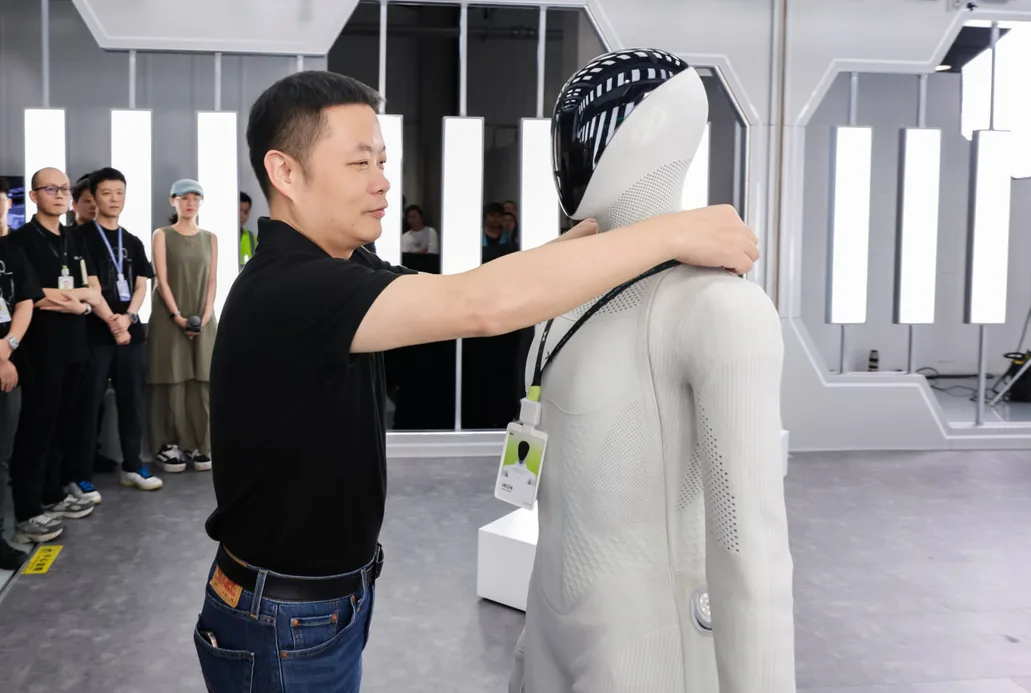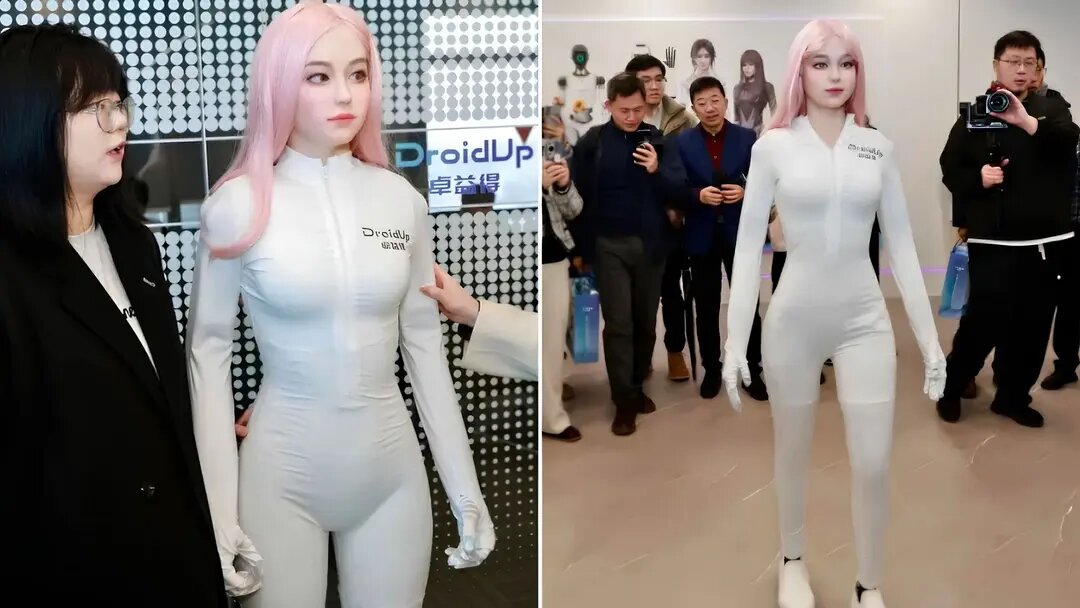
Chinese company DroidUp unveiled a humanoid robot named Moya in Shanghai in late January, which is described as the world's first fully biomimetic robot with artificial intelligence. The robot attracted attention thanks to its ability to walk almost like a human and maintain a body temperature similar to that of humans.
Moya is built on the concept of so-called embodied artificial intelligence (embodied AI), which means that it can perceive its surroundings, reason, and physically interact with the real world – rather than functioning only in a digital environment. Videos shared on YouTube show Moya smiling, nodding, maintaining eye contact, and walking with a gait that closely resembles human movement.
Technical specifications and design
According to DroidUp, the robot's walking accuracy reaches 92% compared with human walking. The robot is 1.65 meters tall and weighs approximately 32 kilograms. One of its most remarkable features is its body temperature, which ranges between 32 and 36 degrees Celsius – a detail intended to enhance realism when interacting with people.
According to available information, Moya is built on a chassis referred to as "Walker 3", although DroidUp has not officially confirmed this platform. The use of the name "Walker 3" may cause confusion because it is commonly associated with humanoid robots developed by UBTECH. However, neither company has confirmed any connection between their platforms.
The robot has a modular design, making it possible to customize its external appearance without changing its internal mechanical structure. DroidUp also claims that Moya can replicate human microexpressions, placing it among the most humanlike robots currently under development.
Public reaction and applications
Moya's appearance and behavior have prompted mixed reactions on Chinese social media. According to journalist Llewellyn Cheung of the South China Morning Post, some users expressed fascination with the robot's realism, while others described its movement as unsettling. This phenomenon reflects the familiar tension associated with the so-called "uncanny valley" – the uncomfortable feeling people experience when artificial beings look almost, but not entirely, human.

DroidUp is not presenting Moya merely as a household robot. According to the South China Morning Post, the company plans to deploy the humanoid robot in healthcare, education, and other commercial environments where human-robot interaction plays a key role.
Rather than focusing on industrial tasks or high-speed athletic demonstrations, the company is targeting environments that require long-term interaction and a sense of approachability. Moya is expected to enter the market in late 2026 with a starting price of around 1.2 million yuan, equivalent to approximately 4.3 million Czech korunas.
The humanoid robot market
Moya's debut comes at a time when humanoid robot development is taking different directions globally. Some companies deliberately design robots with a cartoonish or stylized appearance to avoid comparisons with humans, while others emphasize clearly mechanical forms suited to industrial work. A smaller group, including DroidUp, continues the pursuit of highly realistic designs that seek to overcome the "uncanny valley" rather than avoid it.
Moya represents an interesting approach to the future of robotics – a robot that aims to be not merely a functional tool, but a companion capable of natural interaction with people in everyday situations.
Sources: techradar.com and interestingengineering.com