OpenAI recently announced important updates concerning how people around the world can use its ChatGPT tool. The company is working to ensure that artificial intelligence is available to as many people as possible, regardless of whether they can afford to pay. That is why it launched the ChatGPT Go plan, which is now available in the US and everywhere ChatGPT operates. This plan costs CZK 184 per month and offers expanded capabilities such as sending messages, creating images, uploading files, and memory. Since August last year, this plan has been available in 171 countries, and it is now also coming to the United States to help people get more out of artificial intelligence at a low price.
The company sees artificial intelligence as a personal super-assistant that helps people learn and do almost anything. But the question is who will have access to all of this. OpenAI wants to prevent AI from merely widening the gaps between people, which is why it is focusing on free versions and affordable plans. In the coming weeks, it plans to test ads in the free version and the Go plan in the US, which should allow even more people to use the tools without restrictions or payment. Higher-tier plans such as Pro, Business, and Enterprise will remain ad-free.
Principles of Advertising in ChatGPT
People use ChatGPT for many important and personal matters, so OpenAI knows it must maintain trust. That is why it has clear rules governing how ads work. Its main principle is that ads must support the company’s mission of ensuring that artificial intelligence benefits all people. Ads must not influence ChatGPT’s responses—they are always focused on what is most useful to the user. Ads will be separate and clearly labeled so that no one feels they are mixed in with the main content.
Another important point is conversation privacy. OpenAI promises that conversations with ChatGPT will remain private and will not be shared with advertisers. User data is not sold. Everyone has control over their data—personalization can be turned off, and data used for ads can be deleted at any time. There will always be a way to avoid ads, for example by using a paid ad-free plan. The company is not trying to maximize the time spent in ChatGPT, but rather to build trust and provide a good experience.
What Will Ads Look Like in Practice?
Ad testing will begin soon in the US for signed-in adult users of the free version and the Go plan. Initially, ads will appear at the end of responses if there is a relevant sponsored product or service related to the topic of the conversation. For example, if you ask for recipes for a Mexican dinner, an ad for hot sauce from Harvest Groceries might appear. Everything will be clearly labeled and separated from the main response. Users will be able to find out why an ad was shown or dismiss it and explain why it is not relevant to them.
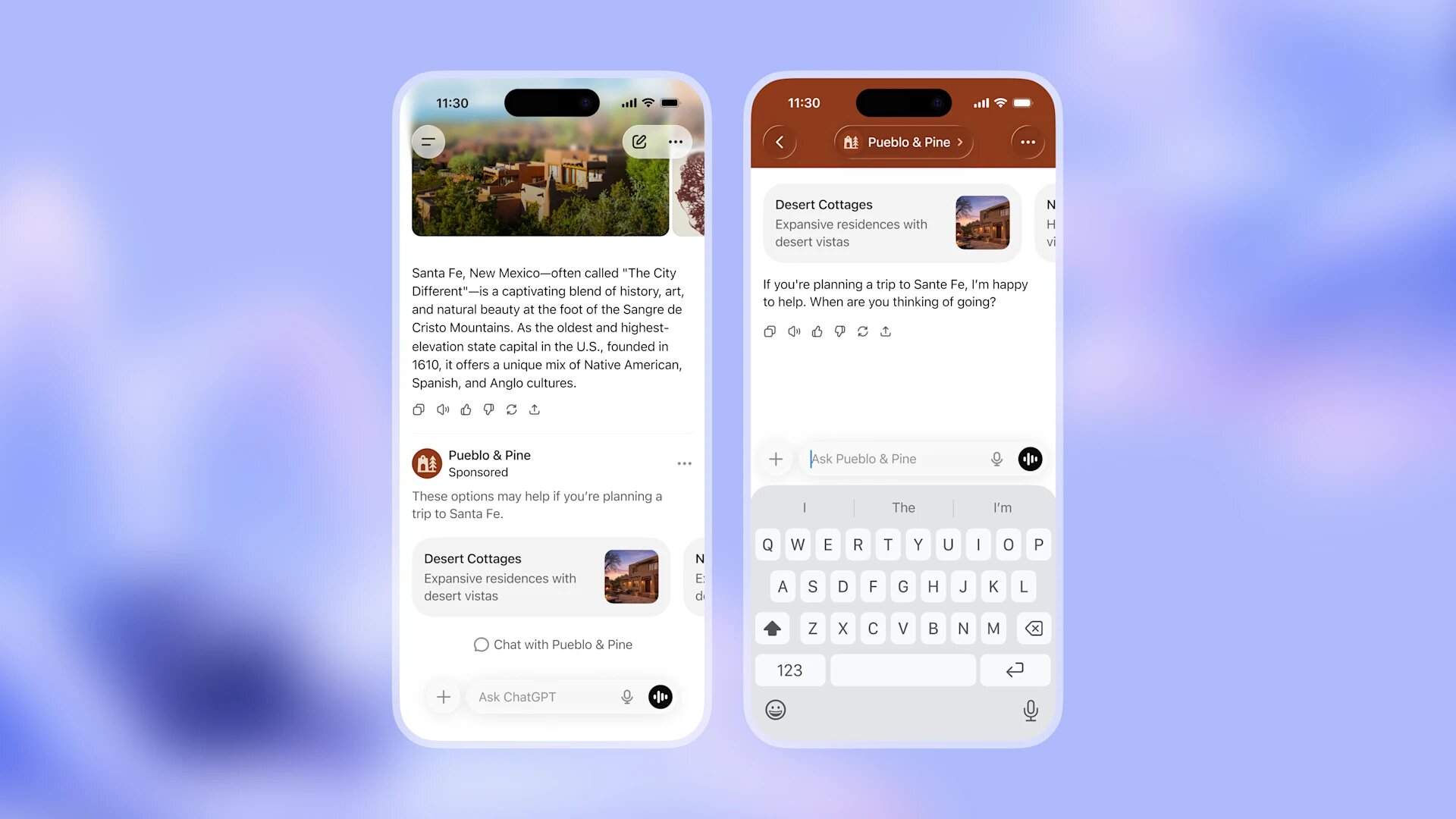
During the test, ads will not appear on accounts where the user says, or the system estimates, that they are under 18. They will also not appear alongside sensitive topics such as health, mental health, or politics. OpenAI provides examples of what this might look like: on a mobile phone, after an answer to a question about traveling to Santa Fe, New Mexico, an ad for accommodation in Pueblo & Pine desert cabins appears. Ads are intended to be useful and entertaining, helping people discover new things. In the future, they could allow users to ask questions directly about the ad so they can make a purchase decision within the conversation.
Benefits for Small Businesses
Ads can help small businesses and new brands that are trying to establish themselves. Artificial intelligence will enable them to create high-quality experiences through which people can discover options they might not otherwise encounter. OpenAI plans to collect feedback and adjust how ads are displayed, but its commitment to users will remain the same. The company is building its advertising platform from the ground up around these principles so that everything aligns with what people expect from ChatGPT.
In the long term, OpenAI is focused on products that millions of people and businesses find valuable enough to pay for. Its subscription and business offerings are already strong, but ads are intended to help diversify revenue and make intelligence more accessible to everyone. Testing will begin in the coming weeks and months, and the company looks forward to hearing people’s feedback so that ads can support broad access to AI while maintaining trust.
Additional source: cnbc.com