

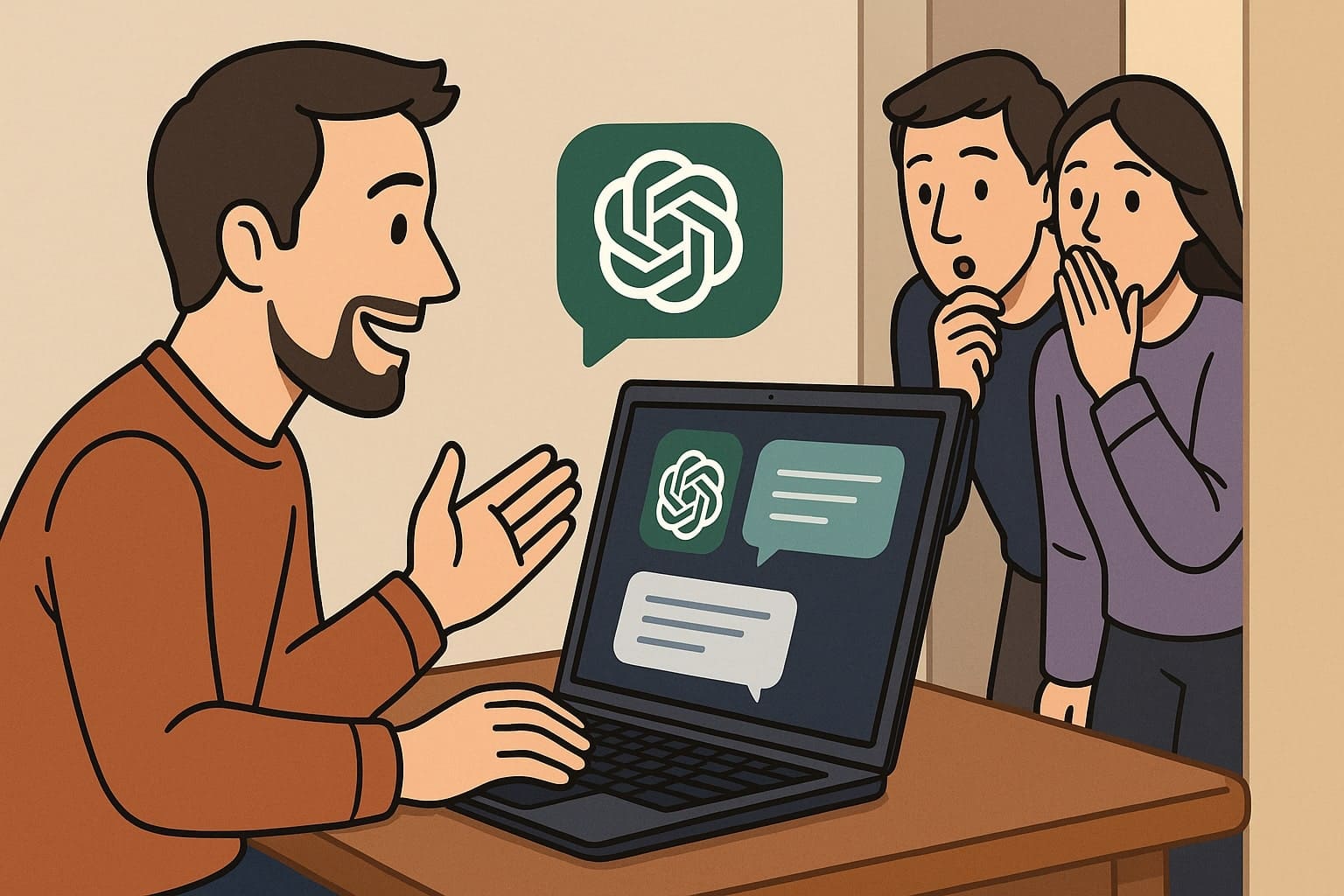
Security Risk: Your ChatGPT Conversations Can Be Found Online!
Imagine that anyone on the internet could suddenly find your private conversations with AI. That is exactly what is happening with thousands of ChatGPT conversations that have appeared publicly. According to a report by Wccftech, people recently discovered that more than 100,000 ChatGPT conversations can be found through a simple Google search. These chats come from various users and contain sensitive information, such as health-related questions, resignation letters, internal legal documents, résumés, names, and even explicit content. OpenAI, the company behind ChatGPT, is trying to de-index these chats, which means removing them from search engine results. But the problem does not end there—many remain accessible through the Wayback Machine archive service on Archive.org.
This incident is not the result of a sophisticated hack, but rather a consequence of how users share their conversations. ChatGPT allows users to create special links (shared links) to specific conversations, intended for collaboration or sharing with others. However, if these links end up on public forums, social media, or websites, search engines such as Google index them and make them accessible to everyone. OpenAI warns users not to include sensitive information in shared links, but many were unaware of this and are now facing a breach of privacy.
How Does the "Shady Trick" Work, and Why Is It a Problem?
Let us start at the beginning and explain it step by step. It all begins with the sharing feature in ChatGPT. A user creates a conversation—for example, asking for health advice or drafting a confidential document. They then generate a unique URL that is meant to be private, but if someone publishes it (perhaps accidentally on a forum), it becomes public. Google and other search engines crawl and index these links, meaning they include them in their results. Suddenly, anyone who enters the right keywords can find the entire chat history.
Now comes the "shady trick," as the article describes it: Even if OpenAI asks Google to remove these links, they remain stored in the Wayback Machine archive. This Archive.org service stores "snapshots" of web pages from different points in time—even pages that were later deleted. According to Mark Graham, director of the Wayback Machine, OpenAI has not yet requested that the links be removed from its archive. Specifically, he said: "I can tell you that we have neither received nor processed any requests to exclude URLs matching the 'chatgpt.com/share' pattern. If OpenAI, the rights holder for material from the chatgpt.com domain, requested the exclusion of URLs matching the chatgpt.com pattern, we would likely honor that request. However, they have not submitted such a request."
The problem goes even further: Not only ChatGPT conversations, but also conversations from Grok (xAI's AI) are appearing on Google. This points to a broader privacy problem affecting mainstream AI models. Users are discovering their chats through simple searches, leading to the exposure of identities, sensitive data, or even their use in legal disputes. For example, chats containing deeply personal secrets could be used against you in court without legal protection, as OpenAI's Sam Altman has warned in related contexts.
Related Incidents and Why This Is Not Just About ChatGPT
This problem is not new—similar incidents emerged in mid-2025, when Google indexed thousands of shared links, exposing conversations about mental health, business strategies, or explicit content. According to related reports from Cybernews and the OpenAI forum, users are often unaware that sharing a link can lead to a public leak. OpenAI recommends not including sensitive information in shared chats, but many people overlook this advice.
Additional information shows that this is not a hack, but a case of user error. For example, if a link ends up in a public place, it becomes part of the internet archive. The Wayback Machine stores timestamped versions, so even after content is deleted from the original source, it remains available to those who know how to search for it. This means that even if OpenAI deletes the chats, the archive preserves them—and without a removal request, they will remain there.
How Can You Protect Yourself, and What Comes Next?
To sum up: If you use ChatGPT or similar AI tools, be careful. Do not use the sharing feature unless necessary, and never include personal data in shared chats. If you have discovered your chat online, try contacting OpenAI or the archive services to have it removed. This incident shows how quickly privacy can be lost in the digital world and is forcing companies such as OpenAI to reassess their systems. Stay vigilant—your words could end up in unexpected places!


